



QUETTA: For years, buying smuggled Iranian fuel from Quetta’s Hazar Ganji market was routine for Abdul Rauf, a 29-year-old resident of Brewery Road who makes a living selling the cheaper petrol brought across the border from Iran.
Now, he says, even finding 300 liters to keep his business running takes hours of searching.
The informal fuel trade in Pakistan’s southwestern Balochistan province — sustained for decades by price differences between subsidized Iranian fuel and higher-priced Pakistani petrol — has been disrupted since war erupted in Iran following US and Israeli strikes on Feb. 28.
Pakistan and Iran share a 909-kilometer border across Balochistan, where communities on both sides have long relied on formal and informal trade for livelihoods in an area marked by poverty and limited economic opportunities.
“We are badly affected due to this war because the border is closed and I didn’t find a single gallon of fuel,” Rauf told Arab News while searching for Iranian fuel on his three-wheeled Zaranj motorbike.
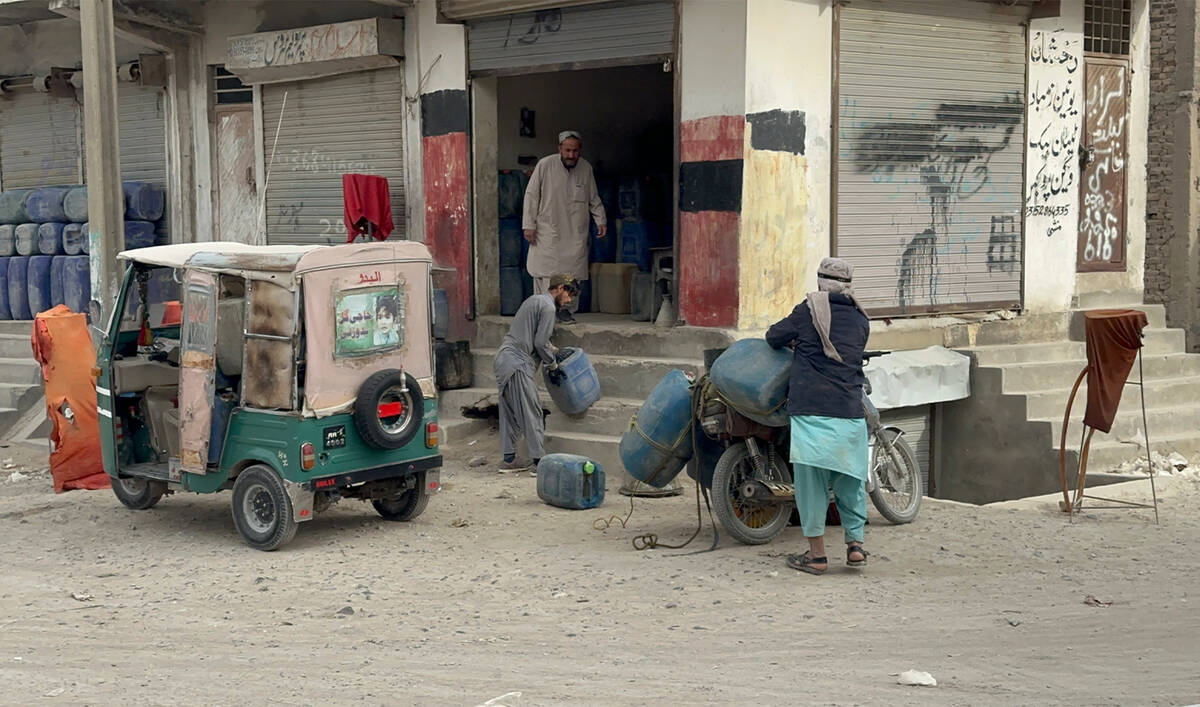
Local workers are busy in filling Iran fuel gallons in Quetta, Pakistan on March 13, 2026. (AN Photo)
“Since the war started in Iran, the price of one-liter Iranian fuel has gone up from Rs160 ($0.57) to Rs255 ($0.91),” he said, adding that during the initial days of the conflict the price briefly rose to Rs300 ($1.07).
Rauf earns about Rs3,000 ($10.74) a day by transporting the fuel. But the shortage means he is now riding around with empty containers.
“I have been riding on Zaranj with empty gallons because no one is selling the fuel citing the shortage due to the Iran war,” he said. “If the war continues for a long period, we would sit home empty-handed because we don’t have any other livelihood.”
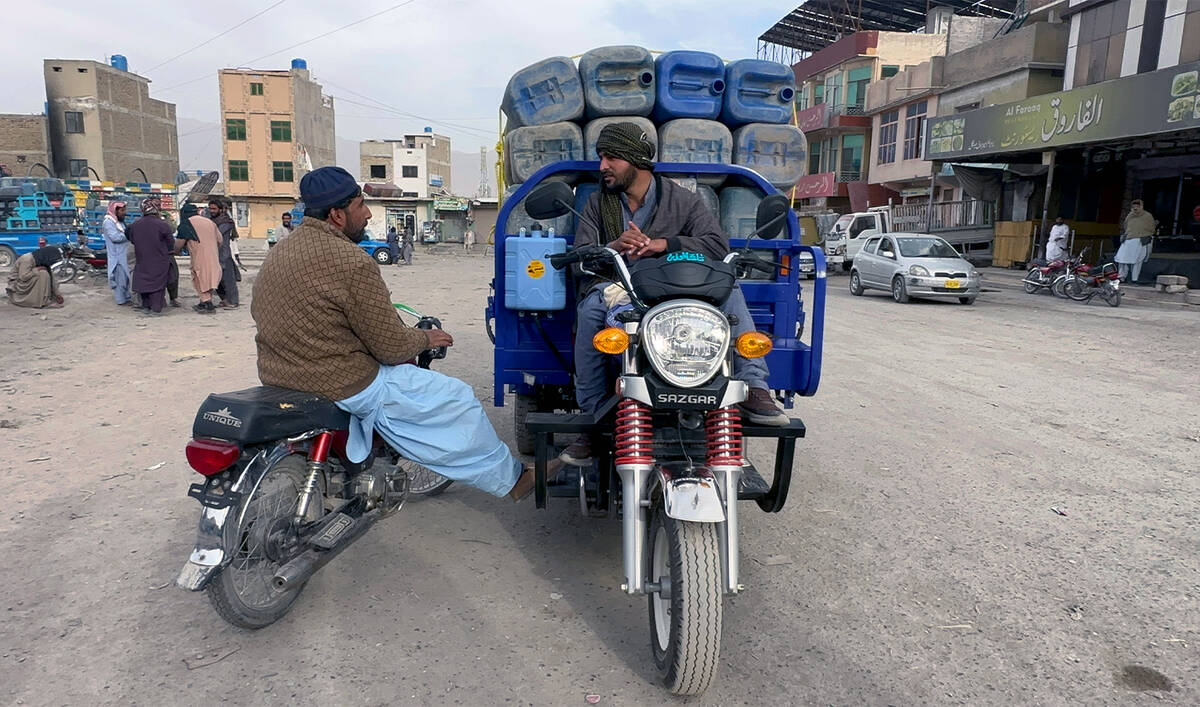
Abdul Rauf, a local Iranian fuel seller, is talking with a dealer in Quetta, Pakistan, on March 13, 2026. (AN Photo)
Iranian petrol and diesel have long flowed informally into Balochistan, where they are sold through roadside stalls and informal depots in towns across the province.
Some of it is consumed locally while part of the supply moves onward to the neighboring Sindh province. The trade persists partly because policing the long, mountainous border is difficult and because many residents depend on the business for income.
According to local fuel dealers, Iran regularly supplies more than one million liters of fuel to Pakistan daily through informal channels. However, government figures cited in 2024 suggested that between five and six million liters of Iranian fuel were entering Pakistan every day, down from earlier estimates of 15 to 20 million liters.
Abdul Ghaffar, a junior government employee who also drives an auto-rickshaw to supplement his income, said the shortage had already begun to affect daily life.
“If the Iranian fuel’s supply completely halts from Iran, people will have to buy bicycles because no one can afford Pakistani petrol amid soaring prices,” he told Arab News.
“We are totally dependent on Iranian items. If there is disturbance, we feel the economic burns here.”
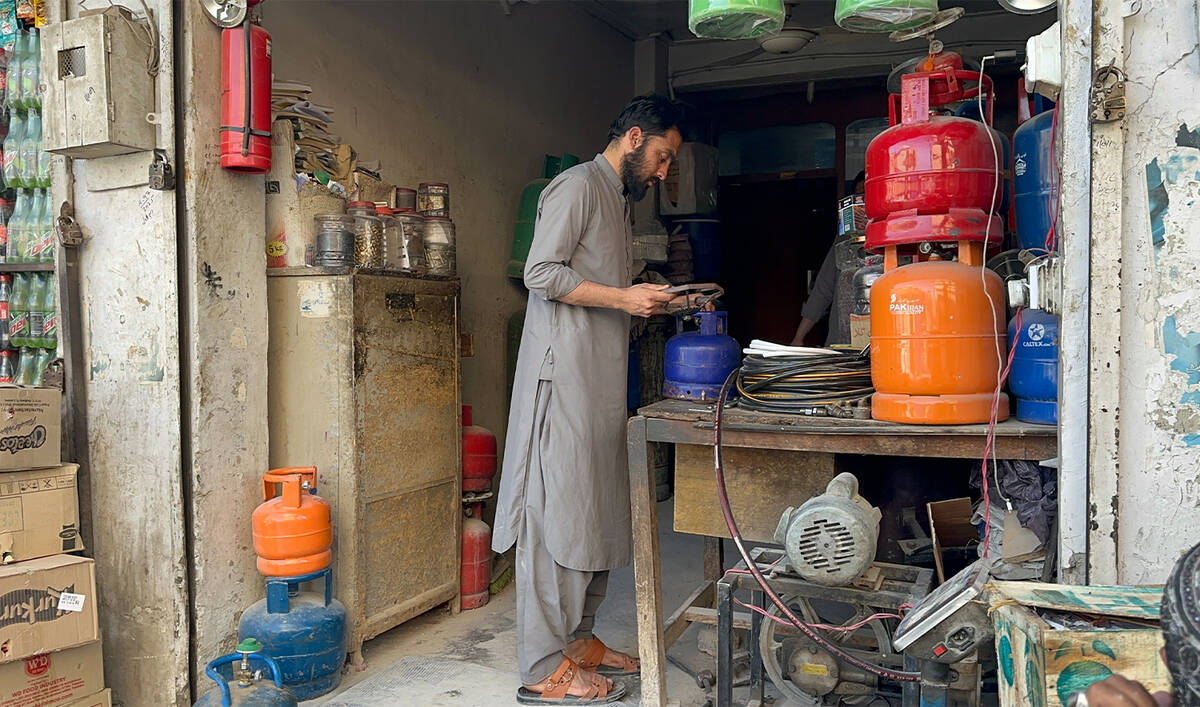
A man fixing a gas cylinder in Quetta, Pakistan, on March 14, 2026. (AN photo)
The war has also disrupted legal trade between the two countries, which have in recent years sought to strengthen economic ties and establish border markets to serve frontier communities.
According to the Quetta Chamber of Commerce, Pakistan exports about $800 million worth of goods annually to Iran and imports approximately $3.5 billion. The two countries have also said they aim to increase bilateral trade to $10 billion.
Muhammad Ayoub Miryani, president of the Quetta Chamber of Commerce, said the conflict had severely affected cross-border commerce.
“Both our export and import are currently halted, leading to major losses to the traders,” he told Arab News.
“People will suffer as 95 percent of Pak-Iran trade is affected in this war, import-export targets will not be met, and more people will fall below the poverty line.”
One of the items Pakistan has long imported from Iran is liquefied petroleum gas (LPG) to meet domestic demand. According to the Observatory of Economic Complexity, Pakistan imported LPG worth $687 million from Iran in 2024.
Hajji Shoukat Essazai, an LPG importer in Taftan, said shipments had dropped sharply since the war began.
“Before the war, 100 to 150 LPG bowsers weighing 22 tons of petroleum gas were crossing into Pakistan through Taftan border but now the numbers have dropped to 15 to 25,” he told Arab News.
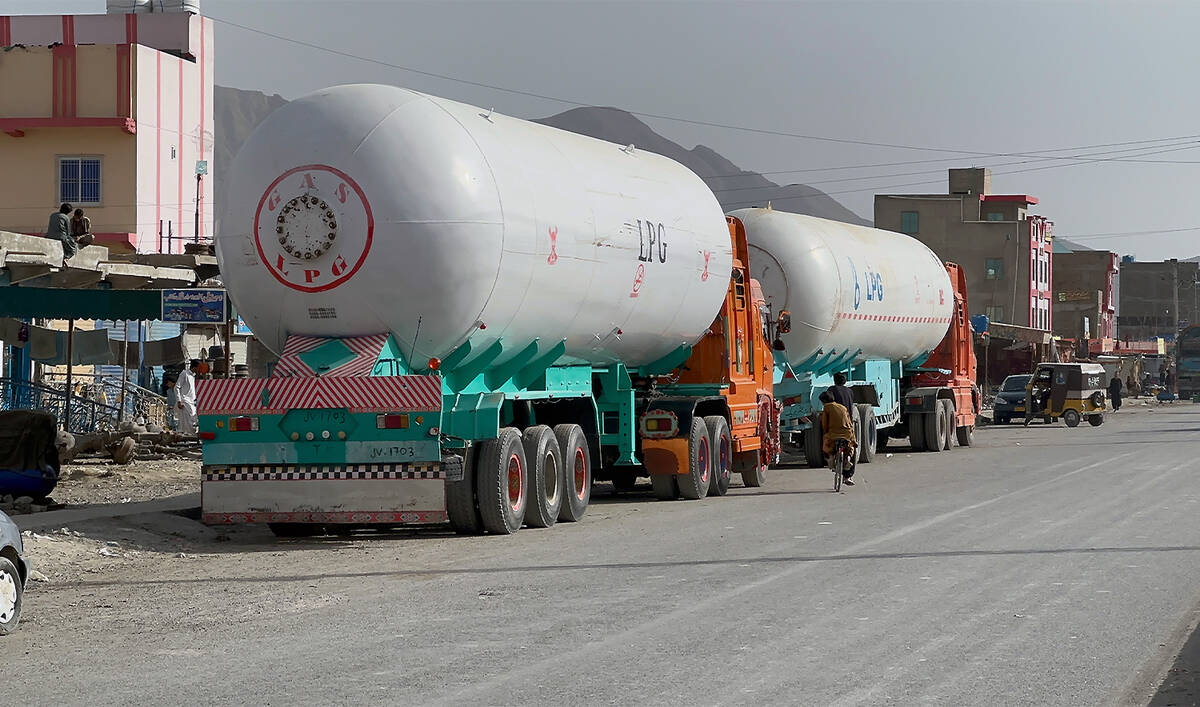
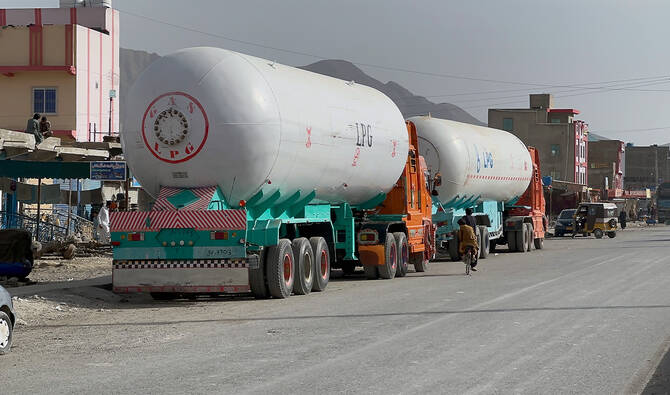
LPG bowsers is parked at Hazar Ganji in Quetta, Pakistan on March 12, 2026. (AN Photo)
Essazai, who has been in the business for three decades, said he now receives only a handful of trucks each day.
“Only those who had existing stocks of LPG or food items are still doing business, nothing new is coming through Iran,” he said.
Naik Muhammad, an LPG seller in Quetta’s Alamdar Road market, said rising prices were already pushing customers away.
“The price of a 50kg LPG cylinder has increased from Rs12,000 [$42.98] to Rs16,000 [$57.31],” he said. “We have stock for the people till Eid Al-Fitr, but if the war continues, LPG will vanish from Quetta after Eid.”
Local authorities confirmed the conflict has slowed commercial traffic along the border.
Jahanzaib Shanwani, deputy commissioner of Chaghi district, said traders and drivers on both sides were increasingly reluctant to move goods.
“Pakistani drivers are hesitating to go toward Iran and the Iranian themselves are not bringing commodities and other items toward Pakistan,” he told Arab News.
“We are trying our best to let the trade continue even if it is halted from the Iranian side, because people are engaged with the Pak-Iran trade activities not from today or yesterday but for a very long time.”


