

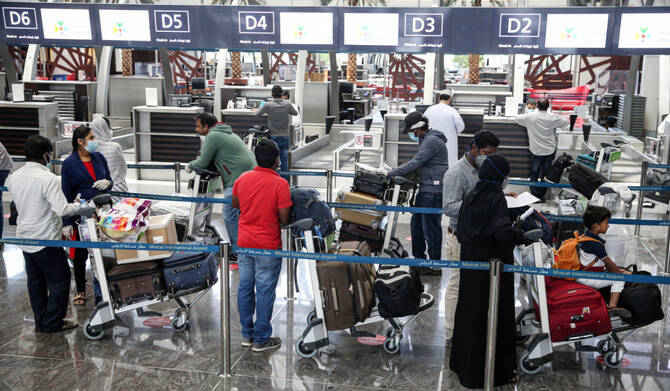

MUSCAT: Oman’s Muscat International Airport has asked private jet operators to avoid using the site for “additional flights,” giving priority to government and commercial flights as fresh airspace closures hit the region’s attempts to increase travel, according to an email seen by Reuters.
“Due to the current crisis management measures at Muscat International Airport, flight movements are restricted to approved seasonal scheduled services only,” the airport authorities told charter plane operators on Friday.
The airport said this measure was necessary to manage congestion and ensure that airport capacity remains within acceptable limits.
The email, first reported by the Financial Times, asked that all airlines and operators cancel any slots falling outside the approved seasonal schedule and to refrain from submitting non-approved flight requests until further notice.
“The only additional flights that may be considered during this period are embassy-sponsored repatriation flights, subject to prior approval through the applicable diplomatic channels and on the condition that no commercial sale of seats is undertaken in connection with such operations,” the email added.
The outbreak of the US-Israel war against Iran has led to flight cancelations across the Middle East, leaving airlines and governments scrambling to support thousands of stranded passengers.
With most airspace in the region still closed over missile and drone concerns, some people have turned to private jets while charter flights and limited commercial services struggle to evacuate tens of thousands of travelers.
Travelers have shelled out high prices to get out of the Middle East, rushing to airports or heading over land to quieter hubs, with fighter jets occasionally escorting passenger jets.


