

Pakistan registers nearly 3,500 new firms in Feb. with China, US among top foreign investors

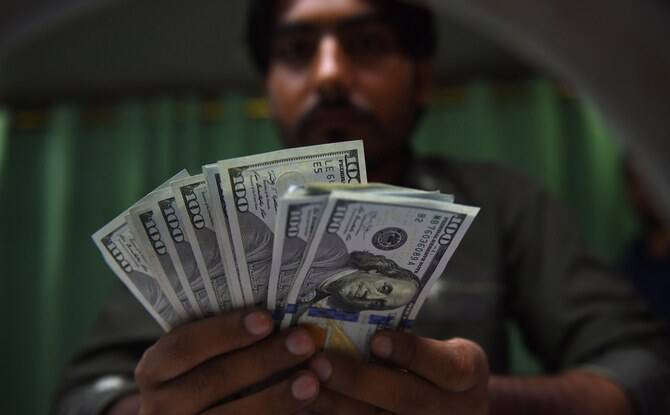
This photo taken on July 17, 2018 shows a Pakistani currency dealer counting US dollars banknotes at a currency exchange shop in Karachi. (AFP/File)
Short Url
Updated 06 March 2026
Follow

Pakistan registers nearly 3,500 new firms in Feb. with China, US among top foreign investors

  • Pakistan is seeking to increase foreign investment as it treads a long path to economic recovery under $7 billion IMF bailout
  • IT and e-commerce sectors remained the leading drivers of growth with 723 new incorporations, followed by the trading sector

KARACHI: The Securities and Exchange Commission of Pakistan (SECP) registered nearly 3,500 new companies in the month of Feb., it said on Friday, with China and United States (US) among top foreign investors.

The development comes at a time when Pakistan is seeking to increase foreign direct investment as it treads a long path to economic recovery under a $7 billion International Monetary Fund (IMF) bailout.

The South Asian country has announced several incentives for in its Special Economic Zones (SEZs), including exemption from income tax and sales tax on the import of machinery, to promote foreign investment.

On Tuesday, the SECP said addition of 3,444 new firms brings the total number of registered companies in Pakistan to 287,049, reflecting continued growth in the country’s corporate sector.

“Private limited companies accounted for 59 percent of the new registrations, followed by single-member companies at 38 percent. The remaining 3 percent comprised public unlisted companies, not-for-profit organizations, limited liability partnerships, and foreign companies,” the regulator said.

“Foreign investment remained robust, with 82 newly incorporated companies receiving international shareholding. China emerged as the leading source of investment with participation in 44 companies, followed by the United States with investments in seven companies.”

Other key investors included Palau, Germany Egypt, the United Kingdom, Australia, Indonesia, Azerbaijan, Jordan, Canada, Sweden, Denmark and Turkiye, according to the SECP.

The primary destinations for foreign investment were the mining and quarrying, trading, and information technology sectors, indicating sustained international interest in Pakistan’s natural resources, commercial markets and expanding digital economy.

Punjab led with 1,696 new companies, followed by the Islamabad Capital Territory with 656, Sindh with 555, Khyber Pakhtunkhwa with 317, Gilgit-Baltistan with 174 and Balochistan with 46, demonstrating broad-based geographic expansion of corporate activity.

“Sector-wise, the information technology and e-commerce sectors remained the leading drivers of growth with 723 new incorporations, followed by the trading sector with 531 registrations, services with 434, and real estate development and construction with 323 new companies,” the SECP said.

“Further diversification was observed across multiple sectors, including tourism and transport (194), food and beverages (165), education (107), mining and quarrying (79), textile (69), marketing and advertisement (64), chemicals (58), pharmaceuticals (58), corporate agricultural farming (57), health care (56), engineering (52), cosmetics (50), communications (44), fuel and energy (42), lodging (37), and auto-allied industries (35),” it said.

“In addition, 266 companies were incorporated across various other sectors, including cables and electric goods, sports, and paper and board, reflecting the continued broadening of Pakistan’s industrial and business base.”


Pakistan engages Saudi Arabia, China in bid to ease surging Middle East tensions 

Updated 10 March 2026
Follow

Pakistan engages Saudi Arabia, China in bid to ease surging Middle East tensions 

  • Pakistan’s foreign minister stresses need for de-escalation in conversations with Chinese, Saudi counterparts
  • Tensions in the Middle East continue to remain high as conflict between US, Israel and Iran intensifies

ISLAMABAD: Pakistan’s Deputy Prime Minister Ishaq Dar spoke to the foreign ministers of Saudi Arabia and China on Tuesday, stressing the importance of diplomatic engagement to de-escalate tensions in the Middle East as the Iran war intensifies. 

Pakistan has constantly engaged regional countries in efforts to broker a ceasefire in the Middle East, after the US and Isreal launched coordinated strikes against Iran on Feb. 28. 

Iran launched fresh attacks on Gulf countries on Tuesday morning, where it has targeted US military bases in recent weeks. In addition to firing missiles and drones at Israel and American bases in the region, Iran has also been targeting energy infrastructure which, combined with its stranglehold on the Strait of Hormuz, has sent oil prices soaring worldwide. 

Dar spoke to Saudi Foreign Minister Prince Faisal bin Farhan to discuss developments in the Middle East and ongoing deliberations at the UN Security Council, Pakistan’s foreign office said in a statement. 

“DPM/FM shared Pakistan’s perspective, underscoring the importance of continued coordination and diplomatic engagement to support de-escalation and promote peace and stability across the region and beyond,” the statement said. 

Dar, who also serves as Pakistan’s foreign minister, spoke to Chinese foreign minister Wang Yi over the telephone separately. The two discussed the evolving regional situation and broader global developments.

Dar underscored the need to ease tensions in the Middle East and the wider region during the conversation, the foreign office said. 

Yi appreciated Pakistan’s constructive efforts aimed at promoting de-escalation and stability in the region, it added. 

“The two leaders stressed the importance of de-escalation and emphasized the need to pursue dialogue and diplomacy in accordance with the principles of the UN Charter,” the foreign office’s statement said. 

The conflict in the Middle East has hit Pakistan hard as well, forcing Islamabad to hike petrol and diesel prices by Rs55 per liter last Friday. 

Pakistan’s government has also announced a set of austerity measures, which include closing schools and cutting down on government expenditures, as it evaluates petrol stocks and looks for alternative supply routes.