

FGM reports add to scrutiny of Somali community in Minnesota

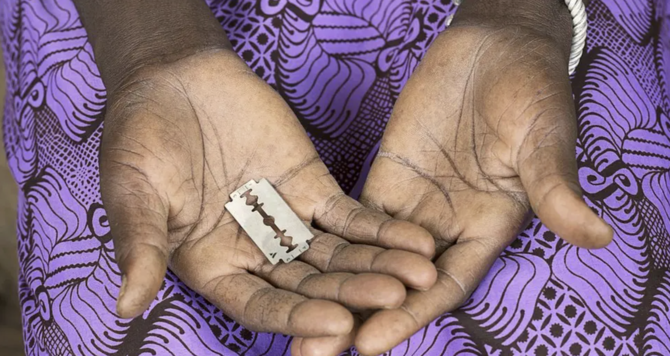
UN data shows that nearly 98 percent of Somalia’s female population aged between 15 and 49 have undergone FGM. (File/Getty Images)
Short Url
Updated 26 February 2026
Follow

FGM reports add to scrutiny of Somali community in Minnesota

  • It is not something that Islam urges parents or families to do for their children at all, says US imam

CHICAGO: The US state of Minnesota has reportedly seen a rise in instances of female genital mutilation, or FGM, especially among the growing Somali community.

More than 260,000 Somalis live in the US, with nearly 100,000 of them settled in Minnesota. About 50,000 Somalis live in Minnesota’s 5th Congressional District, represented by Somali American Rep. Ilhan Omar.

UN data shows that nearly 98 percent of Somalia’s female population aged between 15 and 49 have undergone the procedure.

The controversy over FGM in Minnesota has only added to the dark cloud of alleged fraud that is hanging over the state’s Somali community. US President Donald Trump made this subject a major part of his State of the Union speech on Tuesday, calling the fraudsters “Somali pirates.”

State and federal investigators have said Somalis in Minnesota have been implicated in the theft of billions of dollars in state and federal funds intended to support childcare, food programs for families and seniors, and healthcare and mental health programs. Officials contend that this has resulted in the loss of up to $9 billion in funding over many years. In his State of the Union speech, however, Trump said the fraud has cost American taxpayers as much as $19 billion.

Muslim leaders are speaking out against the practice of FGM. Imam Kifah Mustapha of the Orland Prayer Center, one of the largest mosques in Illinois, said FGM is not representative of Muslim religious practices and is not required by Islam.

“There is nothing in Islam that says it should be done as an obligation. There’s no such thing,” Mustapha told Arab News.

“It is not something that Islam urges parents or families to do for their children at all. It is not practiced at all in most Muslim countries. It is not something Islam urges people to do or obligates people to do. We know that most Muslim countries now even prohibit it, they don’t allow it anymore.”

Congress first banned FGM on girls under the age of 18 in 1996. However, a 2018 federal court ruling struck down that law as unconstitutional. President Trump toughened the law and signed the Stop FGM Act into law in 2021, imposing a penalty of up to 10 years’ imprisonment for anyone convicted.

Forty-one US states, including Minnesota, have enacted their own laws banning FGM. The nine states that have failed to adopt bans are Alabama, Alaska, Connecticut, Hawaii, Maine, Mississippi, Montana, Nebraska and New Mexico, all states with small Muslim populations.

Minnesota was one of the first states to pass an FGM law in 1994. State Rep. Mary Franson has been fighting ever since to strengthen its enforcement. She recently told the media that cultural secrecy makes FGM “exceptionally difficult to detect” in tight-knit communities.

Somali-born activist Ayaan Hirsi Ali, an author who survived FGM and has spoken out against it, has publicly described the lasting physical and psychological damage that she experienced. Hirsi Ali has called for a strong legal response.

Hirsi Ali was on Sunday quoted as saying: “Female genital mutilation is violence against the most vulnerable — children. It causes infection, incontinence, unbearable pain during childbirth and deep physical and emotional scars that never heal. Religious or cultural practices that deliberately and cruelly harm children must be confronted. No tradition can ever justify torture.”

In 2018, the UN Population Fund released a report showing that nearly 70 million girls will undergo FGM between 2015 and 2030.


Afghanistan says it thwarted Pakistani airstrike on Bagram Air Base as fighting enters fourth day

Updated 01 March 2026
Follow

Afghanistan says it thwarted Pakistani airstrike on Bagram Air Base as fighting enters fourth day

  • The fighting has been the most severe between the neighbors for years
  • Pakistan accuses Taliban government of harboring militant groups that stage attacks against it

KABUL: Afghanistan thwarted attempted airstrikes on Bagram Air Base, the former US military base north of Kabul, authorities said Sunday, while cross-border fighting between Pakistan and Afghanistan stretched into a fourth day.
The fighting has been the most severe between the neighbors for years, with Pakistan declaring that it’s in “open war” with Afghanistan.
The conflict has alarmed the international community, particularly as the area is one where other militant organizations, including Al-Qaeda and the Daesh group, still have a presence and have been trying to resurface.
Pakistan accuses Afghanistan’s Taliban government of harboring militant groups that stage attacks against it and also of allying with its archrival India.
Border clashes in October killed dozens of soldiers, civilians and suspected militants until a Qatari-mediated ceasefire ended the intense fighting. But several rounds of peace talks in Turkiye in November failed to produce a lasting agreement, and the two sides have occasionally traded fire since then.
On Sunday, the police headquarters of Parwan province, where Bagram is located, said in a statement that several Pakistani military jets had entered Afghan airspace “and attempted to bomb Bagram Air Base” at around 5 a.m.
The statement said Afghan forces responded with “anti-aircraft and missile defense systems” and had managed to thwart the attack.
There was no immediate response from Pakistan’s military or government regarding Kabul’s claim of attempted airstrikes on Bagram or the ongoing fighting.
Bagram was the United States’ largest military base in Afghanistan. It was taken over by the Taliban as they swept across the country and took control in the wake of the chaotic US withdrawal from the country in 2021. Last year, US President Donald Trump suggested he wanted to reestablish a US presence at the base.
The current fighting began when Afghanistan launched a broad cross-border attack on Thursday night, saying it was in retaliation for Pakistani airstrikes the previous Sunday.
Pakistan had said its airstrike had targeted the outlawed Pakistani Taliban, also known as Tehreek-e-Taliban Pakistan, or TTP. Afghanistan had said only civilians were killed.
The TTP militant group, which is separate but closely allied with Afghanistan’s ruling Taliban, operates inside Pakistan, where it has been blamed for hundreds of deaths in bombings and other attacks over the years.
Pakistan accuses Afghanistan’s Taliban government of providing a safe haven within Afghanistan for the TTP, an accusation that Afghanistan denies.
After Thursday’s Afghan attack, Pakistani Defense Minister Khawaja Mohammad Asif declared that “our patience has now run out. Now it is open war between us.”
In the ongoing fighting, each side claims to have killed hundreds of the other side’s forces — and both governments put their own casualties at drastically lower numbers.
Two Pakistani security officials said that Pakistani ground forces were still in control on Sunday of a key Afghan post and a 32-square-kilometer area in the southern Zhob sector near Kandahar province, after having seized it during fighting Friday. The captured post and surrounding area remain under Pakistani control, they added. The officials spoke on condition of anonymity, because they weren’t authorized to speak publicly.
In Kabul, the Afghan government rejected Pakistan’s claims. Deputy government spokesman Hamdullah Fitrat called the reports “baseless.”
Afghan officials said that fighting had continued overnight and into Sunday in the border areas.
The police command spokesman for Nangarhar province, Said Tayyeb Hammad, said that anti-aircraft missiles were used from the provincial capital, Jalalabad, and surrounding areas on Pakistani fighter jets flying overhead Sunday morning.
Defense Ministry spokesman Enayatulah Khowarazmi said that Afghan forces had launched counterattacks with snipers across the border from Nangarhar, Paktia, Khost and Kandahar provinces overnight. He said that two Pakistani drones had been shot down and dozens of Pakistani soldiers had been killed.
Fitrat said that Pakistani drone attacks hit civilian homes in Nangarhar province late Saturday, killing a woman and a child, while mortar fire killed another civilian when it hit a home in Paktia province.
There was no immediate response to the claims from Pakistani officials.