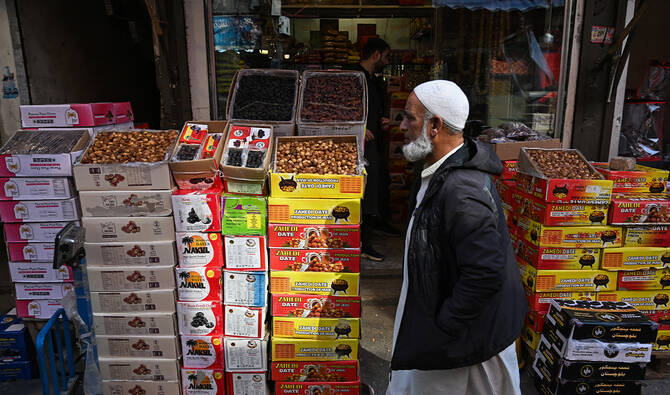

ISLAMABAD: Pakistanis preparing for Ramadan are scaling back food purchases and changing shopping habits as high utility bills and uneven prices squeeze household budgets at the start of the holy month that begins tomorrow, Thursday.
Ramadan, when Muslims fast from dawn to dusk and gather for evening meals known as iftar, typically drives a seasonal spike in food consumption across Pakistan, especially for fruit, fried snacks and sweets sold at temporary street stalls and neighborhood markets.
But years of high inflation following an economic crisis — including steep electricity and gas tariffs — have altered buying patterns, forcing many middle-class families to ration purchases while traders report weaker sales compared with previous Ramadans.
ExcConsumer prices peaked at about 38 percent in May 2023, one of the highest levels in the country’s history, driven by soaring food and energy costs. Since then inflation has steadily declined — falling to around 11.8 percent by May 2024 and to roughly 5.8 percent year-on-year in January 2026 — as stabilization measures take hold. However, economists note that while the rate of increase has slowed, prices remain elevated after years of cumulative rises, meaning many families still feel squeezed during Ramadan shopping.
“During the season, people put up seasonal decorations, boondi [savoury snack], etc,” said food seller Muhammad Sharaz.
“But the work situation this time … last time’s work was very good, but this time, due to inflation, the bills have come so high that people cannot afford them. The work is very slow this time, and the [electricity and gas] bills have come very high.”
Students and families said they were delaying purchases and buying smaller quantities early in the month, when food prices traditionally rise.
“If we are a normal middle-class family, then in the first 10 days they buy very few things,” said Veena Afzal, a student. “Now, where we need to buy more fruits, we are buying little by little, just enough to manage so that life’s necessities are met and Iftar is possible.”
Others said prices fluctuated rather than rising uniformly.
“In terms of timing, it is much better. Last Ramadan, some things were expensive, but now they are cheap, what was cheap at that time is now expensive, with ups and downs,” said grocery buyer Muhammad Naiz.
Despite the squeeze, some traditional foods continue to sell strongly, particularly long-established Ramadan staples.
“Fried vermicelli is being sold, the demand is very high,” said shop owner Muhammad Rafiq. “It has been sold for fifty years and sells very quickly. During Ramadan, the demand increases significantly; otherwise, it remains normal.”