TOKYO: Tokyo said it had lodged a “stern demarche” to China through diplomatic channels after Beijing’s top diplomat Wang Yi accused “far-right forces” in Japan of seeking to revive militarism.
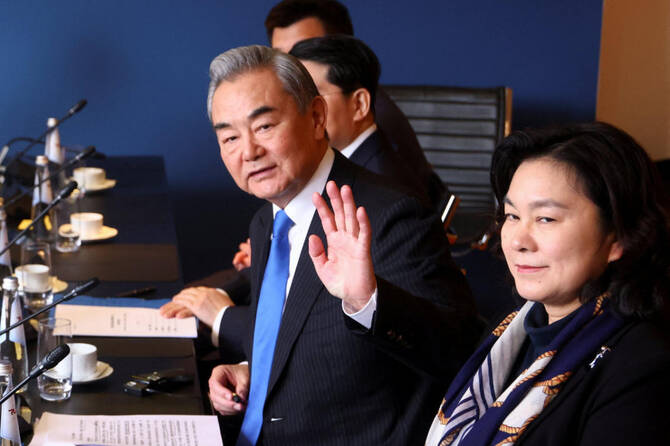
Speaking at the Munich Security Conference in Germany, Wang weighed in on Beijing’s current relationship with Tokyo, which has been under heavy strain since Prime Minister Sanae Takaichi made comments about Taiwan in November.
Wang said that “Japanese people should no longer allow themselves to be manipulated or deceived by those far-right forces, or by those who seek to revive militarism.”
“All peace-loving countries should send a clear warning to Japan: if it chooses to walk back on this path, it will only be heading toward self-destruction.”
Japan’s ministry of foreign affairs dismissed the claims in a post on X Sunday as “factually incorrect and ungrounded.”
“Japan’s efforts to strengthen its defense capabilities are in response to an increasingly severe security environment and are not directed against any specific third country,” the statement said.
It said there were “countries in the international community that have been rapidly increasing their military capabilities in a non-transparent manner” but added that “Japan opposes such moves and distances itself from them.”
Foreign Minister Toshimitsu Motegi made his stance clear at another session of the conference, followed by a stern demarche against the Chinese side through diplomatic channels, the statement said.
Just weeks into her term, Takaichi said Japan would intervene militarily in any attack on Taiwan.
Beijing claims the self-ruled democratic island as part of its territory and has threatened to use force to bring it under its control.
Takaichi was seen as a China hawk before becoming Japan’s first woman prime minister in October.
She said last week that under her leadership Japan — which hosts some 60,000 US military personnel — would bolster its defenses and “steadfastly protect” its territory.


![]()

Japan protests China comments on reviving ‘militarism’
Short Url
https://arab.news/84v5d
Japan protests China comments on reviving ‘militarism’
- Beijing’s top diplomat Wang Yi has accused “far-right forces” in Japan of seeking to revive militarism
- Japan’s Ministry of Foreign Affairs dismissed Wang's claims as “factually incorrect and ungrounded”


Latest updates


© 2026 SAUDI RESEARCH & PUBLISHING COMPANY, All Rights Reserved And subject to Terms of Use Agreement.