

Mashreq launches cross-border accounts for UAE-based Pakistanis with instant transfers home

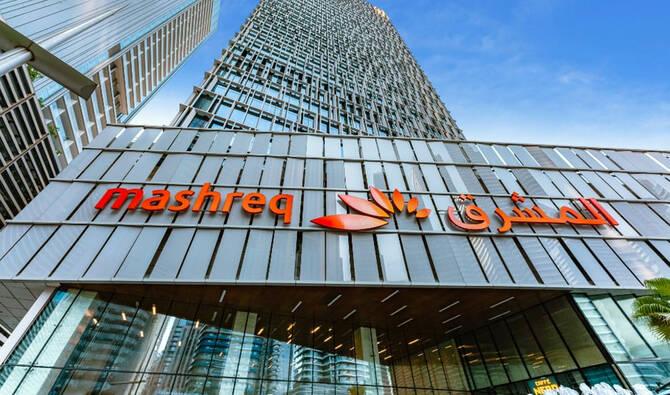
This undated photograph shows a general view of the Mashreq Bank headquarters in Dubai, UAE. (Mashreq/File)
Short Url
Updated 12 February 2026
Follow

Mashreq launches cross-border accounts for UAE-based Pakistanis with instant transfers home

  • UAE-based Pakistanis can open Mashreq Pakistan accounts without branch visits
  • The bank offers instant, fee-free remittances to its client through Quick Remit service

KARACHI: United Arab Emirates-based lender Mashreq announced the launch of a digital cross-border banking service on Thursday, allowing Pakistani nationals in the Gulf state to remotely open accounts in their home country and transfer money instantly without fees.

Remittances from the UAE, home to one of the largest Pakistani expatriate communities, rose 13.7 percent year-on-year to $4.78 billion in July-January FY26, compared with $4.21 billion a year earlier, according to State Bank of Pakistan data, highlighting the importance of the corridor to Pakistan’s economy.

Under the new arrangement, UAE-based Pakistani customers can open and operate a Mashreq Pakistan account entirely through its mobile app, eliminating the need for physical documentation or branch visits. Customers can view and manage both accounts through a unified dashboard.

“We are delighted to introduce this pioneering digital service, which marks a significant milestone for Mashreq and our customers,” Fernando Morillo, Group Head of Retail Banking at Mashreq, said in a statement.

“As the first bank in the UAE to enable non-resident Pakistanis to open accounts in their home country digitally ... we are demonstrating our commitment to reimagining banking through innovation,” he added. “Our zero-fee Quick Remit service further enhances the experience, empowering customers with greater convenience, speed, and value.”

Once activated, customers can send funds instantly to Pakistan using Quick Remit, a remittance feature available to Mashreq account holders.

Pakistani customers who open an account with Mashreq Pakistan will receive a current account with no minimum balance requirement and a domestic PayPak debit card, the statement said.

Muhammad Hamayun Sajjad, CEO of Mashreq Pakistan, said the initiative was aimed at strengthening digital financial connectivity for overseas Pakistanis.

“This milestone reflects our continued focus on building a robust digital financial ecosystem through technology-led solutions,” he said. “By enabling seamless and secure cross-border account opening, we are breaking down traditional banking barriers and delivering meaningful impact to our customers.”

Headquartered in Dubai, Mashreq operates across the Middle East and has expanded its digital banking offerings in recent years as competition intensifies in the region’s remittance and cross-border payments market.


Under floodlights after Tarawih prayers, late-night Ramadan volleyball lights up Islamabad

Updated 5 sec ago
Follow

Under floodlights after Tarawih prayers, late-night Ramadan volleyball lights up Islamabad

  • Players and spectators gather after Tarawih prayers and matches run until 3am
  • Teams travel from across Islamabad and nearby towns to take part in the tournament

ISLAMABAD: Soon after the Tarawih prayers end each night in Ramadan, a playground in Islamabad’s D-17 sector comes alive under bright floodlights.

The quiet residential corner fills with the thwack of volleyballs flying across the net as players leap for smashes and spectators line the edges of the ground, cheering and clapping late into the night. Matches often stretch until 3am, just hours before Sehri, the pre-dawn meal before the day’s fast begins.

Volleyball, one of the cheapest team sports, has long been popular in Pakistani towns and villages. Pakistan’s national team currently ranks 44th out of 101 teams in the FIVB Senior World Rankings and seventh in Asia.

During Ramadan, however, the game becomes more than just competition. With daily routines slowed by fasting, nighttime offers a rare window for activity, socializing and community gatherings.

“It has been four years since I started playing here,” said Ismail Khan, who hails from North Waziristan in the northwestern Khyber Pakhtunkhwa province and has represented Pakistan at the Under-19 level.

Players compete in a volleyball match under floodlights during a late-night game in Islamabad, Pakistan, February 27, 2026.

“Late-night matches in Ramadan have become a tradition. We are busy during the day and fasting, so the night is when everyone is free. That’s when we come together.”

This year, the D-17 Volley Club has organized a Ramadan tournament that has drawn teams from across the capital as well as nearby towns and villages. For many participants, the games are about more than winning.

Khan says the atmosphere during Ramadan is unique.

“It feels different in Ramadan,” he told Arab News. “There is more energy.”

Spectators watch a late-night volleyball match from a small bridge as players compete under floodlights in Islamabad, Pakistan, February 27, 2026.

The appeal of the matches extends beyond local players. Whyn Whyn, a volleyball player from the Philippines visiting Pakistan for the second time, occasionally joins games at the D-17 ground.

“This is my exercise. And through sports, I meet many people,” she said, adding that she often spends evenings rotating between different grounds in Islamabad.

Around the court, spectators gather on motorbikes or stand shoulder-to-shoulder near the sidelines, watching each rally unfold. The crowd’s cheers rise with every powerful serve or well-timed block.

“In Ramadan, the atmosphere is different,” Naveed Mahmood, who regularly comes to watch the matches, told Arab News.

“There are more people compared to other months. We stay here until Sehri.”

 A player jumps to strike the ball during a volleyball match in Islamabad, Pakistan, February 27, 2026.

Children are frequent visitors as well, weaving through the crowd or sitting beside their parents while watching the games.

“I come here two to three times a week to watch volleyball,” said Muhammad Haroon, 13. “My father also plays here and watching him has inspired me to play as well.”

For Munawar Khan, the tournament’s organizer and a doctor by profession, the idea began five years ago with a simple aim: to keep people active during a month when daily routines slow.

“In Ramadan, people don’t have much activity during the day,” he said. “They are fasting and working. At night, they feel free. So, we decided to install floodlights and organize games.”

Over time, the initiative has grown into something larger.

Now, as the night deepens and the crowd lingers by the court, the rhythm of rallies continues beneath the lights, a small Ramadan ritual where sport, community and late-night energy meet until the approach of dawn.

“People from all walks of life come here to play,” Munawar said. “It brings the community together.”