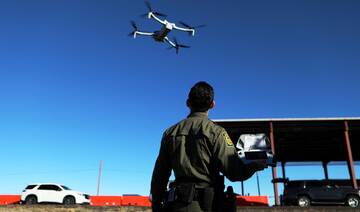
WASHINGTON: A secret military laser-based anti-drone system prompted the Trump administration to ban air traffic for more than seven hours in and out of the Texas border city of El Paso after US aviation officials raised drastic concerns about the safety of commercial air traffic.
The sudden closure of the nation’s 71st busiest airport by the Federal Aviation Administration stranded air travelers and disrupted medical evacuation flights overnight. The FAA initially said the closure would last 10 days for “special security reasons,” in what would have been an unprecedented action involving a single airport. Government and airline officials, speaking on condition of anonymity, said the FAA closed the airspace due to concerns that an Army laser-based counter-drone system could pose risks to air traffic. The two agencies had planned to discuss the issue at a February 20 meeting but the Army opted to proceed without FAA approval, sources said, which prompted the FAA to halt flights.
The Army’s laser was a direct-energy weapon called LOCUST and is manufactured by AeroVironment, a Virginia-based drone and counter-drone defense firm, two people briefed on the matter said. The company and the Pentagon did not immediately respond to requests for comment.
The FAA lifted its restrictions after the Army agreed to more safety tests before using the system, which is housed at Fort Bliss, next to El Paso International Airport.
The White House was surprised by the El Paso airspace closure, according to two sources speaking on condition of anonymity, touching off a scramble among law enforcement agencies to figure out what happened.
The FAA lifted the restrictions shortly after the situation was discussed in the office of White House chief of staff Susie Wiles, the sources said. US Transportation Secretary Sean Duffy, who oversees the FAA, said the closure had been prompted by a drone incursion by a Mexican drug cartel. However, a drone sighting near an airport would typically lead to a brief pause on traffic, not an extended closure, and the Pentagon says there are more than 1,000 such incidents each month along the US-Mexico border.
FAA Administrator Bryan Bedford met senators on Wednesday and told them there could have been better coordination about the move but did not answer detailed questions about why the agency initially planned a 10-day halt to flights, lawmakers said. Senate Commerce Committee chair Ted Cruz, a Texas Republican, and Senator Ben Ray Lujan, a New Mexico Democrat, both called for a classified briefing to get more answers. “The details of what exactly occurred over El Paso are unclear,” Cruz said.
The move had stranded numerous aircraft from Southwest Airlines, United Airlines and American Airlines at the airport, which handles about 4 million passengers annually.
El Paso Mayor Renard Johnson said the FAA did not reach out to the airport, the police chief or other local officials before shutting down the airspace.
“I want to be very, very clear that this should have never happened,” he said at a news conference.
The US official in charge of airport security, Transportation Security Administration Acting Administrator Ha Nguyen McNeill, also told Congress that she had not been notified.
“That’s a problem,” said Republican Representative Tony Gonzales of Texas, who said there are daily drone incursions along the US-Mexico border.
Airlines caught off guard
Airlines were also caught off-guard by the early Wednesday announcement. Southwest Airlines said the effects should be minimal for its 23 daily departures scheduled.
“FAA has not exactly acquitted itself credibly, objectively, or professionally,” said Bob Mann, an airline industry consultant. “The question should be, do we get an explanation?”
Trump has repeatedly threatened to deploy US military force against Mexican drug cartels, which have used drones to carry out surveillance and attacks on civilian and government infrastructure, according to US and Mexican security sources.
Mexican President Claudia Sheinbaum said at her daily news conference that her administration would try to find out what exactly happened but had no information about drone traffic along the border.
Tensions between the US and regional leaders have ramped up since the Trump administration mounted a large-scale military buildup in the southern Caribbean, attacked Venezuela and seized its president, Nicolas Maduro, in a military operation. The FAA curbed flights throughout the Caribbean after the attack, forcing the cancelation of hundreds of flights.

El Paso flights resume after US anti-drone system prompts sudden shutdown
Short Url
https://arab.news/94qh3
El Paso flights resume after US anti-drone system prompts sudden shutdown
- Aviation officials lifts restrictions after sudden overnight halt
- FAA, US Army in dispute over laser anti-drone system
Abduction of Mexican mine workers raises doubts over touted security improvements
CONCORDIA: Deep in the coastal mountains above the sparkling Pacific resort of Mazatlan, towns spaced along a twisting road appear nearly deserted, the quiet broken only by the occasional passing truck.
It was near one of these towns, Panuco, that 10 employees of a Canadian-owned silver and gold mine were abducted in late January. The bodies of five were located nearby and five more await identification.
Most residents of these towns have fled out of fear as two factions of the Sinaloa Cartel have been locked in battle since September 2024, said Fermín Labrador, a 68-year-old from the nearby village of Chirimoyos. Others, he said, were “invited” to leave.
The abduction of the mine workers under still unclear circumstances has raised fears locally and more widely generated questions about the security improvements touted by President Claudia Sheinbaum. She signaled her more aggressive stance toward drug cartels in Sinaloa with captures and drug seizures after she took office in late 2024. It has been one year since she sent 10,000 National Guard troops to the northern border to try to head off US tariffs over the cartels’ fentanyl trafficking, much of which comes from Sinaloa.
In January, Sheinbaum held up a sharp decline in homicide rates last year as evidence that her security strategy was working.
“What these kinds of episodes do is demolish the federal government’s narrative that insists that little by little they are getting control of the situation,” said security analyst David Saucedo. He said Sheinbaum had tried to “manage the conflict” while the Sinaloa Cartel’s internal war spread and split the state by obliging people “to take a side with one of the two groups.”
Fleeting security
The mine workers’ disappearance in late January brought more troops into the mountains as they searched by air and on the ground for signs of them.
Mexico’s Security Secretary Omar García Harfuch came to coordinate the operation. Several arrests were made and from information gleaned from suspects, authorities found the clandestine graves.
But the increased security presence has not brought peace of mind to residents.
Roque Vargas, a human rights activist for people displaced by violence in the area, said that “all of the hubbub has scattered the organized crime guys” but he worries they could return. He and others are also concerned about being mistaken for bad guys and attacked by security forces when they leave their town, because it has happened elsewhere in the state.
“We’ve practically been abandoned,” he said.
Cartel infighting triggered violence
Sheinbaum took office in October 2024, when Sinaloa was entering a new spiral of violence following the abduction of Sinaloa Cartel leader Ismael “El Mayo” Zambada by a son of former cartel leader Joaquín “El Chapo” Guzmán. Zambada was handed over to US authorities and his faction of the cartel went to war with the faction led by Guzmán’s sons.
Initially, residents of the state capital, Culiacan, were caught in the crossfire, but the conflict eventually extended statewide. US President Donald Trump took office last year and designated the Sinaloa Cartel, among others, a foreign terrorist organization, upping the pressure on Sheinbaum’s administration to get tough with the cartels.
By last April, Vizsla Silver Corp., the Vancouver, Canada-based mine owner, announced it was halting activities at the mine because of security concerns in the area. The pause lasted a month.
García Harfuch said this month that the suspects arrested were part of the Sinaloa Cartel faction loyal to Guzmán’s sons, known as “los Chapitos,” and had mistaken the workers for belonging to the other faction. There has not been an explanation for how the confusion could have occurred since Vizsla said the workers were taken from their site.
Mines and crime
Mines, along with other businesses like avocado groves and pipelines carrying gasoline, have long attracted organized crime’s attention in Mexico as a source of extortion payments or to steal the extracted material.
Saucedo, who has researched cases in Guanajuato, Sinaloa and Sonora, said he has also seen cases where mines take advantage of armed groups to control mine opponents.
The Mexican government has said it has no reports that Vizsla was extorted. Sheinbaum said that her administration would talk with all mining companies in Mexico “to offer the support they require.”
Vizsla did not respond to questions emailed by The Associated Press, but has said in statements that its focus is on finding the remaining workers and supporting the affected families. Relatives of one of the workers declined to comment.
Search for the missing
In the community of El Verde, in the foothills that rise between the ocean and the mountains, Marisela Carrizales stood beside banners bearing the photographs of missing people. The road leading to a site where clandestine graves were discovered was blocked by a police car. The surrounding town was silent.
“I’m here waiting for answers,” said Carrizales, who belongs to one of the many search collectives that have spread all over Mexico to look for the missing. She has been looking for her son, Alejandro, for 5 ½ years and had come to El Verde with more than 20 others also looking for missing relatives to monitor authorities’ work and demand that they help them look in other places, too. “We have information that there are a lot more graves here … we have to come to look for them.”
It was here in the first week of February that authorities found a clandestine grave and then more in the days that followed. The Attorney General’s office said 10 bodies were found in one location, five of which have been identified as the missing mine workers. But the Sinaloa state prosecutor’s office also said additional remains were found in four other grave sites around the community.
There are many missing. In Mazatlan, a Mexican tourist was taken from a bar in October. In January, a businessman disappeared. In February, six other Mexican tourists were abducted from a ritzy part of the resort city. A woman and a girl who were part of that group were later found alive outside the city, but the men who were with them have not appeared.
While the government has strengthened security in Mazatlan ahead of carnival celebrations, back in the mountains, teachers, doctors or even buses are not coming to many of the communities out of fear, Vargas said.
Labrador, the man from Chirimoyos, said that when he is lucky, he borrows a friend’s motorcycle to go to his job in a highway toll booth. When he can’t borrow it, he has to walk more than 5 miles (8 kilometers) through the mountains, because the person in charge of local public transportation disappeared in December.
It was near one of these towns, Panuco, that 10 employees of a Canadian-owned silver and gold mine were abducted in late January. The bodies of five were located nearby and five more await identification.
Most residents of these towns have fled out of fear as two factions of the Sinaloa Cartel have been locked in battle since September 2024, said Fermín Labrador, a 68-year-old from the nearby village of Chirimoyos. Others, he said, were “invited” to leave.
The abduction of the mine workers under still unclear circumstances has raised fears locally and more widely generated questions about the security improvements touted by President Claudia Sheinbaum. She signaled her more aggressive stance toward drug cartels in Sinaloa with captures and drug seizures after she took office in late 2024. It has been one year since she sent 10,000 National Guard troops to the northern border to try to head off US tariffs over the cartels’ fentanyl trafficking, much of which comes from Sinaloa.
In January, Sheinbaum held up a sharp decline in homicide rates last year as evidence that her security strategy was working.
“What these kinds of episodes do is demolish the federal government’s narrative that insists that little by little they are getting control of the situation,” said security analyst David Saucedo. He said Sheinbaum had tried to “manage the conflict” while the Sinaloa Cartel’s internal war spread and split the state by obliging people “to take a side with one of the two groups.”
Fleeting security
The mine workers’ disappearance in late January brought more troops into the mountains as they searched by air and on the ground for signs of them.
Mexico’s Security Secretary Omar García Harfuch came to coordinate the operation. Several arrests were made and from information gleaned from suspects, authorities found the clandestine graves.
But the increased security presence has not brought peace of mind to residents.
Roque Vargas, a human rights activist for people displaced by violence in the area, said that “all of the hubbub has scattered the organized crime guys” but he worries they could return. He and others are also concerned about being mistaken for bad guys and attacked by security forces when they leave their town, because it has happened elsewhere in the state.
“We’ve practically been abandoned,” he said.
Cartel infighting triggered violence
Sheinbaum took office in October 2024, when Sinaloa was entering a new spiral of violence following the abduction of Sinaloa Cartel leader Ismael “El Mayo” Zambada by a son of former cartel leader Joaquín “El Chapo” Guzmán. Zambada was handed over to US authorities and his faction of the cartel went to war with the faction led by Guzmán’s sons.
Initially, residents of the state capital, Culiacan, were caught in the crossfire, but the conflict eventually extended statewide. US President Donald Trump took office last year and designated the Sinaloa Cartel, among others, a foreign terrorist organization, upping the pressure on Sheinbaum’s administration to get tough with the cartels.
By last April, Vizsla Silver Corp., the Vancouver, Canada-based mine owner, announced it was halting activities at the mine because of security concerns in the area. The pause lasted a month.
García Harfuch said this month that the suspects arrested were part of the Sinaloa Cartel faction loyal to Guzmán’s sons, known as “los Chapitos,” and had mistaken the workers for belonging to the other faction. There has not been an explanation for how the confusion could have occurred since Vizsla said the workers were taken from their site.
Mines and crime
Mines, along with other businesses like avocado groves and pipelines carrying gasoline, have long attracted organized crime’s attention in Mexico as a source of extortion payments or to steal the extracted material.
Saucedo, who has researched cases in Guanajuato, Sinaloa and Sonora, said he has also seen cases where mines take advantage of armed groups to control mine opponents.
The Mexican government has said it has no reports that Vizsla was extorted. Sheinbaum said that her administration would talk with all mining companies in Mexico “to offer the support they require.”
Vizsla did not respond to questions emailed by The Associated Press, but has said in statements that its focus is on finding the remaining workers and supporting the affected families. Relatives of one of the workers declined to comment.
Search for the missing
In the community of El Verde, in the foothills that rise between the ocean and the mountains, Marisela Carrizales stood beside banners bearing the photographs of missing people. The road leading to a site where clandestine graves were discovered was blocked by a police car. The surrounding town was silent.
“I’m here waiting for answers,” said Carrizales, who belongs to one of the many search collectives that have spread all over Mexico to look for the missing. She has been looking for her son, Alejandro, for 5 ½ years and had come to El Verde with more than 20 others also looking for missing relatives to monitor authorities’ work and demand that they help them look in other places, too. “We have information that there are a lot more graves here … we have to come to look for them.”
It was here in the first week of February that authorities found a clandestine grave and then more in the days that followed. The Attorney General’s office said 10 bodies were found in one location, five of which have been identified as the missing mine workers. But the Sinaloa state prosecutor’s office also said additional remains were found in four other grave sites around the community.
There are many missing. In Mazatlan, a Mexican tourist was taken from a bar in October. In January, a businessman disappeared. In February, six other Mexican tourists were abducted from a ritzy part of the resort city. A woman and a girl who were part of that group were later found alive outside the city, but the men who were with them have not appeared.
While the government has strengthened security in Mazatlan ahead of carnival celebrations, back in the mountains, teachers, doctors or even buses are not coming to many of the communities out of fear, Vargas said.
Labrador, the man from Chirimoyos, said that when he is lucky, he borrows a friend’s motorcycle to go to his job in a highway toll booth. When he can’t borrow it, he has to walk more than 5 miles (8 kilometers) through the mountains, because the person in charge of local public transportation disappeared in December.
© 2026 SAUDI RESEARCH & PUBLISHING COMPANY, All Rights Reserved And subject to Terms of Use Agreement.