NAIROBI: Doctors Without Borders (MSF) on Friday denounced restrictions on humanitarian access in South Sudan as fighting has intensified between rival factions over the past month.
Fighting erupted in Jonglei state, north of the capital Juba, in late December, in the latest clashes between factions loyal to President Salva Kiir and his long-time rival, Riek Machar, displacing at least 180,000 people according to the United Nations.
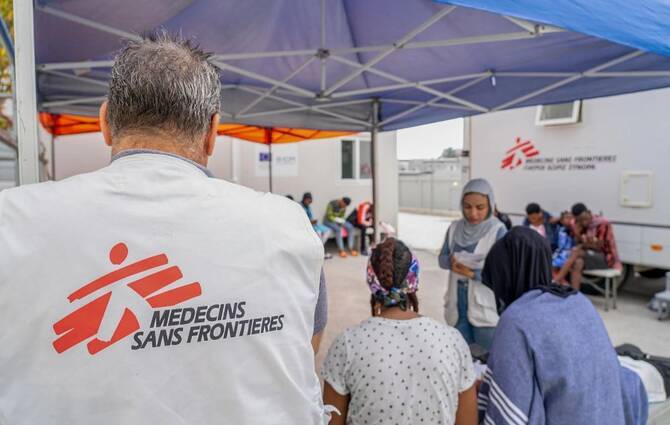
MSF is the only health provider to almost 400,000 people in the state, it said, saying the government has blocked humanitarian flights to the Lankien, Pieri, and Akobo areas, preventing them from supplying medicines and personnel as well as evacuating critical patients.
Its team in Pieri was forced to evacuate its facility on Thursday due to the imminent danger of armed conflict, it said in a statement, discharging patients and grabbing emergency kits as they fled the town with the local population.
“Patients will die if the government continues to block humanitarian and medical access in Jonglei,” said Abdalla Hussein, MSF desk manager for South Sudan in the statement.
“Imposing restrictions on humanitarian aid and preventing people from accessing health care is a crude political maneuver... This must stop immediately.”
On Thursday, UN Secretary-General Antonio Guterres said he was “deeply concerned” by the violence in Jonglei, “which has caused many deaths, injuries and the reported displacement of 180,000 civilians.”
The government claimed this week it was “not at war” and that the security operation in Jonglei was a “necessary measure aimed at halting the advance of rebel forces.”
South Sudan is the world’s youngest country and has been beset by civil war, poverty and massive corruption since it was formed in 2011.
Supporters of Kiir and Machar fought a civil war from 2013 and 2018 that killed an estimated 400,000 people.
They subsequently formed a power-sharing government under a UN-backed peace deal, but it has been unraveling over the past year, with Machar jailed and put on trial for “crimes against humanity.”


![]()

MSF denounces denial of humanitarian access in South Sudan
Short Url
https://arab.news/n3qkv
MSF denounces denial of humanitarian access in South Sudan
- MSF is the only health provider to almost 400,000 people in the state
- “Patients will die if the government continues to block humanitarian and medical access in Jonglei,” said Hussein


Latest updates


© 2026 SAUDI RESEARCH & PUBLISHING COMPANY, All Rights Reserved And subject to Terms of Use Agreement.