

Pakistanis among 44 migrants rescued by aid ship off Libyan coast

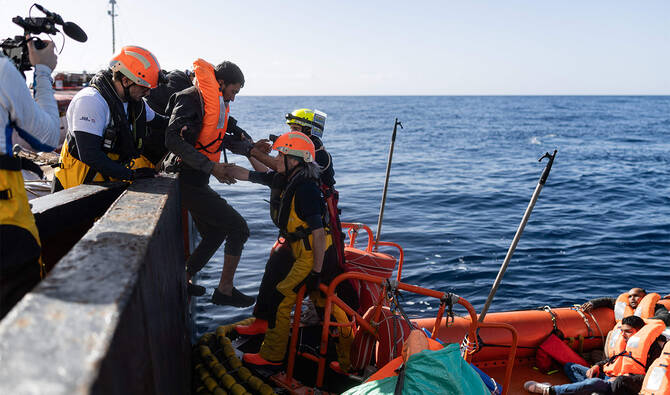
Crew members of the "Ocean Viking" rescue ship, help a migrant to board a RHIB (Rigid inflatable boat) during an evacuation from the Sider, a merchant ship, in the search-and-rescue zone in international waters off the coast of Libya, on January 17, 2026. (AFP)
Short Url
Updated 19 January 2026
Follow

Pakistanis among 44 migrants rescued by aid ship off Libyan coast

  • Survivors rescued after days at sea on unseaworthy boat in international waters
  • Pakistanis have featured in several deadly Mediterranean migrant disasters in recent years

Crew members of the humanitarian rescue ship Ocean Viking evacuated and provided first aid to 44 migrants stranded aboard a merchant vessel in international waters off the Libyan coast, the NGO SOS Mediterranee said on Monday.

The group, originating mainly from Bangladesh, Pakistan and Egypt, had been rescued earlier from an unseaworthy fiberglass boat and later transferred to the merchant ship before the Ocean Viking intervened, according to the organization.

Libya, about 300 kilometers from Italy, remains one of the main departure points in North Africa for migrants attempting the dangerous Mediterranean crossing, despite repeated warnings from humanitarian agencies about abuse, exploitation and high fatality rates along the route.

Migrants often depart Libya after months in detention centers or informal holding sites, boarding overcrowded and unsafe vessels operated by smuggling networks. Delays in rescue frequently leave survivors severely weakened, aid groups say.

“These 44 people, they are mainly from Bangladesh, Pakistan, and Egypt. They departed reportedly from Benghazi (Libya) some five or six days ago. And they are now safe on board the Ocean Viking, recovering,” Francesco Creazzo, spokesperson for SOS Mediterranee, said.
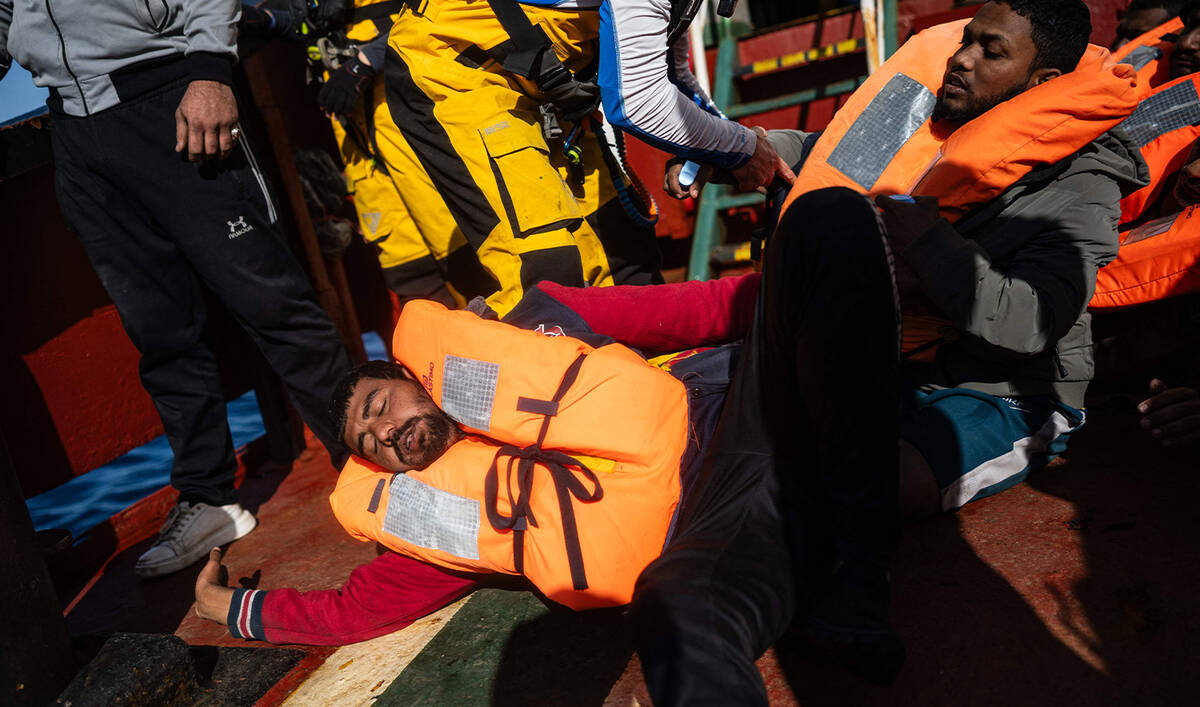


A migrant falls as crew members of the "Ocean Viking" rescue ship help migrants to wear life jackets before being evacuated from the Sider, a merchant ship, by a RHIB (Rigid inflatable boat), in the search-and-rescue zone in international waters off the coast of Libya, on January 17, 2026. (AFP)

Creazzo said the migrants were found in severe physical distress when evacuated.

“They were exhausted, coughing of dehydration, extremely weak, some couldn’t walk,” he added.

The Ocean Viking, an ambulance ship operated by SOS Mediterranee, regularly conducts search-and-rescue missions in the central Mediterranean, one of the world’s deadliest migration routes. According to international organizations, thousands of people have died or gone missing in the Mediterranean over the past decade while attempting to reach Europe.
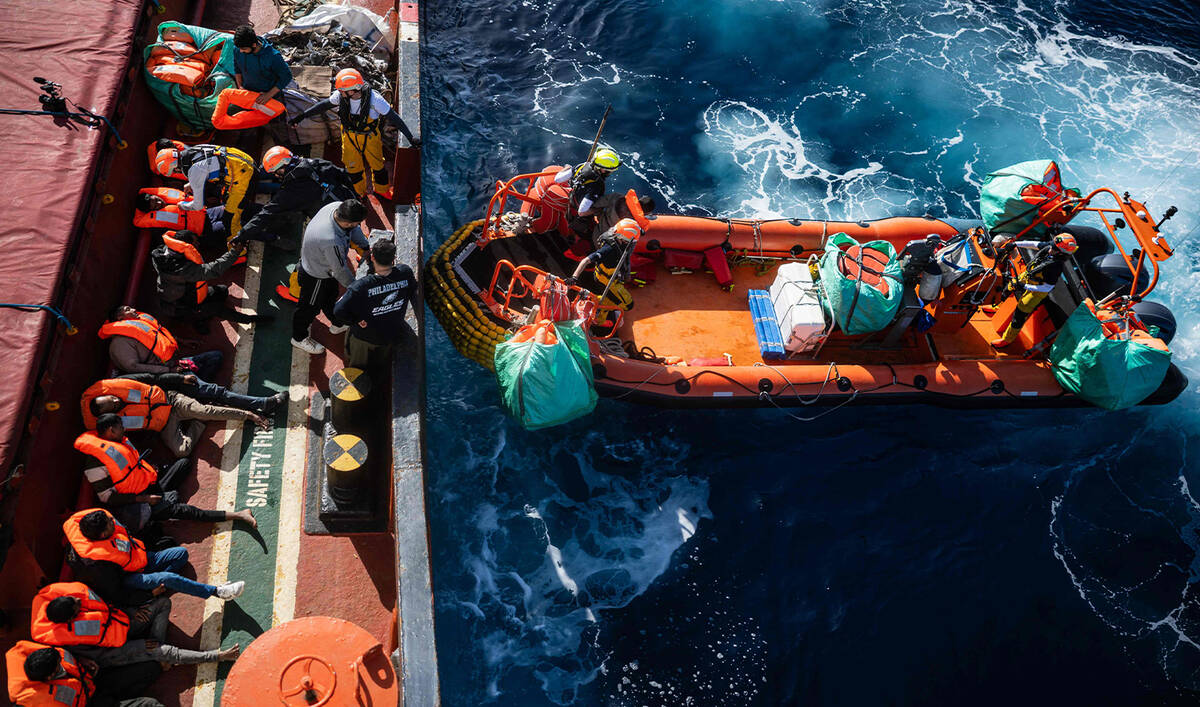


Crew members of the "Ocean Viking" rescue ship, help migrants to board a RHIB (Rigid inflatable boat) during their evacuation from the Sider, a merchant ship, in the search-and-rescue zone in international waters off the coast of Libya, on January 17, 2026. (AFP)

The latest rescue comes amid a series of deadly migrant disasters in the Mediterranean in recent years that have involved Pakistani nationals. In June 2023, at least several hundred migrants died when the Adriana, a fishing trawler carrying migrants from Pakistan and other countries, capsized off the coast of Greece in one of the deadliest maritime disasters in the region in a decade.
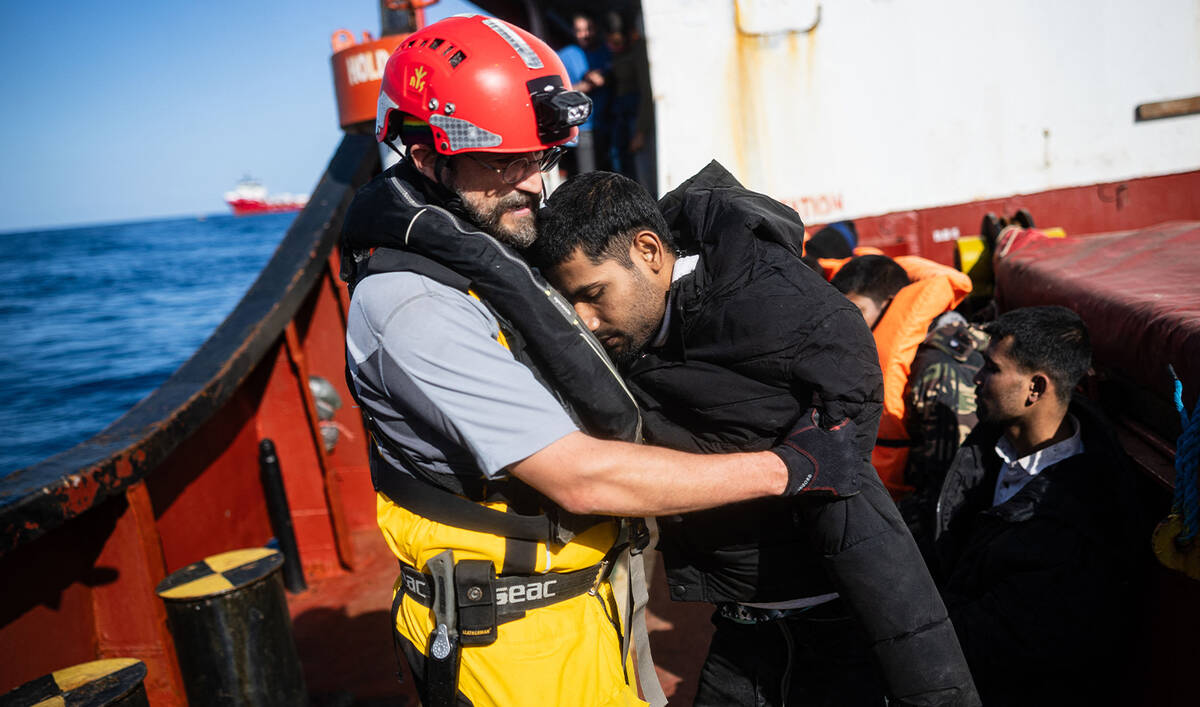


A crew member of the "Ocean Viking" rescue ship holds a migrant before his evacuation from the Sider, a merchant ship, by a RHIB (Rigid inflatable boat), in the search-and-rescue zone in international waters off the coast of Libya, on January 17, 2026. (AFP)

Earlier incidents have also seen Pakistani migrants perish in shipwrecks off Italy, Tunisia and Libya, highlighting the persistent risks faced by people attempting irregular sea crossings to Europe. Pakistani authorities have repeatedly urged citizens not to undertake the journey, while international agencies warn that smugglers continue to exploit economic hardship and conflict to lure migrants onto unsafe boats.

Karachi port sees rise in transshipment activity as Middle East tensions reshape shipping routes

Updated 4 sec ago
Follow

Karachi port sees rise in transshipment activity as Middle East tensions reshape shipping routes

  • Two vessels dock simultaneously at Karachi terminals as regional cargo redistribution grows
  • New feeder service has been launched to link Karachi with UAE hubs Fujairah and Khor Fakkan

KARACHI: Karachi Port is seeing increased transshipment activity and new feeder links to Gulf logistics hubs as shipping lines adjust regional routes amid tensions linked to the war involving Iran, port authorities said on Thursday.

Two vessels carrying transshipment cargo docked simultaneously at the port, according to a statement, highlighting its growing role in redistributing containers across Middle Eastern shipping routes.

The development comes as the conflict in the Middle East raises concerns about disruptions to critical energy and trade corridors.

The war has already pushed up oil and gas prices and heightened risks for shipping across Gulf waters, prompting logistics companies to reassess routes and rely more heavily on regional hubs outside potential conflict zones.

“The simultaneous handling of transshipment containers at Karachi Port highlights the port’s strong operational capacity, efficient port infrastructure, and strategic geographic advantage in supporting regional maritime logistics, container shipping operations, and uninterrupted international trade during ongoing disruptions in global shipping routes,” the official statement said.

“As transshipment cargo volumes continue to increase, Karachi Port is steadily strengthening its reputation as a key maritime logistics hub in South Asia and the Middle East regions, further reinforcing Pakistan’s role in international shipping and maritime connectivity,” it added.

FEEDER SERVICE

Separately, Karachi Gateway Terminal (Private) Limited (KGTL) said a dedicated feeder service linking Karachi with the UAE ports of Fujairah and Khor Fakkan has begun operations, strengthening connectivity between Pakistan and key Gulf transshipment hubs.

The inaugural voyage of the service arrived at the terminal on the evening of March 11, marking the start of regular operations aimed at maintaining reliable links between Pakistani exporters and global shipping networks.

“The commencement of this feeder service reflects KGTL’s continued commitment to strengthening Pakistan’s maritime connectivity and supporting the country’s trading community,” Khurram Aziz Khan, KGTL chief executive officer, said in a statement.

“By linking Karachi directly with major UAE transshipment hubs, this service provides importers and exporters with reliable access to global shipping networks while reinforcing the role of Karachi Gateway Terminal as a key gateway for international trade,” he added.

Chairman of the Karachi Port Trust Rear Admiral (r) Shahid Ahmed said stronger links with regional hubs would help facilitate smoother cargo movement.

“The introduction of this feeder service further enhances Karachi Port’s connectivity with key regional hubs and supports Pakistan’s growing trade requirements,” he said.

“Strengthening maritime links with the UAE will help facilitate smoother cargo movement while providing greater flexibility for the country’s trading community.”