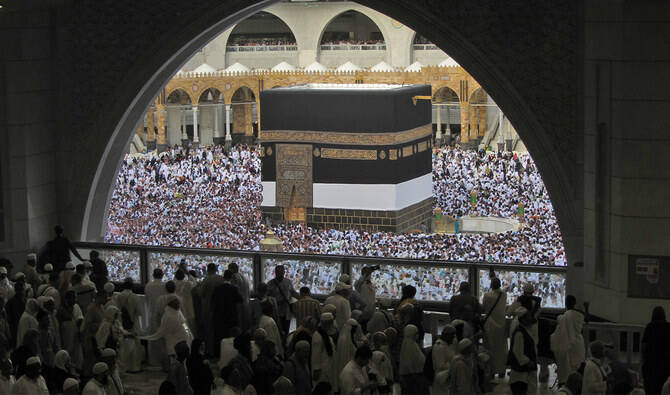

ISLAMABAD: Pakistan has formally requested Saudi Arabia to increase its Hajj quota to 230,000, arguing that the allocation should be adjusted in proportion to the country’s population of 240 million to allow more people to perform the pilgrimage, state broadcaster Radio Pakistan reported this week.
Saudi Arabia has allocated Pakistan a quota of 179,210 pilgrims for Hajj 2026, of which around 118,000 seats have been reserved under the government scheme, while the remaining quota has been allocated to private tour operators, according to official figures.
“Pakistan has formally requested the Saudi government to increase its Hajj quota to 230,000, in proportion to the country’s population, to allow more people to undertake the pilgrimage,” Minister for Religious Affairs and Interfaith Harmony Sardar Muhammad Yousaf said while talking to the media in Islamabad on Wednesday, according to Radio Pakistan.
Answering a question, the minister said over 38,000 intending pilgrims will travel from Islamabad under the Route to Makkah project, while efforts are being made to expand this facility to Lahore. The initiative allows pilgrims to complete Saudi immigration and customs formalities at departure airports in Pakistan, enabling them to enter the kingdom as domestic travelers upon arrival and reducing waiting times during the pilgrimage season. At present, intending pilgrims are availing the facility at Islamabad and Karachi only.
The minister said the government has finalized arrangements for Hajj 2026 in line with guidance from the Saudi authorities.
Earlier, addressing participants of a Hajj training session, he said the training program had been made mandatory to ensure that intending pilgrims were fully aware of Hajj rituals and administrative procedures. He added that the first phase of Hajj training programs will continue across the country until February.
He also said over 450,000 applications were received for Hajj registration this year, which he said reflected growing public trust in the government’s arrangements.