

 Creative labor and the value of cultural investment in Saudi Arabia
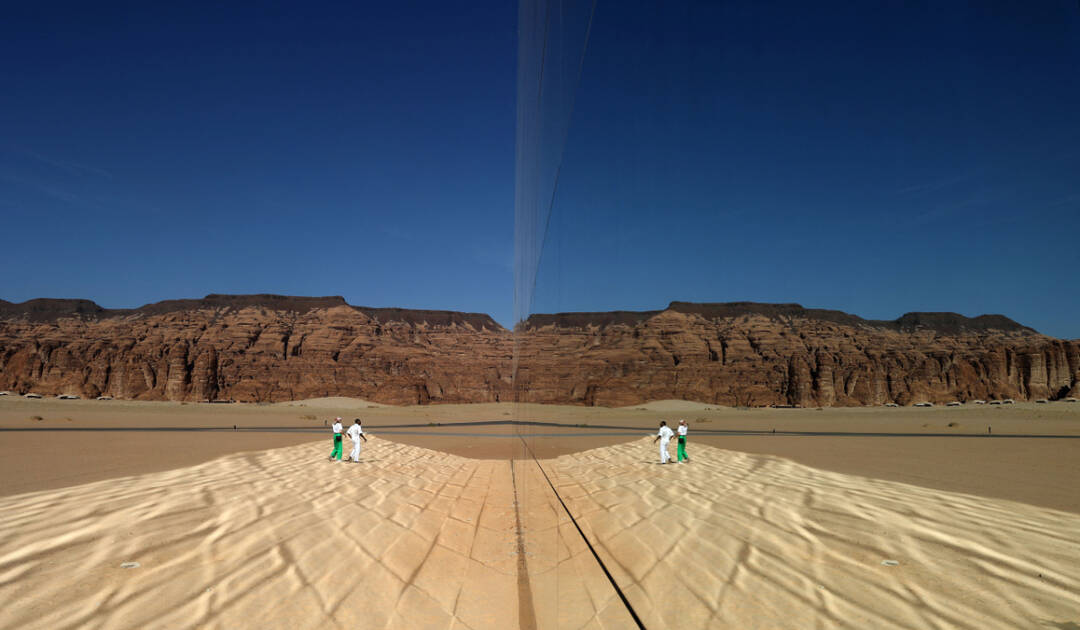

As we reflect on 2025 in Saudi Arabia’s cultural and creative industry, one theme emerges consistently: cultural investment. This has taken a two-pronged form: on the one hand, direct funding from government and private entities; on the other, the activation of new public and private initiatives operating at both large-scale and community levels. Together, these approaches form a strong foundation for economic resilience and the long-term sustainability of creative labor.
This focus was visible locally through initiatives launched by the Ministry of Culture, such as the Cultural Investment Forum, as well as large-scale projects and impactful programs hosted by institutions such as the Misk Art Institute, Ithra, the Royal Commission for AlUla, the Diriyah Gate Development Authority, and the Royal Commission for Riyadh City.
Internationally, the Saudi cultural presence reached historic venues and global audiences, from exhibitions and performances in Europe and Asia to high-profile cultural diplomacy moments. Most notably, the Saudi National Orchestra and Choir took center stage at the iconic Royal Opera in the Chateau de Versailles, and in London.
Saudi Arabia’s cultural investments increasingly reverberate beyond its borders. International outreach in the creative sector was evident from Saudi Cultural Week in Osaka to Diriyah’s presence at Outernet London, where Diriyah, known as “The City of Earth,” was introduced for the second time at the venue to global audiences as a living historic and cultural destination.
Saudi Arabia’s economic and cultural policy interventions have increasingly placed culture and creativity as central pillars of national development
In the years following the launch of Vision 2030, Saudi Arabia’s economic and cultural policy interventions have increasingly placed culture and creativity as central pillars of national development. This has made cultural work — once modest and informal — more visible and has enabled the scaling of the creative sector through scholarships, training programs, grants, and institutional support.
Today, the growth of the creative industries continues to generate employment, with targets exceeding 230,000 roles across the cultural ecosystem. Equally important is the effective use of resources. With more than SR81 billion invested in the cultural sector and ambitions to reach SR24 billion in cultural exports by 2030, investment is expected to be matched by transparent access to training, clearer pathways into technology and adjacent sectors, and research-led innovation ecosystems.
Minister of Culture Prince Badr bin Abdullah bin Farhan stated that “the real investment is in the Saudi creative.” Creative education and cultural practice training are now recognized as vital contributors to a wide-reaching sector that touches the daily lives of Saudis and shapes global perceptions of the Kingdom.
However, it is important to note that cultural employment differs from traditional labor models. It requires adaptability, lifelong learning, supportive infrastructure, and institutional frameworks that recognize the realities of freelance and interdisciplinary work.
One of the most impactful forms of cultural investment is mentorship. The Visual Arts Commission’s mentorship program, now in its third edition, stands as a strong example of how structured dialogue between emerging creatives and established practitioners can empower the former.
Having mentored in this program in 2025 and engaged closely with mentees, I witnessed firsthand how mentorship functions as cultural infrastructure. Going forward, it is vital to recognize that cultural workers are often required to invest continuously in training and professional development, constantly educating themselves about new technologies and navigating uncertain career pathways.
In fact, many of the jobs that culture and arts graduates will hold in the next decade do not yet exist.
Tremendous initiatives and flagship moments, international events, large-scale investments, and targeted funding and support have been instrumental in highlighting the cultural sector’s importance in the Kingdom in 2025, with more to come in 2026.
• Dr. Ghadah W. Alharthi is an international cultural adviser and an associate professor specializing in culture and innovation at Central Saint Martins, University of the Arts London. X: @ GhadahWA


