

Where We Are Going Today: Savory cinnamon rolls at Darcin

1 / 5
Photo/Darcin website/menu
2 / 5
Photo/Darcin website/menu
3 / 5
Photo/Darcin website/menu
4 / 5
Photo/Darcin website/menu
5 / 5
Photo/Darcin website/menu
Short Url
Updated 12 January 2026
Follow

Where We Are Going Today: Savory cinnamon rolls at Darcin

  • The labneh zaatar roll was also a great choice, similar to a manakeesh with its creamy and aromatic flavor

Have you ever had a savory cinnamon bun? Neither had we, but Darcin has changed the game. As their slogan says, it’s “not your ordinary spice — it’s cinnamon with attitude.”

The self-proclaimed “Home of the Cinnamon Roll” is in Riyadh’s Al-Rayyan district. It invites you to its outdoor seating area through a wall of natural greenery, equipped with heating lamps that make it the perfect spot to spend a cozy winter night reading a book or catching up with friends. 

We started off with the halloumi pesto roll, which was savory, indulgent and vibrant with creamy basil flavors. The bun itself was extremely soft, almost like a Japanese milk bun, and the halloumi was well cooked and topped with sundried tomatoes. 

The labneh zaatar roll was also a great choice, similar to a manakeesh with its creamy and aromatic flavor.

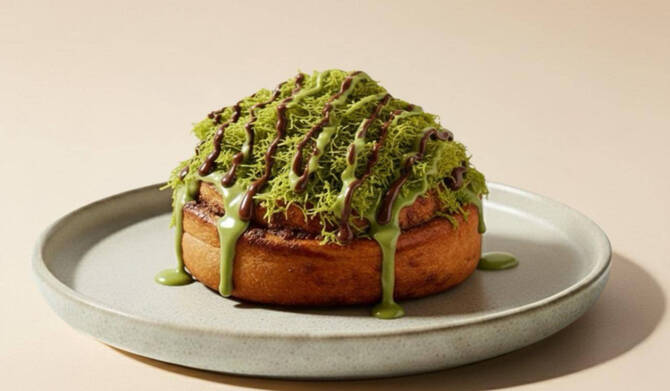
We capped our meal by indulging our sweet tooth; there are a decent number of options, ranging from a mixed berry cheesecake and pistachio kinafeh to halawa or a creamy tiramisu. It was tough to pick from all the mouthwatering cinnamon rolls on offer, but we settled on the maple pecan, which was great if you’re not looking for something too intensely sweet.

The coffee was also great, and the venue was quite busy for a weekend evening, with all the outdoor seating occupied at some point.

One thing to note is that we didn’t get the best service when we were there. The staff were not especially helpful in providing recommendations, oddly telling us they had no savory options until we proved otherwise by pointing at the menu. 

Regardless, it’s a lovely place to visit if you are seeking new places to hang out in Riyadh or want to grab a treat to take home. They have a selection of sharing boxes that would be great for a night in or a large gathering. 


Chef serves up a taste of Spain at Ithra Cultural Days in Saudi Arabia 

Updated 20 January 2026
Follow

Chef serves up a taste of Spain at Ithra Cultural Days in Saudi Arabia 

DHAHRAN: Among the attractions of the Ithra Cultural Days: Spain at the King Abdulaziz Center for World Culture (Ithra), visitors can try a tantalizing selection of Spanish foods — none more renowned than its famous paella. 

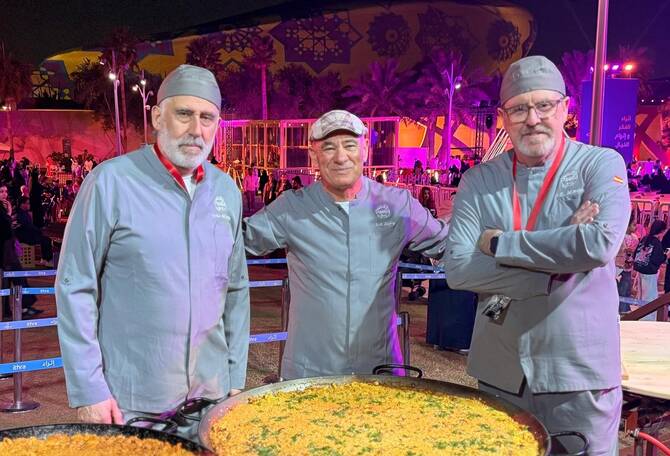
Arab News spoke with chef Jose Zafra at the event, which runs until Jan. 31, who flew in from Spain to offer a taste of his homeland to the people of Saudi Arabia. 

A “master rice cook, paella researcher and promoter,” according to his business card, his logo is even designed around the recognizable cooking pan and the phrase “Pasion por la paella,” or “Passion for paella.”

“That's why the pan is round because people get around and eat all together — to share culture and passion and life,” Zafra told Arab News as foodies lined up behind him, eager to try a plateful.

Arab News spoke with chef Jose Zafra at the event, which runs until Jan. 31. (Supplied)

“It’s not just a food. It’s a link, a connection. Paella is the symbol of unity and sharing. And people now are going to try it — authentic Spanish paella in Saudi Arabia.”

The word “paella” comes from the Latin “patella,” meaning pan.

In Spanish, it refers both to the rice dish itself and the pan in which it is cooked.

Paella was introduced to Spain during Moorish rule. It originated in Valencia, on the country’s eastern coast, as a rural peasant dish that was cooked by farm workers over open fires using local ingredients. Over time, the dish’s popularity spread and other versions evolved, for example featuring seafood and meat.

It is different to Saudi Arabia’s kabsa, a communal dish which similarly uses rice and meat. Kabsa is cooked in a deep pot to ensure the rice stays soft and aromatic from the meaty broth, whereas paella uses a wide, shallow pan to fully absorb flavors evenly, often creating a prized crispy layer at the bottom. 

Visitors to Ithra’s Culture Days can enjoy the flavors of Spain made with a sprinkling of local love — true to the origins of the dish.

Find the scoops of Spanish joy near the food truck area and try chicken paella, seafood paella —or both! You will see the signs offering a plate, at SR35 ($9) for chicken and SR40 for seafood, or let your nose lead you there.

Zafra concluded: “The chicken is from here, the seafood is from here — and the passion, well, that is from Spain.”