

Pakistan rejects India’s ‘irresponsible assertions’ after FM Jaishankar’s ‘bad neighbors’ remarks

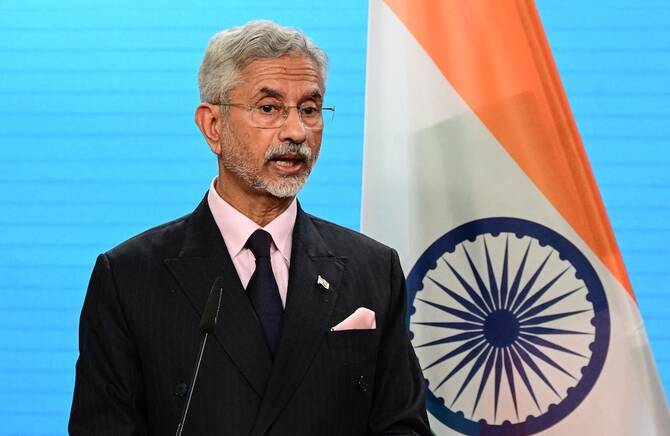
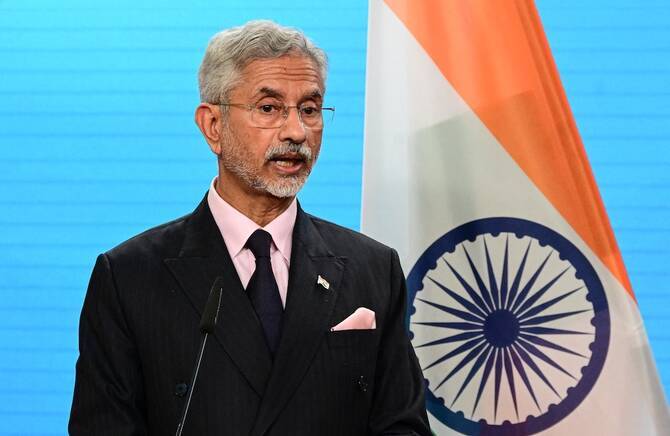
India’s Minister of External Affairs Subrahmanyam Jaishankar speaks during a press conference in Berlin on May 23, 2025. (AFP file photo)
Short Url
Updated 03 January 2026
Follow

Pakistan rejects India’s ‘irresponsible assertions’ after FM Jaishankar’s ‘bad neighbors’ remarks

  • Indian FM Jaishankar accused Pakistan of fomenting militancy, backed New Delhi’s decision to put Indus Waters Treaty in abeyance
  • Islamabad calls the remarks an attempt to deflect attention from India’s ‘troubling record as a neighbor,’ vows to safeguard rights

ISLAMABAD: Pakistan on Saturday rejected “irresponsible assertions” made by Indian External Affairs Minister S. Jaishankar after his remarks about “bad neighbors” and the 1960 Indus Waters Treaty (IWT) between the two countries.

Jaishankar mentioned about “bad neighbors” at an event in Madras on Friday and said that New Delhi had a right to defend itself. “When you have bad neighbors... if you look to the one to the West, if a country decides that they will deliberately, persistently, unrepentantly continue with terrorism, we have a right to defend our people,” he was quoted as saying by The Hindu newspaper.

The remarks came months after New Delhi blamed Pakistan for a militant attack in Indian-administered Kashmir and conducted missile strikes inside Pakistan. Islamabad, which denied involvement in the Kashmir attack, responded to the strikes, leading to a four-day military conflict that saw the use of armed drones, fighter jets and artillery between the neighbors in May.

In a statement, Pakistani foreign office spokesman Tahir Andrabi said Islamabad firmly rejects the irresponsible assertions made by the Indian external affairs minister, describing the remarks as an attempt to deflect attention from India’s own “troubling record as a neighbor that promotes terrorism and contributes to regional instability.”

“India’s documented involvement in promoting terrorist activities in the region, particularly in Pakistan, is well known. The case of Commander Kulbhushan Jadhav remains a stark example of organized, state-sponsored terrorism directed against Pakistan,” he said.

“Equally concerning are recurring instances of extraterritorial killings, sabotage through proxies, and covert support to terrorist networks.”

Jadhav, an Indian navy officer who Islamabad said had been working with Indian spy agency, RAW, when Pakistani agencies arrested him in Balochistan in 2016. He was later sentenced to death by a Pakistani military court for alleged espionage. India disputes the conviction and has challenged it at the International Court of Justice.

Pakistan and India routinely accuse each other of supporting militant groups waging attacks against the other. The two countries have fought multiple wars, including two of them over the disputed region of Kashmir, since their independence from British rule in 1947. Both rule the region in part but claim it in full.

Jaishankar also spoke on Friday about the IWT that divides control of the Indus basin rivers between the neighbors and ensures water for 80 percent of Pakistani farms. India announced in April, following the Kashmir attack, that it was putting the 1960 World Bank-mediated treaty in abeyance.

“Many years ago, we agreed to a water-sharing arrangement — the belief was it was gesture of goodwill — because of good neighborliness we were doing it … but if you have decades of terrorism, there is no good neighborliness and you don’t get the benefit of good neighborliness,” Jaishankar was quoted as saying.

Pakistan foreign office spokesman Andrabi said the IWT is an international agreement concluded in good faith and at a considerable cost.

“Any unilateral violation of the Treaty by India would undermine regional stability and call into question its credibility as a state that claims to respect international legal obligations,” he said.

“Pakistan will take all necessary measures to safeguard its legitimate rights under the Treaty.”


Pakistan alarmed as Russia-Ukraine conflict intensifies, calls for immediate ceasefire

Updated 13 sec ago
Follow

Pakistan alarmed as Russia-Ukraine conflict intensifies, calls for immediate ceasefire

  • Pakistan envoy urges both sides to resolve ongoing conflict through peaceful means during Security Council briefing
  • Russia last Friday fired hypersonic ballistic missile capable of carrying nuclear warhead at Ukraine, drawing criticism

ISLAMABAD: Pakistan’s UN Ambassador Iftikhar Ahmad this week expressed alarm as the Russia-Ukraine conflict intensifies, calling for an immediate ceasefire and demanding both countries resolve their issues peacefully through dialogue. 

The development takes place days after Russia last week fired an intermediate-range hypersonic ballistic missile at Ukraine called Oreshnik. The move drew sharp criticism as the missile is capable of carrying nuclear and conventional warheads. Russia said it fired the Oreshnik in response to what Moscow says was an attempted Ukrainian drone attack on Dec. 29 against one of Putin’s residences in northern Russia. Ukraine denies Moscow’s claims. 

February 2026 will mark four years since Russia launched its full-scale invasion of Ukraine, triggering the worst armed conflict in Europe since World War II. The war has killed hundreds of thousands of people and forced millions to flee their homes.

“We are alarmed by the recent intensification in fighting with escalation in attacks from both sides, further worsening the already dire humanitarian situation,” Ahmad said on Monday during a UN Security Council briefing on the Ukraine conflict. 

“Such actions not only perpetuate the conflict, but they also undermine trust, and the ongoing efforts for peace.”

The Pakistani envoy urged both sides to abide by the principles of international law and ensure civilians and civilian infrastructure are protected during the conflict. He said Pakistan’s position on resolving the issue through dialogue has not changed. 

“Now, more than ever before, the overwhelming global opinion is on the side of ending this conflict through peaceful means,” Ahmad said. “This can only be achieved through a sustained, meaningful and structured dialogue.”

US President Donald Trump has been pushing both sides to strike a deal to halt the conflict, running shuttle diplomacy between Ukraine’s Volodymyr Zelensky and Russia’s Vladimir Putin in a bid to get an agreement across the line. Plans to broker peace collapsed after an initial 28-point plan, which largely adhered to Moscow’s demands, was criticized by Kyiv and Europe.

Ahmad appreciated the US for attempting to resolve the conflict through peaceful means. 

“We hope that all sides would make full use of the ongoing diplomacy, demonstrate genuine political will, and engage constructively to make meaningful strides toward a peaceful and negotiated settlement of the conflict, starting with an immediate ceasefire,” he said.