

Blair pressured UK officials over case against soldiers implicated in death of Iraqi

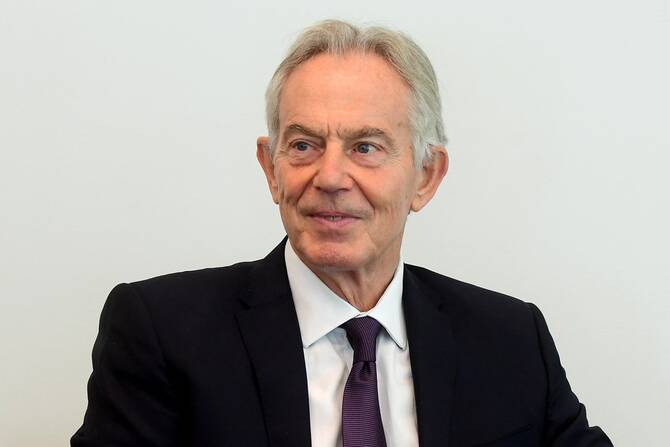
Former British Prime Minister Tony Blair. (File/AFP)
Short Url
Updated 30 December 2025
Follow

Blair pressured UK officials over case against soldiers implicated in death of Iraqi

  • Newly released files suggest ex-PM took steps to ensure cases were not heard in civilian court
  • Baha Mousa died in British custody in 2003 after numerous assaults by soldiers over 36 hours

LONDON: Former UK Prime Minister Tony Blair pressured officials not to let British soldiers be tried in civil courts on charges related to the death of an Iraqi man in 2003, The Guardian reported on Tuesday.

Baha Mousa died in British Army custody in Basra during the Iraq War, having been repeatedly assaulted by soldiers over a 36-hour period.

Newly released files show that in 2005 Antony Phillipson, Blair’s private secretary for foreign affairs, had written to the prime minister saying the soldiers involved would be court-martialed, but “if the (attorney general) felt that the case were better dealt with in a civil court he could direct accordingly.”

The memo sent to Blair was included in a series of files released to the National Archives in London this week. At the top of the memo, he wrote: “It must not (happen)!”

In other released files, Phillipson told Blair that the attorney general and Ministry of Defence could give details on changes to the law they were proposing at the time so as to avoid claims that British soldiers could not operate in a war zone for fear of prosecution. 

In response, Blair said: “We have, in effect, to be in a position where (the) ICC (International Criminal Court) is not involved and neither is CPS (Crown Prosecution Service). That is essential. This has been woefully handled by the MoD.”

In 2005, Cpl Donald Payne was court-martialed, jailed for a year and dismissed from the army for his role in mistreating prisoners in custody, one of whom had been Mousa.

Payne repeatedly assaulted, restrained and hooded detainees, including as part of what he called “the choir,” a process by which he would kick and punch prisoners at intervals so that they made noise he called “music.”

He became the first British soldier convicted of war crimes, admitting to inhumanely treating civilians in violation of the 2001 International Criminal Court Act.


Indonesia reaffirms Yemen’s territorial integrity, backs stability efforts amid tensions

Updated 01 January 2026
Follow

Indonesia reaffirms Yemen’s territorial integrity, backs stability efforts amid tensions

  • Statement comes after Saudi Arabia bombed a UAE weapons shipment at Yemeni port city
  • Jakarta last week said it ‘appreciates’ Riyadh ‘working together’ with Yemen to restore stability

JAKARTA: Indonesia has called for respect for Yemen’s territorial integrity and commended efforts to maintain stability in the region, a day after Saudi Arabia bombed a weapons shipment from the UAE at a Yemeni port city that Riyadh said was intended for separatist forces. 

Saudi Arabia carried out a “limited airstrike” at Yemen’s port city of Al-Mukalla in the southern province of Hadramout on Tuesday, following the arrival of an Emirati shipment that came amid heightened tensions linked to advances by the UAE-backed Southern Transitional Council in the war-torn country. 

In a statement issued late on Wednesday, the Indonesian Ministry of Foreign Affairs said it “appreciates further efforts by concerned parties to maintain stability and security,” particularly in the provinces of Hadramout and Al-Mahara. 

“Indonesia reaffirms the importance of peaceful settlement through an inclusive and comprehensive political dialogue under the coordination of the United Nations and respecting Yemen’s legitimate government and territorial integrity,” Indonesia’s foreign affairs ministry said. 

The latest statement comes after Jakarta said last week that it “appreciates the efforts of the Kingdom of Saudi Arabia, as well as other relevant countries, working together with Yemeni stakeholders to de-escalate tensions and restore stability.” 

Saudi Arabia leads the Coalition to Restore Legitimacy in Yemen, which includes the UAE and was established in 2015 to combat the Houthi rebels, who control most of northern Yemen. 

Riyadh has been calling on the STC, which initially supported Yemen’s internationally recognized government against the Houthi rebels, to withdraw after it launched an offensive against the Saudi-backed government troops last month, seeking an independent state in the south.  

Indonesia has also urged for “all parties to exercise restraint and avoid unilateral action that could impact security conditions,” and has previously said that the rising tensions in Yemen could “further deteriorate the security situation and exacerbate the suffering” of the Yemeni people. 

Indonesia, the world’s biggest Muslim-majority country, maintains close ties with both Saudi Arabia and the UAE, which are its main trade and investment partners in the Middle East.