WEST PALM BEACH, Florida: President Donald Trump said Thursday night that he’d launched a “powerful and deadly” US strike against Daesh forces in Nigeria, after spending weeks accusing the West African country’s government of failing to rein in the persecution of Christians.
“Tonight, at my direction as Commander in Chief, the United States launched a powerful and deadly strike against Daesh Terrorist Scum in Northwest Nigeria, who have been targeting and viciously killing, primarily, innocent Christians, at levels not seen for many years, and even Centuries!” the president posted on his social media site.
His post did not include information about how the strike was carried out, nor what effects it had. But the US Africa Command posted on X that it had “conducted a strike at the request of Nigerian authorities in Soboto State killing multiple Daesh terrorists.”
“Lethal strikes against Daesh demonstrate the strength of our military and our commitment to eliminating terrorist threats against Americans at home and abroad,” its post said.
The Defense Department did not immediately answer requests for comment.
In response to Trump’s previous criticisms, Nigeria’s government says that people of many faiths, not just Christians, have suffered attacks at the hands of extremists groups.
Still, last month, Trump said he’d ordered the Pentagon to begin planning for potential military action in Nigeria following the claims of Christian persecution. The State Department has also announced it would restrict visas for Nigerians and their family members involved in mass killings and violence against Christians in the West African country.
And the US recently designated Nigeria a “country of particular concern” under the International Religious Freedom Act.
“I have previously warned these Terrorists that if they did not stop the slaughtering of Christians, there would be hell to pay, and tonight, there was,” Trump wrote in his Christmas night post.
He said that US defense officials had “executed numerous perfect strikes, as only the United States is capable of doing” and added that “our Country will not allow Radical Islamic Terrorism to prosper.”
Nigeria’s population of 220 million is split almost equally between Christians and Muslims. The country has long faced insecurity from various fronts including the Boko Haram extremist group, which seeks to establish its radical interpretation of Islamic law and has also targeted Muslims it deems not Muslim enough.
But attacks in Nigeria often have varying motives. There are religiously motivated ones targeting both Christians and Muslims, clashes between farmers and herders over dwindling resources, communal rivalries, secessionist groups and ethnic clashes.
The US security footprint has diminished in Africa, where military partnerships have either been scaled down or canceled. US forces likely would have to be drawn from other parts of the world for any military intervention in Nigeria.
Trump has nonetheless kept up the pressure as Nigeria faced a series of attacks on schools and churches in violence that experts and residents say targets both Christians and Muslims.
Defense Secretary Pete Hegseth posted Thursday night on X: “The President was clear last month: the killing of innocent Christians in Nigeria (and elsewhere) must end.”
Hegseth said that US military forces are “always ready, so Daesh found out tonight — on Christmas” and added, “More to come…Grateful for Nigerian government support & cooperation” before signing off, “Merry Christmas!”

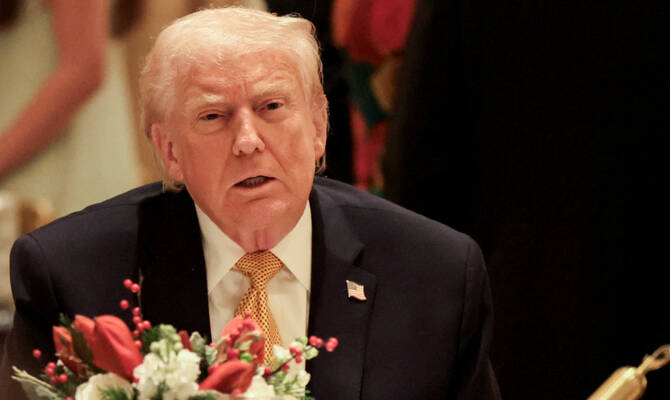
Trump says US struck Daesh targets in Nigeria after group targeted Christians
Short Url
https://arab.news/w6s5m
Trump says US struck Daesh targets in Nigeria after group targeted Christians
- The US recently designated Nigera a “country of particular concern” under the International Religious Freedom Act
Argentine lawmakers approve historic labor reform promoted by President Javier Milei
BUENOS AIRES: Argentine President Javier Milei scored a crucial victory in congress Friday with the approval of a sweeping labor reform aimed at radically altering labor relations in the South American country.
With 42 votes in favor, 28 against and two abstentions, the Senate passed the government-backed initiative into law. The reform seeks to modernize labor relations, lower labor costs and limit the historical power of unions.
“Historic! We have a labor modernization,” Milei said after the overhaul was approved.
Shortly before the debate began in Argentina’s upper house, clashes broke out between police and protesters participating in a demonstration organized by unions, opposition political groups and left-wing social organizations outside the Parliament building to oppose the reform. At least three people were arrested.
The bill, which grants employers greater flexibility in matters of hiring, firing, severance and collective bargaining, has drawn fierce opposition from critics who argue it would roll back measures that protect workers from abuse and Argentina’s notoriously frequent economic shocks.
“It makes me incredibly angry. Passing a law is one thing, but implementing it is another,” said Ariel Somer, a 48-year-old railway worker protesting near Congress. “In Argentina, progress only happens when workers organize. We will find ways to resist.”
Supported by allies of the ruling La Libertad Avanza party, the initiative’s approval would provide Milei with a major legislative victory. He could then showcase these profound economic reforms during his Sunday address at the opening of the ordinary sessions of Congress.
The legislation won initial support from the Senate last week, but must go back for a final vote before becoming law. The government was forced to amend a clause that halves salaries for workers on leave because of injury or illness unrelated to work, after an outcry from opposition lawmakers.
The Senate on Friday may either accept the amendment — marking the final passage of the law — or insist on the original text to reinstate the article. The former outcome is widely anticipated.
The legislative process has been fraught with tension between the governing party and the opposition. The friction boiled over last week during the bill’s debate in the lower house of Congress, as the General Confederation of Labor — Argentina’s largest trade union group — launched a 24-hour nationwide strike, while demonstrators from various leftist groups clashed with police outside Congress.
Milei considers the changes to Argentina’s half-century-old labor code crucial to his efforts to lure foreign investment, increase productivity and boost job creation in a country where about two in five workers are employed off the books.
Unions argue that the law will weaken the workers’ protections that have defined Argentina since the rise of Peronism, the country’s dominant populist political movement, in the 1940s.
Roughly 40 percent of Argentina’s 13 million registered workers belong to labor unions, according to union estimates, and many are closely allied with Peronism.
With 42 votes in favor, 28 against and two abstentions, the Senate passed the government-backed initiative into law. The reform seeks to modernize labor relations, lower labor costs and limit the historical power of unions.
“Historic! We have a labor modernization,” Milei said after the overhaul was approved.
Shortly before the debate began in Argentina’s upper house, clashes broke out between police and protesters participating in a demonstration organized by unions, opposition political groups and left-wing social organizations outside the Parliament building to oppose the reform. At least three people were arrested.
The bill, which grants employers greater flexibility in matters of hiring, firing, severance and collective bargaining, has drawn fierce opposition from critics who argue it would roll back measures that protect workers from abuse and Argentina’s notoriously frequent economic shocks.
“It makes me incredibly angry. Passing a law is one thing, but implementing it is another,” said Ariel Somer, a 48-year-old railway worker protesting near Congress. “In Argentina, progress only happens when workers organize. We will find ways to resist.”
Supported by allies of the ruling La Libertad Avanza party, the initiative’s approval would provide Milei with a major legislative victory. He could then showcase these profound economic reforms during his Sunday address at the opening of the ordinary sessions of Congress.
The legislation won initial support from the Senate last week, but must go back for a final vote before becoming law. The government was forced to amend a clause that halves salaries for workers on leave because of injury or illness unrelated to work, after an outcry from opposition lawmakers.
The Senate on Friday may either accept the amendment — marking the final passage of the law — or insist on the original text to reinstate the article. The former outcome is widely anticipated.
The legislative process has been fraught with tension between the governing party and the opposition. The friction boiled over last week during the bill’s debate in the lower house of Congress, as the General Confederation of Labor — Argentina’s largest trade union group — launched a 24-hour nationwide strike, while demonstrators from various leftist groups clashed with police outside Congress.
Milei considers the changes to Argentina’s half-century-old labor code crucial to his efforts to lure foreign investment, increase productivity and boost job creation in a country where about two in five workers are employed off the books.
Unions argue that the law will weaken the workers’ protections that have defined Argentina since the rise of Peronism, the country’s dominant populist political movement, in the 1940s.
Roughly 40 percent of Argentina’s 13 million registered workers belong to labor unions, according to union estimates, and many are closely allied with Peronism.
© 2026 SAUDI RESEARCH & PUBLISHING COMPANY, All Rights Reserved And subject to Terms of Use Agreement.


