



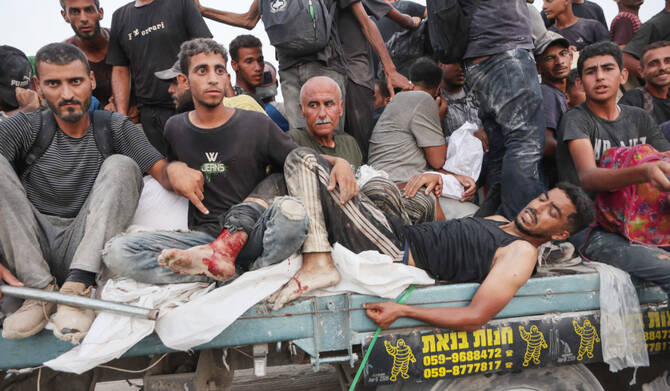

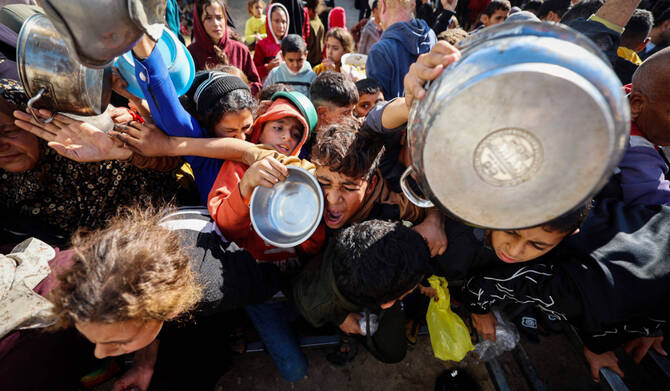
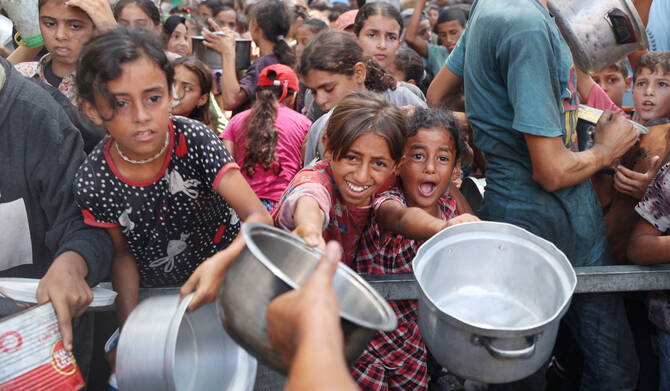

JERUSALEM: Two and a half months have passed since Gaza‘s latest ceasefire took effect, and the supplies being delivered to war-battered Palestinians are again the subject of fierce debate.
The underlying question is whether Israel is upholding a key commitment under the US-backed ceasefire by allowing enough humanitarian aid into the territory. Israel says it is, but that claim is disputed by data from humanitarian organizations and Hamas-linked Gaza authorities.
The debate plays out in numbers of trucks said to be entering Gaza. But that tells only part of the story. Most trucks are operated by the private sector and carry commercial goods that are unaffordable to many Palestinians.
Here’s what to know about the dispute.
Israel’s claims about trucks
The ceasefire calls for a minimum of 600 trucks a day, though it’s not clear whether that figure refers specifically to aid trucks. Israel says it has met that stipulation since the ceasefire took effect on Oct. 10. Its closest ally, the United States, which coordinates aid deliveries from a hub in southern Israel, says Israel has met it for the last five weeks.
But about 80 percent of those trucks are private-sector vehicles, according to the Israeli military agency in charge of coordinating aid to Gaza, known as COGAT.
The effects are mixed. Markets in Gaza are now better stocked, and high prices for essentials such as flour and meat have begun to ease, but most people cannot afford the goods after two years of war. And many commercial items like cigarettes, cellphones and snacks don’t address widespread malnutrition.
Commercial supplies “are often prioritized ahead of aid deliveries yet do not address humanitarian needs,” the nonprofit Refugees International said in a statement last week.
COGAT says about 70 percent of the trucks are carrying food, and “the remainder carry medical equipment, shelter supplies, tents, clothing and other essential humanitarian assistance.”
The agency would not give a breakdown of raw data, saying that sharing such details would benefit Hamas. A COGAT-run data dashboard on Gaza aid stopped updating after the ceasefire began.
Other measures of trucks
Rights groups and others point out that Israel controls the crossings into Gaza and has sole access to track how much aid and how many commercial goods are entering.
“There is little transparency about how much and what exactly is getting in,” said Shaina Low, communications adviser for the Norwegian Refugee Council.
Global food security experts last week said all of Gaza is in danger of starvation, but that the spread of famine beyond Gaza City, where it was declared in August, had been averted. Israel disputed the report, calling it “distorted” and “biased.”
Last week’s report undercut Israel’s claims. The authors, citing data they said was provided by Israel, said an average of 540 trucks — both aid and commercial ones — entered Gaza daily in October since the ceasefire and that the November average was 581. Both numbers fall below the 600-truck requirement.
Meanwhile, entities inside Gaza assert that the number of trucks is even smaller.
A report issued this week by the World Food Program said an average of 256 trucks carrying both aid and commercial goods entered daily in the first two weeks of December. The report cited the Gaza Chamber of Commerce and Industry and the Hamas-affiliated Palestinian Ministry of State for Relief Affairs.
It was not clear why those numbers differ so much from Israel’s.
The WFP report also noted that even the entry of commercial goods often faces “a complex system of approvals” and “exorbitant fees” reaching several thousand dollars per truck entering through the Rafah crossing with Egypt and from the occupied West Bank. That drives up prices of essential items such as eggs and vegetables.
Beyond the private sector
The noncommercial trucks entering Gaza, or about 20 percent of the traffic, carry out deliveries for the United Nations and aid groups, or for various countries. Israel’s government does not provide aid to Gaza.
The UN’s data dashboard tracks how much aid from its agencies and partners is unloaded at Gaza border crossings and how much reaches intended destinations. No independent entity tracks aid donated by international governments.
From Oct. 10, when the ceasefire began, through Dec. 21, 9,379 trucks reached intended destinations in Gaza, and food made up over 80 percent of that aid by weight.
That means about 130 trucks a day on average reached their destinations during that period. The dashboard shows that 156 other trucks during that time were intercepted by hungry crowds or armed gangs.
But the amounts inside the trucks can vary sharply because of Israeli restrictions, which include the denial of items Israel believes could be used for military purposes, such as tents with aluminum frames.
Such inconsistencies led to reduced food rations earlier this month, with some households in Gaza receiving rations covering 75 percent of minimum caloric needs to “reach as many people as possible,” according to the World Food Program.
The effect on hunger
Last week’s report by the world’s leading authority on food crises said there have been “notable improvements” in food security in Gaza since the ceasefire. But the Integrated Food Security Phase Classification, or IPC, said the situation remains “highly fragile.”
The report said Gaza’s needs remain immense and unhindered aid is required.
Palestinians have told The Associated Press that even though Gaza’s markets have more products these days, most people can’t afford them.
Access is “deeply unequal,” the International Rescue Committee’s vice president for emergencies, Bob Kitchen, said after the IPC report. He added: “Much of the food entering Gaza is also low in nutritional value, such as sweets and sugary drinks, which does little to support recovery from malnutrition.”


