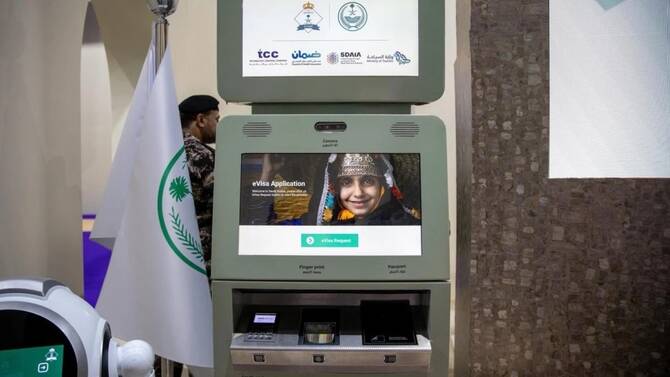

RIYADH: Saudi Arabia’s General Directorate of Passports, also known as Jawazat, is upgrading its self-service tourist visa kiosks at international ports, allowing eligible travelers to obtain their visas upon arrival.
Spokesperson Nasser Al-Otaibi affirmed to Al-Eqtisadiah that Jawazat is continuously working to develop the device to ensure its compatibility with the latest regulatory requirements for visas, which rely on artificial intelligence technologies designed to enhance the quality of the visitor experience.
Al-Otaibi explained that Saudi Passports has equipped a number of its international ports with the developed mobile camera device, which contains all the elements of the traditional counter, including fingerprint readers, Saudi ID readers, in addition to the passport scanner for all arrivals to the Kingdom.
The spokesperson stated: “This device is used specifically to serve people with special needs, the elderly, and the sick, as it allows the completion of all passport procedures for them at their location without the need to go to traditional service counters, ensuring speed and ease of completing transactions.”
$100 allows you to stay for 90 days
The tourist visa upon arrival to Saudi Arabia is granted to eligible nationalities or holders of valid visas for countries such as the US, the UK, or the Schengen area. It can be issued through self-service devices or passport offices at ports, costs approximately $100, and is valid for one year with a stay of up to 90 days.
The Kingdom is seeking to facilitate the arrival of visitors and tourists, having recently announced the expansion of the scope of countries eligible for the electronic visa to include citizens of 66 nations worldwide. This facilitation covers wide geographical areas, including major countries across various continents.
From North America, both the US and Canada were included. European continent countries top the list with 28 countries, most notably France, Germany, and Switzerland. In Asia, the list included Japan, Korea, and China, in addition to countries like Malaysia, Kazakhstan, and Uzbekistan.
The list also includes Australia and New Zealand from Oceania, in addition to three African countries: Mauritius, Seychelles, and South Africa.