

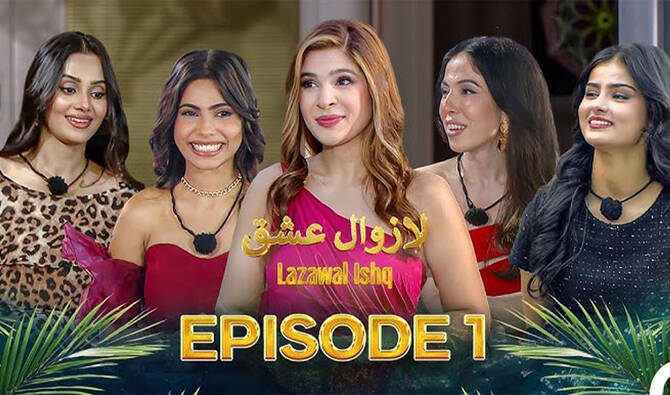

ISLAMABAD: YouTube has hit pause on a dating show that whisked eight men and women from conservative Pakistan to a sun-soaked Istanbul villa, where the strangers mingled, flirted and searched for chemistry.
What was meant to be a glittering escape into modern-day romance sparked a storm back home, turning the rose-petal drama into a cultural, traditional and religious flashpoint.
Dating and sex outside of marriage are prohibited by law in the Muslim-majority country, where public displays of affection can draw penalties.
The show “Lazawal Ishq,” or “Eternal Love,” aired 50 episodes before it was recently taken off YouTube in Pakistan, though it is still available elsewhere.
The format, reminiscent of the British reality hit “Love Island,” pushed boundaries that Pakistani entertainment typically avoids.
“Our program might not be watchable in Pakistan due to political reasons,” the show posted on its Instagram page.
It advised Pakistani viewers to use virtual private networks (VPNs) to continue watching.
YouTube did not immediately reply to an AFP request for comment on why the show was suspended.
The show’s trailer starts with the host, actress Ayesha Omer, entering the villa in a white dress, where she meets contestants who are to choose a partner of their liking and test their compatibility through 100 episodes.
Omer swiftly came under fire online for wearing a “Western dress” and hosting a show that “promotes obscene and immoral content,” an increasingly common reaction to celebrities who deviate from Pakistan’s conservative expectations.
Omer countered on Instagram that “this is not a Pakistani show... it is a Turkish production, but of course people in Pakistan can watch it.”
A LOT OF COMPLAINTS
The Urdu-language show proved popular, with the inaugural trailer getting over two million views.
The online buzz underscored a growing divide between Pakistan’s younger, digitally connected audience and traditional gatekeepers anxious about changing values.
“It was something fun to watch. A show that showed that people in Pakistan can and do date even though it is frowned upon,” said one viewer who requested anonymity to speak freely.
But someone soon filed a petition to the Pakistan Electronic Media Regulatory Authority (PEMRA), it said, seeking a ban and claiming the show goes against “Pakistan’s religious and social values by showing unmarried men and women living together.”
The regulator acknowledged receiving “a lot of complaints” about “Eternal Love” but said it did not have jurisdiction over digital platforms.
PEMRA advised petitioning the Pakistan Telecommunication Authority, which oversees online content. It did not respond to requests for comment.
It is not the first time YouTube has taken down a program deemed offensive by conservative Pakistanis.
Last year, the show “Barzakh,” a family drama that touched on topics including love and spirituality, was removed on claims it promoted LGBTQ relationships.


