Pakistan says record $2.37 billion debt market transaction helps cut power sector circular debt

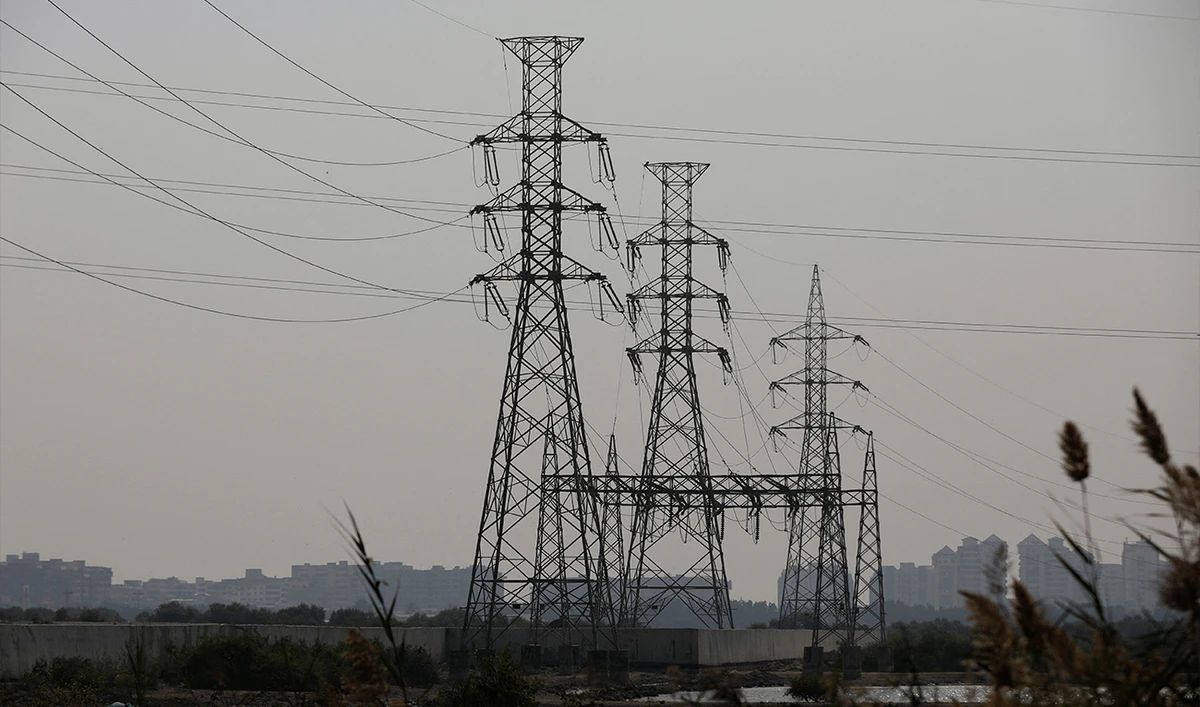
This file photo, taken on January 24, 2023, shows a power transmission tower in Karachi. (REUTERS/File)
Short Url
Updated 10 December 2025
Follow

Pakistan says record $2.37 billion debt market transaction helps cut power sector circular debt

  • Power minister says settlement includes redemption of energy sukuk, bank loans under the debt reduction plan
  • Awais Leghari says move strengthens confidence in the government's reform agenda, energy-sector restructuring

ISLAMABAD: Pakistan’s power minister announced on Wednesday the government has settled Rs 659.6 billion ($2.37 billion) in energy sector debt, calling it the largest-ever debt market transaction carried out in the country as Islamabad pushes ahead with reforms to curb mounting liabilities in its troubled power sector.

Circular debt, the chronic build-up of unpaid bills across the electricity supply chain, has for more than a decade crippled Pakistan’s power system, driven by poor bill recovery, high line losses, tariff shortfalls and expensive financing costs.

Successive governments have struggled to contain the debt pile, which has strained public finances and remained a key point of friction in bailout talks with the International Monetary Fund.

“Delighted to announce the successful completion of PKR 659.6 billion PHL settlements ... through capital markets which is Pakistan’s largest-ever debt market transaction,” Power Minister Awais Leghari said on X, referring to the settlement of Power Holding Limited liabilities.

PHL is a government-owned entity that borrowed heavily over the years to finance the power sector.

The minister said part of the settlement involved redeeming Pakistan Energy Sukuk I and II, Islamic bonds raised earlier to plug power sector financing gaps, through an off-market National Debt Market (NDM) transaction.

Leghari said the redemption included Rs 399.6 billion ($1.44 billion) in sukuk-related obligations and Rs 259.7 billion ($935 million) in syndicated bank loans.

“This landmark transaction is a core component of the PKR 1,225 billion [$4.41 billion] Circular Debt Reduction Plan, reflecting strong institutional confidence in Pakistan’s economic reforms,” he said, adding the move demonstrated the capacity of Pakistan’s capital and Islamic finance markets to manage large-scale restructuring operations.

The minister said the government remained committed to long-term structural energy reforms, fiscal stabilization and continued engagement with stakeholders to accelerate “reform-driven growth.”


Curfew extended in Gilgit-Baltistan, probe ordered after deadly Khamenei protests

Updated 03 March 2026
Follow

Curfew extended in Gilgit-Baltistan, probe ordered after deadly Khamenei protests

  • At least 15 people were killed in clashes with law enforcement agencies over the weekend in Gilgit-Baltistan
  • Government also announces a de-weaponization campaign, crackdown on hate speech and cybercrime in region

ISLAMABAD: The government in Pakistan’s Gilgit-Baltistan (GB) region on Tuesday extended a curfew in Gilgit district and ordered a judicial probe into violent protests over the killing of Iranian Supreme Leader Ali Khamenei in US-Israeli strikes last week, an official said.

At least 15 people were killed in clashes with law enforcement agencies over the weekend in GB, where protesters torched and vandalized several buildings, including United Nations regional offices, an army-run school, software technology park and a local charity building.

The violence prompted regional authorities to impose curfew in Gilgit and Skardu districts on March 2-4 as officials urged people to stay indoors and cooperate with law enforcers, amid widespread anger in Pakistan, particularly among members of the Shiite minority, over Khamenei’s killing.

On Tuesday, the GB government convened to review the situation and announced the extension of curfew in Gilgit among a number of security measures as well as ordered the establishment of a judicial commission to investigate the weekend violence in the region.

“The government has made it clear that the law will strictly take its course against elements involved in vandalism at government institutions, private properties and incidents of vandalism in Gilgit and Skardu and no kind of mischief will be tolerated,” Shabbir Mir, a GB government spokesperson, said in a statement.

“In view of the security situation, curfew will remain in force in Gilgit, while the decision to extend the curfew in Skardu will be taken keeping the ground realities and the changing situation in view.”

The statement did not specify how long the curfew will remain in place in Gilgit.

Besides the formation of the judicial commission to investigate the violent clashes, the government also decided to launch a large-scale de-weaponization campaign in the entire Gilgit district, for which relevant institutions have been directed to immediately complete all necessary arrangements, according to Mir.

In addition, a crackdown has been ordered on hate speech, spread of fake news and cybercrime.

“The aim of these decisions is to ensure the rule of law, protect the lives and property of citizens and crack down on miscreants,” he said. “Approval has also been given to immediately survey the affected infrastructure and start their restoration work on priority basis.”

Demonstrators in Pakistan’s southern port city of Karachi also stormed the US Consulate on Sunday, smashing windows and attempting to burn the building. Police responded with batons, tear gas, and gunfire, leaving 10 people dead and more than 50 injured.

Pakistani authorities have since beefed up security at US diplomatic missions across the country, including around the US consulate building in Peshawar, to avoid any further violence.