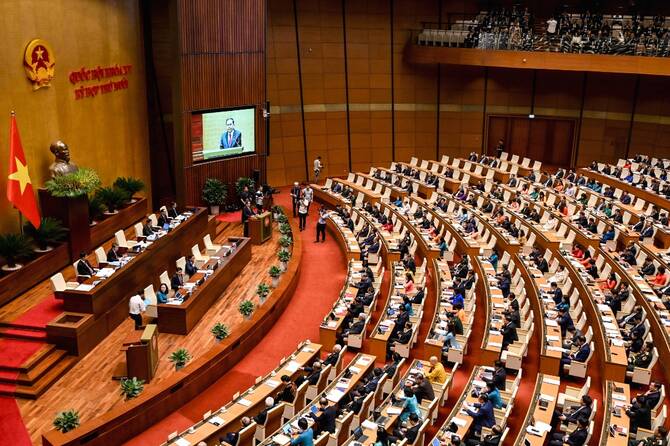
HANOI: Vietnam’s parliament adopted reforms to the media and state secrets laws on Wednesday which press freedom advocates say will make it harder for journalists to protect the identities of their sources and increase legal risks for reporting.
“We are appalled by the further restriction to the legal framework governing press freedom in Vietnam,” Aleksandra Bielakowska, from Reporters Without Borders, said on Wednesday.
The changes will make Vietnam “an almost impossible place for journalists to report freely,” said Bielakowska.
Reporters Without Borders ranks Vietnam 173rd of 180 countries in its world press freedom index.
Vietnam’s government did not immediately respond to a request for comment.
Vietnam’s lawmakers adopted a revamped press law, to take effect in July, which will require journalists to reveal sources at the request of authorities investigating any crime, according to the amended text reviewed by Reuters.
Under the current press law, a journalist can only be compelled to disclose a source in probes of “serious crimes.”
The reformed press law will also allow the public security ministry and local police to order source disclosures, whereas at present only judges can do so.
The reform comes amid an escalation of restrictive measures in recent months in the Communist-run country, such as the withdrawal of passports from foreign media reporters, including a BBC Vietnamese journalist, the ban of a printed edition of the Economist, the temporary suspension of Telegram messaging app and an expanded role for the public security ministry.
While domestic media are under state control, foreign journalists face surveillance, trip-approval requirements and limited access to press events.
Bielakowska said at least 28 journalists are currently imprisoned in Vietnam “often in inhumane conditions, simply for doing their jobs.”
In a separate move, legislators also amended the state secrets law, expanding the categories of protected information.
The new law, reviewed by Reuters and set to take effect in March, designates as additional state secrets details of leaders’ overseas programs, state compensation and settlements of international investment disputes.
Disclosing state secrets is already punishable by fines and prison terms.
“This amendment is granting authorities with yet another tool of repression against an already shattered media landscape,” Bielakowska said.


![]()

Vietnam set to make it harder for media to protect sources, to expand state secrets
Short Url
https://arab.news/jbutd
Vietnam set to make it harder for media to protect sources, to expand state secrets
- Under the current press law, a journalist can only be compelled to disclose a source in probes of “serious crimes”


Latest updates


© 2026 SAUDI RESEARCH & PUBLISHING COMPANY, All Rights Reserved And subject to Terms of Use Agreement.