

Pakistan’s Pak-Qatar Family Takaful to raise $3.9 million in Islamic insurance IPO

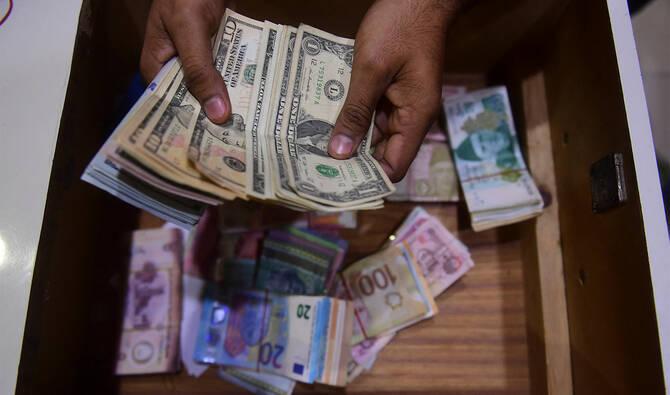
A dealer counts US dollars at a money exchange market in Karachi on January 27, 2023. (AFP/File)
Short Url
Updated 05 December 2025
Follow

Pakistan’s Pak-Qatar Family Takaful to raise $3.9 million in Islamic insurance IPO

  • Company to offer 50 million shares with a price band of $0.05–0.07 per share
  • Proceeds to support capital needs, digital expansion, new customer-focused products

ISLAMABAD: Pak-Qatar Family Takaful Limited, Pakistan’s largest dedicated Islamic insurance provider, will launch an initial public offering this month to raise about Rs1.1 billion ($3.9 million), with book-building scheduled for Dec. 11–12 and registration opening Dec. 8, the company said in a statement on Friday.

The offer will make Pak-Qatar the first dedicated family takaful operator to list on the Pakistan Stock Exchange, marking a notable development for the country’s insurance landscape, where penetration remains low by global standards. The IPO comes as the company looks to scale operations, strengthen technology channels and widen product distribution in a market where Shariah-compliant savings and protection instruments have grown steadily.

“Pak Qatar Family Takaful Limited is all set to list itself at Pakistan Stock Exchange through an IPO with registration starting 08th December. Through this IPO PQFTL is aiming to raise approx. Rs. 1.1 billion,” the statement said.

The company will offer 50 million shares, starting at a floor price of Rs14 per share ($0.05), with a ceiling of Rs21 per share ($0.07). Of the total issue, 37.5 million shares will be allocated to institutional investors, while 12.5 million shares will be offered to the general public.

Lead manager Shahid Ali Habib of Arif Habib Ltd. said investor response has been strong as the offering represents a sector first. According to the statement, proceeds will be used to meet capital requirements, develop new products and accelerate digital outreach.

Pak-Qatar Family Takaful is the country’s first and largest dedicated shariah-compliant family risk-protection provider, holding 44 percent of the total family takaful market and more than 90 percent of the fully dedicated segment, with a nationwide presence of 73 branches and 1,971 field representatives.

Despite Pakistan’s population size, insurance penetration stood at just 0.7 percent in 2024, the company noted, adding that rising awareness and economic shifts leave room for growth compared with advanced markets where penetration has crossed 10%.


Pakistan’s Mahnoor Omer named among TIME’s ‘Women of the Year’ for 2026

Updated 01 March 2026
Follow

Pakistan’s Mahnoor Omer named among TIME’s ‘Women of the Year’ for 2026

  • Omer moved a Pakistani court against the so-called ‘period tax’ in Sept. 2025 which has since sparked a national debate
  • Taxes on sanitary pads in Pakistan can add up to 40 percent to retail price, UNICEF says only around 12 percent women use such products

ISLAMABAD: Pakistani women’s rights activist Mahnoor Omer, who fought against taxes on menstrual products, has been named among the TIME magazine’s ‘Women of the Year’ for 2026.

Omer’s efforts have been recognized alongside 16 activists, artists, athletes and businesswomen in the TIME’s Women of the Year 2026 list, including Olympic gold medalist Sydney McLaughlin-Levrone and Oscar-nominated filmmaker Chloe Zhao.

Dissatisfied with the efforts to educate Pakistani girls about sexual violence, Omer founded the Noor Foundation at the age of 14 and held her own workshops with village girls about everything from climate change to menstruation, according to the TIME magazine.

Two years later, a conversation with a domestic worker about the price of pads made her realize that not everyone could afford these essentials. She moved a court against the so-called “period tax” in Sept. 2025 and the case has sparked a national debate on the subject, considered a taboo by many in Pakistan, since its first hearing late last year.

“A decade and one law degree after her interest in activism was sparked, Omer, now 25, is putting her passion and expertise to work in the name of gender equity,” TIME wrote about Omer on its website.

Taxes imposed on sanitary products in Pakistan can add up to 40 percent to the retail price. UNICEF estimates just 12 percent of women in the country use commercially produced pads or tampons. The alternative, using cloth, risks health impacts including rashes and infections, and can make it impossible for girls to attend school while menstruating.

Omer’s suit, which awaits the government response, has sparked a national discussion. She says she spoke about menstruation to her father and male cousins, who thanked her for standing up for their daughters.
The 25-year-old, who is currently enrolled in a master’s degree in gender, peace, and security at the London School of Economics, sees this case as just the first of many.

“I’m not free until every woman is free,” she was quoted as saying by TIME. “I want to leave no stones unturned in terms of what I can do with the next few decades, as a lawyer for the women in my country and gender minorities in general.”