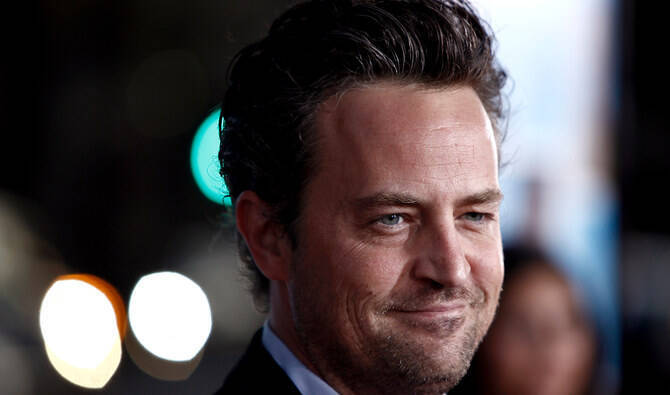
LOS ANGELES: A doctor who pleaded guilty to selling ketamine to Matthew Perry in the weeks before the “Friends” star’s overdose death was sentenced to 2 1/2 years in prison on Wednesday.
Judge Sherilyn Peace Garnett handed down the sentence plus two years of probation to 44-year-old Dr. Salvador Plasencia in a federal courtroom in Los Angeles.
The judge emphasized that Plasencia didn’t provide the ketamine that killed Perry, but told him, “You and others helped Mr. Perry on the road to such an ending by continuing to feed his ketamine addiction.”
“You exploited Mr. Perry’s addiction for your own profit,” she said.
Plasencia was led from the courtroom in handcuffs as his mother cried loudly in the audience. He might have arranged a date to surrender, but his lawyers said he was prepared to do it today.
Perry’s mother and two half sisters gave tearful victim impact statements before the sentencing.
“The world mourns my brother,” Madeleine Morrison said. “He was everyone’s favorite friend.”
Plasencia was the first to be sentenced of the five defendants who have pleaded guilty in connection with Perry’s death at age 54 in 2023.
The doctor admitted to taking advantage of Perry, knowing he was a struggling addict. Plasencia texted another doctor that Perry was a “moron” who could be exploited for money, according to court filings.
Prosecutors had asked for three years in prison, while the defense sought just a day in prison plus probation.
Perry had been taking the surgical anesthetic ketamine legally as a treatment for depression. But when his regular doctor wouldn’t provide it in the amounts he wanted, he turned to Plasencia, who admitted to illegally selling to Perry and knowing he was a struggling addict. He texted another doctor that Perry was a “moron” who could be exploited for money, according to court filings.
Plasencia’s lawyers tried to give a sympathetic portrait of him as a man who rose out of poverty to become a doctor beloved by his patients, some of whom provided testimonials about him for the court.
The attorneys called his selling to Perry “reckless” and “the biggest mistake of his life.”
Plasencia pleaded guilty in July to four counts of distribution of ketamine. Prosecutors agreed to drop five different counts. The agreement came with no sentencing guarantees, and legally Garnett can give him up to 40 years.
The other four defendants who reached deals to plead guilty will be sentenced at their own hearings in the coming months.
Perry died at age 54 in 2023 after struggling with addiction for years, dating back to his time on “Friends,” when he became one of the biggest stars of his generation as Chandler Bing. He starred alongside Jennifer Aniston, Courteney Cox, Lisa Kudrow, Matt LeBlanc and David Schwimmer for 10 seasons from 1994 to 2004 on NBC’s megahit.


![]()


Doctor who sold ketamine to ‘Friends’ star Matthew Perry gets 2 1/2 years in prison
Short Url
https://arab.news/9a7sx
Doctor who sold ketamine to ‘Friends’ star Matthew Perry gets 2 1/2 years in prison
- Plasencia was led from the courtroom in handcuffs as his mother cried loudly in the audience
- Perry’s mother and two half sisters gave tearful victim impact statements before the sentencing


Macron to set out how France’s nuclear arms could protect Europe
PARIS: France will on Monday unveil how it could use the European Union’s only atomic arsenal to protect the continent in an unstable world, with Russia becoming increasingly aggressive and the United States turning away.
The speech by French President Emmanuel Macron, at France’s Ile Longue nuclear submarine base, comes after the launch of US and Israeli attacks against Iran in a campaign that risks destabilising the Middle East.
“What we are experiencing demonstrates that in the world to come, power and independence will be two indispensable forces for dealing with the proliferation of threats,” said a member of Macron’s team.
Macron is set to update France’s nuclear doctrine as Russia’s war against Ukraine grinds into a fifth year and NATO allies worry about Washington’s wavering commitment to Europe.
“There will undoubtedly be some significant shifts and developments,” a source said of the speech set to be delivered from 1415 GMT Monday.
European nations, which have relied on the US nuclear deterrent throughout the Cold War and in the decades since it ended, are increasingly debating whether to bolster their own atomic arsenals.
Paris has been in talks with countries including Germany and Poland over how France could use its atomic arsenal to help protect the continent.
Last year, Macron said he was ready to discuss possible deployment of French aircraft armed with nuclear weapons in other European countries.
Macron said in February he was considering a doctrine that could include “special cooperation, joint exercises, and shared security interests with certain key countries.
France maintains the world’s fourth-largest nuclear arsenal, estimated at around 290 warheads. Britain, which is no longer a member of the EU, is the only other European nuclear power.
By contrast, the United States and Russia, the world’s two main atomic powers, have thousands of nuclear warheads each.
‘27 buttons’
Reassurances from US officials that Washington’s deterrent would continue to cover Europe under the NATO alliance have done little to quell European fears of fickleness under US President Donald Trump.
“It is clear that we will need to reflect together on how French and British deterrence can fit into a more assertive European defense,” Bernard Rogel, who served as top military adviser to Macron, told AFP.
But how exactly nuclear cooperation would work between the EU’s 27 states is another story.
Rogel insisted that control over the launch decision will remain in French hands.
“I can’t see us having 27 buttons. From a credibility standpoint, that just doesn’t work,” he said.
‘Only a good thing’
Rafael Loss, a policy fellow at the European Council on Foreign Relations, said leaders should find confidence in European support for strengthening nuclear deterrence.
He said people in Denmark, Estonia, Germany, Portugal, Spain and Switzerland now tend to support rather than oppose the idea of developing an alternative European nuclear deterrent.
“If there’s going to be some kind of bigger European investments in France or UK’s nuclear deterrence, that’s only a good thing,” Finland’s defense minister Antti Hakkanen told AFP in February.
Florian Galleri, a historian specializing in nuclear doctrines, warned that Macron would have to tread carefully, pointing to his low approval ratings one year before the end of his presidency.
Macron’s address could also spark a backlash ahead of the 2027 presidential election, in which Marine Le Pen’s euroskeptic far-right is seen as having its best chance yet at winning the top job.
“There is a consensus on possessing nuclear weapons in France, but not on nuclear policy,” Galleri said.
The far-right has already issued a warning.
“If Mr. Macron thinks he can give France’s nuclear weapon to the EU, he will face impeachment proceedings for treason,” Philippe Olivier, an adviser to Le
The speech by French President Emmanuel Macron, at France’s Ile Longue nuclear submarine base, comes after the launch of US and Israeli attacks against Iran in a campaign that risks destabilising the Middle East.
“What we are experiencing demonstrates that in the world to come, power and independence will be two indispensable forces for dealing with the proliferation of threats,” said a member of Macron’s team.
Macron is set to update France’s nuclear doctrine as Russia’s war against Ukraine grinds into a fifth year and NATO allies worry about Washington’s wavering commitment to Europe.
“There will undoubtedly be some significant shifts and developments,” a source said of the speech set to be delivered from 1415 GMT Monday.
European nations, which have relied on the US nuclear deterrent throughout the Cold War and in the decades since it ended, are increasingly debating whether to bolster their own atomic arsenals.
Paris has been in talks with countries including Germany and Poland over how France could use its atomic arsenal to help protect the continent.
Last year, Macron said he was ready to discuss possible deployment of French aircraft armed with nuclear weapons in other European countries.
Macron said in February he was considering a doctrine that could include “special cooperation, joint exercises, and shared security interests with certain key countries.
France maintains the world’s fourth-largest nuclear arsenal, estimated at around 290 warheads. Britain, which is no longer a member of the EU, is the only other European nuclear power.
By contrast, the United States and Russia, the world’s two main atomic powers, have thousands of nuclear warheads each.
‘27 buttons’
Reassurances from US officials that Washington’s deterrent would continue to cover Europe under the NATO alliance have done little to quell European fears of fickleness under US President Donald Trump.
“It is clear that we will need to reflect together on how French and British deterrence can fit into a more assertive European defense,” Bernard Rogel, who served as top military adviser to Macron, told AFP.
But how exactly nuclear cooperation would work between the EU’s 27 states is another story.
Rogel insisted that control over the launch decision will remain in French hands.
“I can’t see us having 27 buttons. From a credibility standpoint, that just doesn’t work,” he said.
‘Only a good thing’
Rafael Loss, a policy fellow at the European Council on Foreign Relations, said leaders should find confidence in European support for strengthening nuclear deterrence.
He said people in Denmark, Estonia, Germany, Portugal, Spain and Switzerland now tend to support rather than oppose the idea of developing an alternative European nuclear deterrent.
“If there’s going to be some kind of bigger European investments in France or UK’s nuclear deterrence, that’s only a good thing,” Finland’s defense minister Antti Hakkanen told AFP in February.
Florian Galleri, a historian specializing in nuclear doctrines, warned that Macron would have to tread carefully, pointing to his low approval ratings one year before the end of his presidency.
Macron’s address could also spark a backlash ahead of the 2027 presidential election, in which Marine Le Pen’s euroskeptic far-right is seen as having its best chance yet at winning the top job.
“There is a consensus on possessing nuclear weapons in France, but not on nuclear policy,” Galleri said.
The far-right has already issued a warning.
“If Mr. Macron thinks he can give France’s nuclear weapon to the EU, he will face impeachment proceedings for treason,” Philippe Olivier, an adviser to Le
Latest updates


© 2026 SAUDI RESEARCH & PUBLISHING COMPANY, All Rights Reserved And subject to Terms of Use Agreement.