Saudi-hosted Pakistan–Afghanistan talks end without breakthrough, officials say

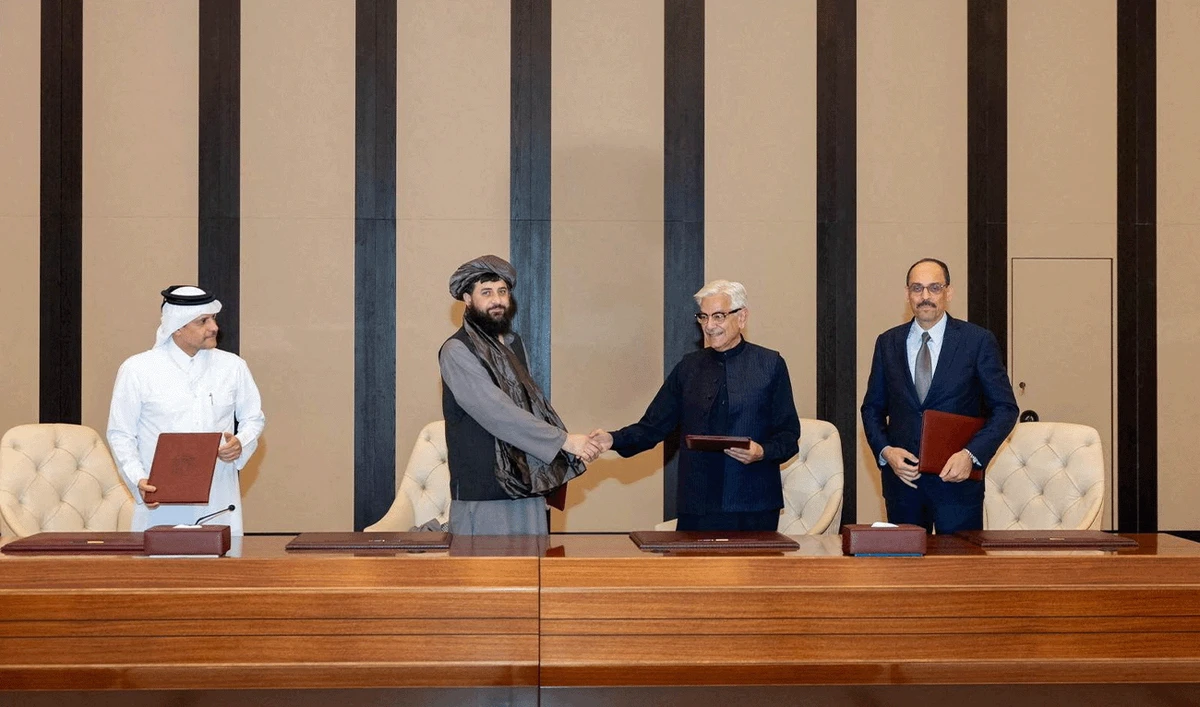
Afghan Defence Minister, Mullah Mohammad Yaqoob Mujahid and Pakistan's Defence Minister, Khawaja Muhammad Asif shake hands, following the signing of a ceasefire agreement, during a negotations meeting mediated by Qatar and Turkey, in Doha, Qatar, on October 19, 2025. (REUTERS/File)
Short Url
Updated 03 December 2025
Follow

Saudi-hosted Pakistan–Afghanistan talks end without breakthrough, officials say

  • Talks in Saudi Arabia last weekend were the latest in a series of meetings hosted by Qatar, Turkiye and the Kingdom
  • Peace talks included representatives from Pakistan’s military, intelligence services and the foreign office

PESHAWAR, Pakistan: A new round of peace talks mediated by Riyadh between Pakistan and Afghanistan has failed to produce a breakthrough to end tensions between the South Asian neighbors, although they agreed to continue their fragile ceasefire, officials from both countries said on Wednesday.

The talks in Saudi Arabia last weekend were the latest in a series of meetings hosted by Qatar, Turkiye and Saudi Arabia aimed at cooling tensions following deadly border clashes in October.

A ceasefire agreed in Doha has largely held, though efforts to secure a longer-term arrangement through follow-up talks in Istanbul last month failed to produce a peace agreement.

Three Afghan and two Pakistani officials told Reuters the latest talks followed a Saudi initiative and included representatives from Pakistan’s military, intelligence services and foreign office.

Both sides agreed to maintain the ceasefire, they said.

At the heart of the dispute, Islamabad says Afghan-based militants have carried out recent attacks in Pakistan, including suicide bombings involving Afghan nationals.
 
Kabul denies the charge, saying it cannot be held responsible for security inside Pakistan.

Afghan Foreign Minister Amir Khan Muttaqi did not comment on the location of the talks or confirm whether they were held in Saudi Arabia.

However, in remarks to political analysts in Kabul he rejected Islamabad’s accusations that Afghan soil is used by anti-Pakistan militants, calling the allegations shifting and inconsistent.

“Our position toward Pakistan is that we still seek to resolve issues through understanding and dialogue,” he said. “And we urge Pakistani officials: focus on solving your own fundamental problems, and value the constructive steps taken by the Islamic Emirate.”

Pakistan’s foreign ministry, its military and the Saudi government did not respond to requests for comment from Reuters.

People from the military, intelligence agencies and the foreign office represented Islamabad in the talks, a Pakistani official said.

Dozens were killed in October’s clashes, the worst violence on the border since the Taliban took power in Afghanistan in 2021.

Islamabad says it wants Kabul to provide a written commitment to act against anti-Pakistan groups. 

The Taliban say this goes beyond their responsibility and they cannot be expected to guarantee security in Pakistan.


Four people, including two policemen, killed in twin blasts in northwest Pakistan

Updated 07 March 2026
Follow

Four people, including two policemen, killed in twin blasts in northwest Pakistan

  • Attack on police van in South Waziristan and motorbike-mounted IED in Lakki Marwat hits KP province
  • Violence comes amid a surge in militancy and cross-border clashes between Pakistan and Afghanistan

ISLAMABAD: At least four people, including two policemen, were killed and about 20 others wounded in two separate blasts in Pakistan’s northwestern Khyber Pakhtunkhwa province on Saturday, officials said, the latest violence in a region grappling with militant violence.

One explosion targeted a police patrol van in Wana, the main town of South Waziristan district near the Afghan border, while another blast caused by explosives mounted on a motorbike struck a market area in Lakki Marwat district, according to police officials and preliminary reports.

The incidents come amid rising militant violence in Pakistan’s northwest, where authorities say armed groups operate from across the border in Afghanistan, straining relations between Islamabad and the Taliban administration in Kabul, with both sides engaged in a military conflict since last month.

“The control room received information in the evening about a bomb blast targeting a police van in Wana Bazaar,” a police official in the area, who did not want to be named, confirmed while speaking to Arab News over the phone.

He confirmed two deaths in the incident while saying more than 25 people had been injured.

The official said rescue teams responded promptly and shifted three seriously injured people to a nearby hospital in Wana.

In another incident during the day in Lakki Marwat, an improvised explosive device attached to a motorbike exploded near shops.

“Two people have been killed and about 10 have been injured in an IED blast in Lakki Marwat,” Raza Khan, Deputy Superintendent of Police in Bannu, told Arab News.

“The deceased are identified as Shoaib Ur Rehman and Furqan Ullah,” he added. “Shoaib, the owner of the shop, was the brother of the Lakki peace committee head.”

Peace committees in the region are informal, community-based groups that work with security forces to report militant activity and maintain order, making their members frequent targets of attacks.

Pakistan’s Interior Minister Mohsin Naqvi condemned the attacks and expressed grief over the incidents.

“I strongly condemn the blast near a police patrolling vehicle in Wana Bazaar,” Naqvi said in a statement, confirming the killing of four people, including two police personnel.

“Khyber Pakhtunkhwa police are on the front line in the war against terrorism,” he said, noting the force had made “unforgettable sacrifices” in the fight against militant groups.

Militant violence has surged in Pakistan’s border regions in recent months, particularly in Khyber Pakhtunkhwa and Balochistan provinces.
Islamabad has repeatedly accused the Afghan Taliban government of allowing militant groups, including the Tehreek-e-Taliban Pakistan (TTP), to operate from Afghan territory — a charge Kabul denies — as cross-border tensions between the two neighbors have escalated.