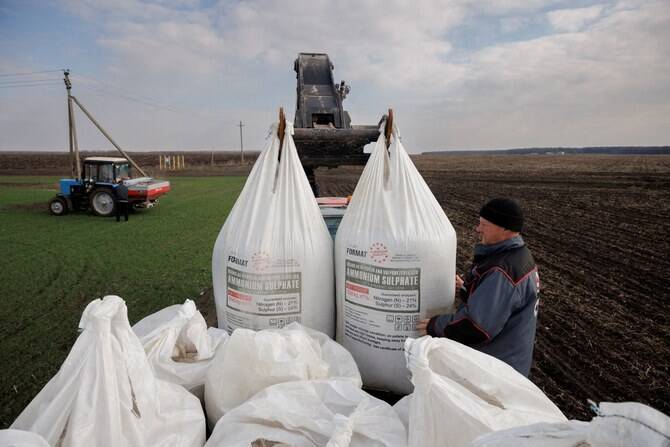
COPENHAGEN: Denmark, which last year introduced a pioneering carbon tax on livestock farming, on Wednesday announced an agreement to cut nitrogen emissions from agriculture and curb water pollution.
The Scandinavian country prides itself on being a leader in tackling global warming but waste from farming has stifled marine ecosystems.
The deal aims to reduce nitrogen emissions by 9,600 tons a year using a quota system.
“From 2027, farmers will receive an emissions quota based on the necessary reduction of nitrogen emissions in their catchment area,” the government announced in a statement.
The quotas will be adjusted according to the capacity of aquatic environments to absorb nitrogen emissions and based on farmers’ efforts to convert their land into natural habitats, it added.
Around 60 percent of Denmark’s territory is currently farmed, making it the country with the highest share of cultivated land, together with Bangladesh, according to a Danish parliamentary report.
The equivalent of 7,500 square kilometers (2,895 square miles) or 17 percent of metropolitan Denmark is affected by water deoxygenation, which is causing the disappearance of marine animals and plants, according to the Danish environment agency.
Researchers estimate that an annual reduction of 14,800 tons of nitrogen would be needed to restore good water quality.
The accord is a milestone for Denmark’s government, which in November last year announced details of the world’s first carbon tax on livestock emissions under a vast agriculture plan known as the Green Tripartite.
The plan also envisaged converting 10 percent of farmland into natural habitat, including 140,000 hectares (345,000 acres) currently cultivated on climate-damaging lowland soils.
Minister for Green Transition Jeppe Bruus told reporters the latest agreement “brings us toward two-thirds of the objective.”
“Have we completely reached our goal? No, not yet, there is still a lot of work to be done.”
The farmers’ confederation, though, condemned the deal as “an unnecessary obstacle for Danish agriculture.”
“The agreement means that some farmers will in future receive too many nitrogen quotas, while others will receive too few,” its president, Soren Sondergaard, said in a statement.
“For every farmer, it will amount to drawing their production conditions by lottery, with no possible recourse if the allocated emissions quota is a ‘losing ticket’, forcing them to abandon production.”


![]()

Denmark targets farm nitrogen emissions to boost water quality
Short Url
https://arab.news/bq4z9
Denmark targets farm nitrogen emissions to boost water quality
- The Scandinavian country prides itself on being a leader in tackling global warming
- The deal aims to reduce nitrogen emissions by 9,600 tons a year using a quota system


Latest updates




© 2026 SAUDI RESEARCH & PUBLISHING COMPANY, All Rights Reserved And subject to Terms of Use Agreement.