

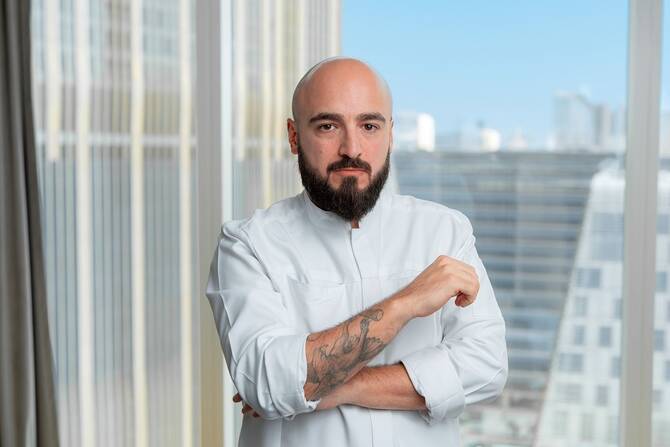

DUBAI: Italian chef Michele Di Bonito has worked in kitchens across Europe and the US, bringing a sharp, globally influenced style to his current role as culinary director at Kimpton KAFD Riyadh. With experience that includes time in Michelin-starred restaurants, he combines technical discipline with an instinct for bold, clean flavors.
At Kimpton KAFD Riyadh, Di Bonito’s emphasis aim is to create food that sparks conversation as much as it satisfies.
“For me, the true challenge of today’s chef is to elevate local products and build relationships with producers and artisans, thus contributing to the growth and development of the territory,” Di Bonito says.
“I am also passionate about teaching younger generations. Within my team, I work closely with many talented Saudi chefs from local schools, training them to become part of a new wave of Saudi chefs capable of competing at the international level,” he adds.
When you started out what was the most common mistake you made ?
I tended to overcomplicate dishes, thinking that more ingredients or techniques meant better results. I’ve learned that simplicity and respect for the main ingredient have a far greater impact than unnecessary complexity. I fully embrace the philosophy of “less is more.”
What’s your top tip for amateurs?
Focus on the basics. Learn to taste continuously, trust your senses, and don’t panic if something doesn’t go as planned. Also, invest in at least one high-quality knife.
What’s one ingredient that can instantly improve any dish?
A fresh, quality herb. It transforms flavors, adds aroma and freshness, and brings harmony to every dish. The right herb, at the right moment, can elevate even the simplest preparation.
When you go out to eat, do you find yourself critiquing the food?
I always observe, but I try to appreciate the intent behind each dish.
What is the most common mistake you’ve observed?
An overemphasis on theatrical presentation, which sometimes overshadows the flavor balance and harmony of the dish.
What is your favorite cuisine or dish to eat?
I love exploring authentic regional cuisines. I prefer dishes that tell the story of their territory, respect tradition, and demonstrate deep knowledge of ingredients. And no matter where I am, I never say no to a properly made pizza.
What’s your go-to dish if you have to cook something quickly at home?
Spaghetti with fresh tomatoes and basil. It’s simple, fresh, and light, yet deeply satisfying. Every time I cook it, I feel connected to my homeland and its culinary traditions.
What customer behavior most annoys you?
When guests show a lack of respect toward my team. We are here to serve the customer, but we are not at anyone’s beck and call.
What’s your favorite dish to cook?
I enjoy preparing dishes that highlight a single high-quality ingredient, allowing it to shine at its fullest potential. Transforming something simple into a surprising, light, and nourishing experience is deeply rewarding. I especially enjoy working with vegetables and applying ancestral techniques, like cooking over wood and charcoal.
What’s the most challenging dish for you to cook?
Cooking proteins such as meat or fish requires precise technique to ensure they are cooked perfectly and served at the right temperature. Achieving the ideal texture and flavor balance is always a test of skill.
As a leader, what are you like? Are you a disciplinarian, or are you more laidback?
I believe in leading by example and clear communication. I never raise my voice, but I am very attentive to detail and procedures. My priority is to teach and guide the team, motivating them without fear, and creating an environment where respect for food, work, and people is central. I’ve worked in kitchens with extremely high tension, and I can assure you that this is not the best way to get the best from a team.
Chef Michele’s gnocchi recipe
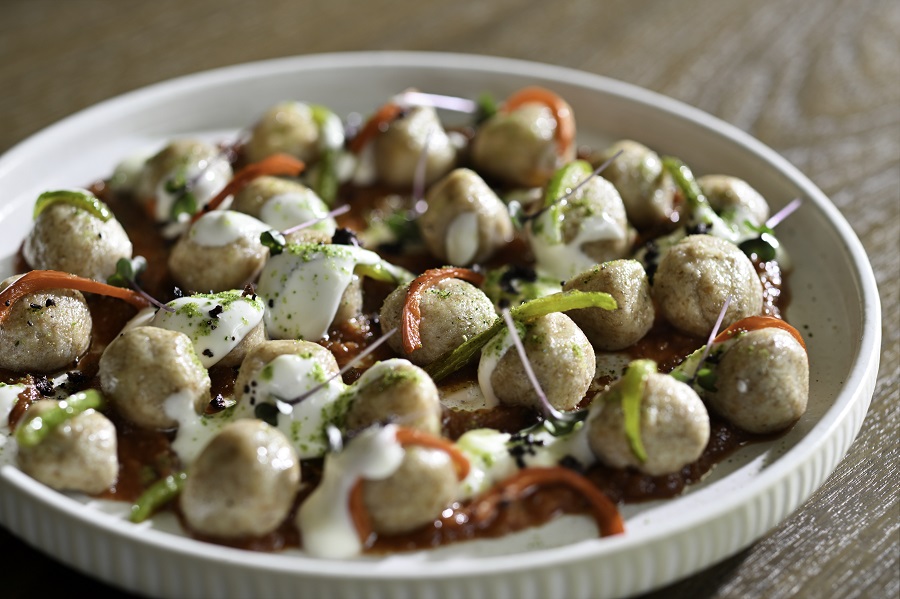
The chef's recipe is a gnocchi with okra and labneh sauce.
Ingredients for the Gnocchi:
1 kg mashed potatoes (peeled and riced)
290 g sifted soft wheat flour
10 g potato starch
30 g egg yolk
2 g fine salt
75 g grated Parmiggiano reggiano
Freshly grated nutmeg (generous amount)
Other Ingredients:
100 g sweet bell peppers (red and yellow), diced
50 g black olive tartare
100 g labneh (room temperature)
Salt and pepper to taste
Olive oil as needed
4–5 okra pods
30 g Tomato paste
Preparation:
Prepare the gnocchi dough:
In a large bowl, combine mashed potatoes, flour, potato starch, egg yolk, salt, Parmiggiano reggiano, and nutmeg. Mix until the dough just comes together, being careful not to overwork it.
Shape the gnocchi:
Roll the dough into ropes, cut into bite-sized gnocchi, and place on a floured tray.
Prepare the okra powder:
Blend the okra into a purée, spread thinly on a baking tray, and dry in a low oven (80°C) until fully dehydrated. Once dry, blend into a fine powder and set aside.
Sauté the peppers:
In a hot pan with olive oil, sauté the diced sweet peppers until tender and lightly caramelized. Season with salt and pepper. Set aside.
Cook the gnocchi:
Cook in salted boiling water until they float. Remove gently and toss with a touch of olive oil to prevent sticking.
Plating:
Spread tomato paste (at room temperature) on the base of the plate. Arrange the gnocchi on top, add the sautéed peppers and black olive tartare. Finish with a dusting of okra powder and labneh cream.


