MEDAN: Some residents of the flood-hit island of Sumatra resorted to looting, seeking food and water to survive, authorities said Sunday.
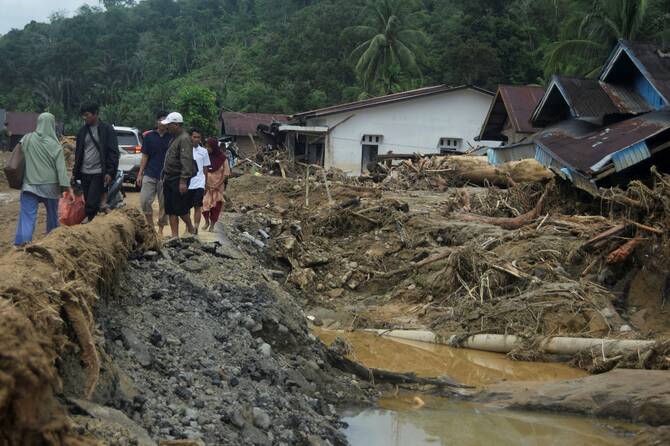
The floods, which hit nearly a week ago, have killed 303 people — with the number expected to rise as more bodies are recovered — and displaced thousands. The deluges triggered landslides, damaged roads, cut off parts of the island, and downed communication lines.
The challenging weather conditons and the lack of heavy equipment also hampered rescue efforts. Aid has been slow to reach the hardest-hit city of Sibolga and the district of Central Tapanuli district in North Sumatra.
Videos on social media showed looters scrambling past crumbling barricades, flooded roads and broken glass to get their hands on food, medicine and gas. Some even waded through waist-deep floodwaters to reach damaged convenience stores.
North Sumatra Police first reported looting incidents on Saturday evening, said police spokesperson, Ferry Walintukan, adding that regional police had been deployed to restore order.
“The looting happened before logistical aid arrived,” he said. “(Residents) didn’t know that aid would come and were worried they would starve.”
Eleven helicopters were deployed from Jakarta to the affected areas the day after the disaster for ongoing logistics distribution operations, especially to the deepest areas and areas where land access was cut off, Cabinet Secretary Teddy Indra Wijaya, said on Sunday, “but unpredictable weather often hampers aid operations.”
The Cabinet Secretariat released footage of the military air dropping supplies on the affected areas. In the dusty village of North Tapanuli, survivors waved frantically to the helicopters carrying aid. Meanwhile, four navy ships docked at a port to support aid distribution.
Indonesia, home to more than 280 million people, is frequently struck by earthquakes, volcanic eruptions and tsunamis due to its location on the “Ring of Fire,” an arc of volcanoes and fault lines in the Pacific Basin. Seasonal rains also frequently cause flooding and landslides.


![]()

Sumatra residents loot for food and water after deadly floods
Short Url
https://arab.news/grb88
Sumatra residents loot for food and water after deadly floods
- The floods, which hit nearly a week ago, have killed 303 people and displaced thousands


Latest updates


© 2026 SAUDI RESEARCH & PUBLISHING COMPANY, All Rights Reserved And subject to Terms of Use Agreement.