- Over 35 million children targeted for measles–rubella vaccination in latest campaign
- Pakistan is one of only two countries in the world where wild poliovirus remains endemic
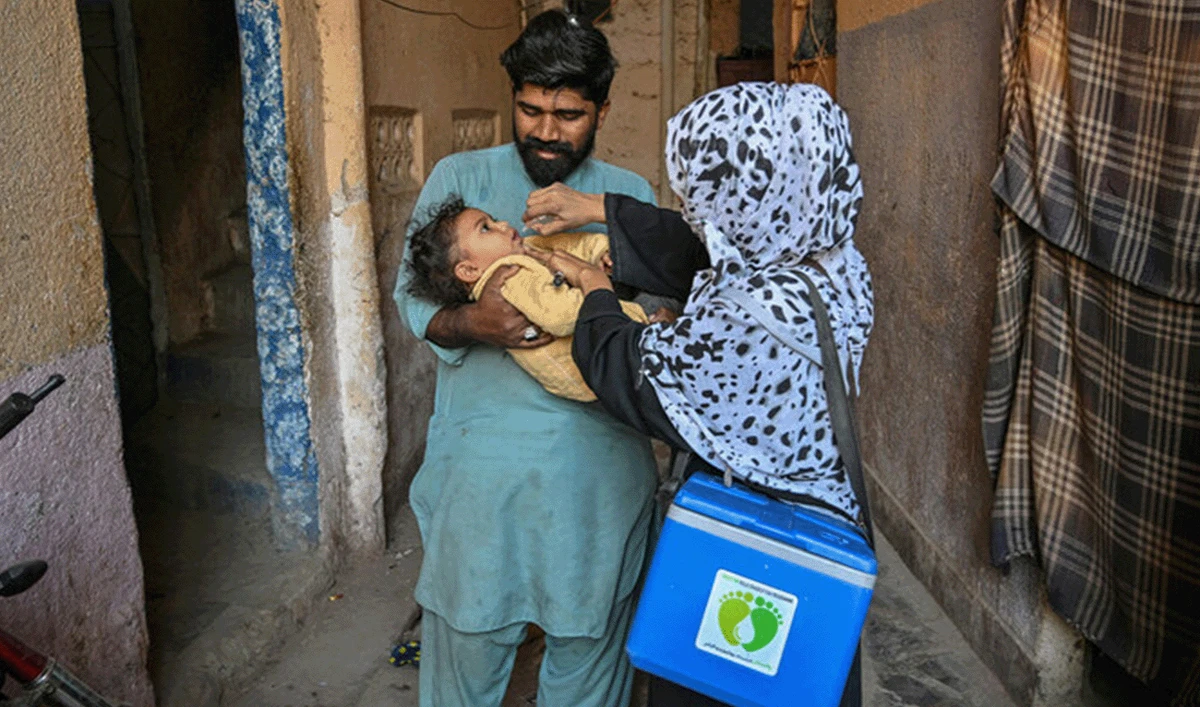
KARACHI: Pakistan has entered the final days of a nationwide immunization campaign aiming to protect more than 50 million children against measles, rubella and polio, with health officials reporting that over 15 million children have already received polio drops in the first nine days of the drive.
The two-week immunization drive, running from Nov. 17 to 29, is one of Pakistan’s largest in recent years and comes amid renewed concern over rising measles cases and continued transmission of wild poliovirus in high-risk districts. The campaign is being coordinated by the National Emergency Operations Center (National EOC), which oversees Pakistan’s polio eradication program.
“During the campaign, 35.4 million children are being vaccinated against measles–rubella,” the National EOC said. “In 90 high-risk districts, 19.4 million children are being administered polio drops.”
The Center said more than 15.2 million children had received polio drops in the first 10 days of the drive. Provincial figures include 4.637 million children vaccinated in Punjab, 5.219 million in Sindh, 3.553 million in Khyber Pakhtunkhwa, 1.455 million in Balochistan, 280,000 in Islamabad and 110,000 in Gilgit-Baltistan.
Vaccinations are being conducted through government health facilities, schools, religious seminaries and temporary outreach centers to reach remote and underserved communities.
“Parents are urged to ensure their children receive polio drops in this and every future polio campaign,” the National EOC said. “Protecting the nation’s future from polio is the national responsibility of every individual.”
Pakistan is one of only two countries in the world where wild poliovirus remains endemic.
Polio is a highly infectious and incurable disease that can cause lifelong paralysis. The only effective protection is through repeated doses of the Oral Polio Vaccine for every child under five during each campaign, alongside timely completion of all routine immunizations.
The South Asian nation’s efforts to eliminate poliovirus have been hampered by parental refusals, widespread misinformation and repeated attacks on anti-polio workers by militant groups. In remote and volatile areas, vaccination teams often operate under police protection, though security personnel themselves have also been targeted and killed in attacks.