When rescuers become family — the power of the human-animal bond

1 / 3
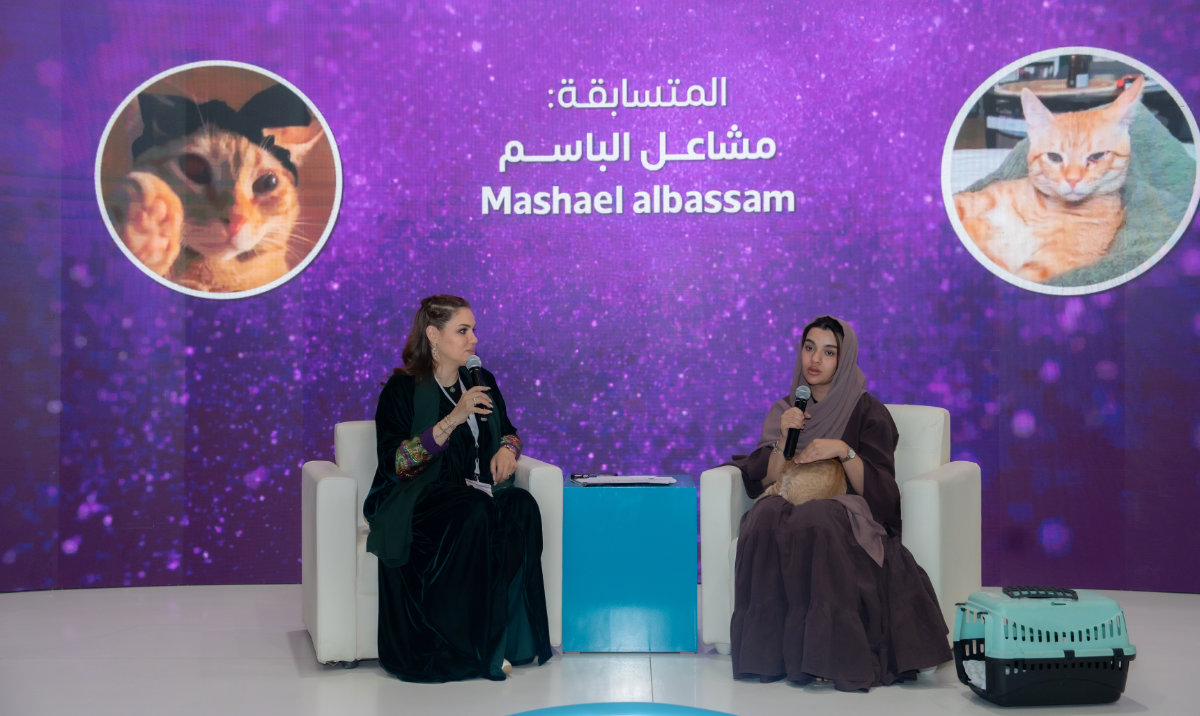
Winner Mashael Al-Bassam told how she rescued her cat, Peanut, who was discovered as a 3-month-old kitten with severe medical issues. (AN photo by Huda Bashatah)
2 / 3
Rahaf Al-Asiri, who took second place, recounted a deeply emotional story of finding a critically ill cat which was barely able to stand. (AN photo by Huda Bashatah)
3 / 3
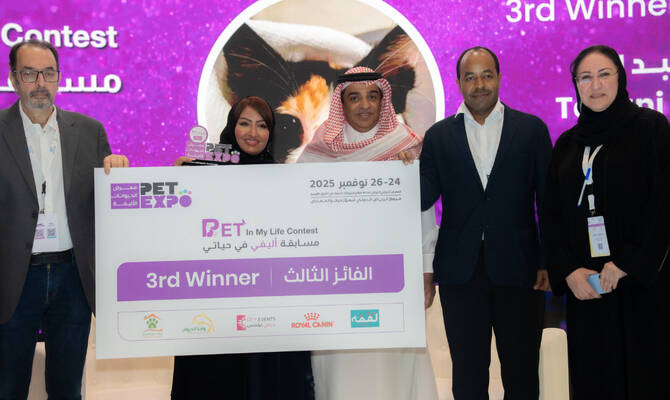
Third-placed Tahani Abdullah shared how her rescued cat became a source of healing during a difficult period of isolation and stress in her life. (AN photo by Huda Bashatah)
Short Url
Updated 27 November 2025
Follow

When rescuers become family — the power of the human-animal bond

  • Pet rescuers honored at Saudi Pet Expo, underlining Kingdom’s animal welfare movement

RIYADH: The steady rise of animal welfare in the Kingdom was celebrated at Saudi Pet Expo 2025 this week.

The event, now in its fourth year, was held at the Riyadh International Convention and Exhibition Center and brought together pet owners, rescuers, industry professionals and families.

This year’s edition featured grooming stations, veterinary clinics, pet accessory brands, breeders, tech startups, training services and educational workshops. It reflected a nationwide shift toward responsible pet ownership and the increasing interest of Saudi families, youth and volunteers in animal welfare.

Among the most popular events was the third “Pet in My Life” competition, which took place on Tuesday.

The entire edition was dedicated to pet rescuers — those individuals who have stepped in to save neglected or injured animals, providing them with safety, medical care and a permanent home. It honored “heroes of compassion” — ordinary people whose efforts often go unnoticed but have a profound impact on animal welfare in Saudi Arabia.

Organizers emphasized how many rescue stories show not only animals being saved, but also humans finding emotional healing as part of the process.

The competition aimed to raise awareness about the importance of rescuing stray and neglected animals, encourage the adoption of rescue animals rather than those bred for sale, and highlight the emotional and social transformation that happens when someone rescues and cares for an animal in need.

Open to those aged from 12 to 65, it drew hundreds of entries from across the Kingdom. Prizes included honorary shields, veterinary clinic discount cards, and pet and pet food supplies. The winner received SR1,500 ($400) in cash and a year’s supply of pet food. 


(AN photo by Huda Bashatah)

A panel including representatives of Royal Canin, City Events, Pet Oasis, Logma and the Amthalakum Endowment judged the submissions, eventually selecting Mashael Al-Bassam, Rahaf Al-Asiri and Tahani Abdullah as the three finalists who most strongly captured the spirit of the competition.

The three then shared their stories live in front of the judges and audience members.

Winner Al-Bassam told how she rescued her cat, Peanut, who was discovered as a 3-month-old kitten with severe medical issues. Peanut faced repeated surgeries, uterine removal, bleeding episodes and colitis, in addition to vision problems. 

Al-Bassam described how she dedicated herself to the cat’s recovery and how, over the course of three years, Peanut became “a part of me,” a companion whose resilience mirrored her own.

Al-Asiri, who took second place, recounted a deeply emotional story of finding a critically ill cat which was barely able to stand. Al-Asiri spent weeks nursing the animal back to health, feeding her around the clock and staying beside her through long nights of worry.

At times, she admitted, she cried while holding the fragile animal, determined to keep her alive. Her patience and resilience became a central part of the story, symbolizing the emotional bond that can develop between rescuer and animal.

Third-placed Abdullah shared how her rescued cat became a source of healing during a difficult period of isolation and stress in her life. As a doctor working long hours, she faced emotional exhaustion and bouts of depression. The presence of her cat, she explained, “brought joy back into my life.” 

She eventually built a dedicated space in her home for cats, channeling her love for rescue animals into a comforting environment that also helped her cope with the pressures of her profession.

Eman Al-Rajab, head of the media committee at the expo and presenter of the finalists’ interviews, told Arab News both she and the audience were deeply moved by the stories.

“Human stories always move me, especially those filled with emotion,” she said. “The story of Mashael Al-Bassam touched me the most. Her cat went through tremendous suffering, yet she never gave up on her. You could feel how strong their bond was.”

She added that Al-Asiri’s story demonstrated remarkable patience and devotion: “She fed the cat, stayed with her, cried with her, she did everything she could. It was truly inspiring.”

Al-Rajab said Abdullah’s story resonated for a different reason. “Her cat became a source of joy and healing. It pulled her out of depression and brought light back into her life. These stories show how rescuing an animal can transform both sides,” she said.

She added that, on top of the prizes, the participants’ real achievement was in spreading awareness about rescue work.

“These individuals are heroes,” she said. “Their real victory is encouraging adoption and protecting the lives of animals in our communities.”

Organizers of the Saudi Pet Expo say the event attracted a strong turnout, reflecting a broader cultural shift in the Kingdom that showed animal welfare was becoming more visible and valued in Saudi society.


Meet Abu Hajar, who collects perfume bottles

Updated 57 min 36 sec ago
Follow

Meet Abu Hajar, who collects perfume bottles

JEDDAH: Most people have several fragrances on rotation, adding a new scent every month or year. But collectors like Mohammed Abu Hajar, who acquire hundreds of blends, take their love of fragrance to another level.

Arab News spoke to Abu Hajar, one of Saudi Arabia’s renowned niche perfume experts, critics, and collectors.

He is known for his collaborations with established perfume houses to create specific fragrances and for his extensive knowledge shared as an influencer and a private museum owner.

With a collection of more than 6,000 perfume bottles in his home, he has earned a reputation not only for searching for rare and iconic fragrances but also for his deep understanding of the stories, craftsmanship, and heritage behind them.

Abu Hajar’s passion for perfumery began in Paris, where he was studying for a bachelor’s degree and has since evolved into an extraordinary personal journey marked by dedication.

He said: “I’ve spent years exploring the world of fragrances — reading, experiencing, collecting, and connecting with experts and creators. I am not only a collector, but I truly appreciate the stories behind each fragrance.”

When asked what sparked his passion for perfumes, Abu Hajar replied: “It all began in 1990 when I went to Paris to continue my college education and I witnessed how perfume’s deeply ingrained in the French culture. The other thing which really made me fall in love with perfumes was my mother’s favorite perfume, which I took with me just to remember her. I used to spray it in every spot of my apartment, especially my bed.”

After finishing his studies in Paris, Abu Hajar held a number of jobs in Jeddah before beginning his social media career, including working as a public relations manager and a manager for local celebrities. 

The perfume critic and expert has a large following on social media platforms (Snapchat, Instagram, X, YouTube), where he shares reviews, insights, and recommendations on niche perfumes and the world of fragrances.

Abu Hajar has a private perfume museum, displaying his passion for and collection of various perfumes.

“This museum showcases my personal collection of rare perfumes, ouds, ambers, and incense that you will not find in the market anymore, collected over 15 years. The collection is not for sale and is available for visits only by prior appointment.

“This museum is an experiment and an invitation for my followers to discover the history of scents with their noses,” he added.

He said that he offers his followers a different experience when they come to visit his museum.

Today, Abu Hajar’s collection includes more than 6,000 perfumes. Each piece holds a story, whether it is a rare vintage, a limited edition, or a scent that simply captured a moment in time. 

For him, it is not just about quantity or the perfume itself, but about the memory behind every bottle. 

“Every bottle holds a story, a memory, a piece of identity,” he said.

“My collection is a reflection of years of passion, exploration, and a deep appreciation for the world of perfumery. Each perfume bottle and the memories associated with them are precious to me,” he added.

The collection includes historical and modern perfumes that have been worn by royalty and presidents. “Also, you will find scents from Italy, France, Romania, Germany, Morocco, Turkey, India, UAE, Oman, and USA,” he said.

“I have been buying perfume bottles to capture my experiences in each country. It’s my style to capture and relive my experiences in those scents.”

He revealed that he has perfumes and ouds worn by great personalities such as Crown Prince Mohammed bin Salman, King Abdullah bin Abdulaziz, the late Iraqi president Sadam Hussain, the Sultan of the Ottoman Empire, Suleiman, the special oud of the black stone in Makkah, and many others. 

Asked what to wear every day, he said: “The bottles are in my living room, so I see them when I wake up. I shift the bottles around according to my mood, and according to the occasions I am going to. The ones I’m not wearing at present I put in the back, while my current favorites reside in the front,” he said.

To stay updated with the latest launches, Abu Hajar travels around the world.

“I have to attend international events and niche forums to meet experts and representatives of top brands to exchange opinions and sometimes witness the steps of production,” he said.

He is also a global food critic, world traveler, and lifestyle influencer, using his platform to cover a range of luxury experiences.

“In the back of our mind, we always know food and scents are closely connected. Perfumers discovered a long time ago that certain food smells can be used in fragrance production.”

Abu Hajar told Arab News that once he reaches 10,000 bottles, he will apply to be recognized by Guinness World Records.