General sworn in as Guinea-Bissau leader in swift coup after disputed election

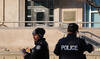
Members of Guine Bissau security forces patrol near the residence of opposition leader Fernando Dias da Costa in Bissau on Thursday. (AFP)
Short Url
Updated 27 November 2025
Follow

General sworn in as Guinea-Bissau leader in swift coup after disputed election

  • Guinea-Bissau is a small coastal nation situated between Senegal and Guinea that is a notorious transit point for cocaine bound for Europe

BISSAU: Guinea-Bissau’s military installed General Horta Nta Na Man as transitional president on Thursday, an army statement said, a day after soldiers toppled the civilian leadership in a swift power grab that followed a fiercely contested presidential vote.

The self-styled “High Military Command for the Restoration of Order” announced in a televised statement on Wednesday that they had ousted President Umaro Sissoco Embalo, in the latest episode of unrest in the coup-prone country.

Radio France Internationale reported that Nta would serve as president for a one-year transitional period.

Wednesday’s army takeover came a day before provisional results were expected to be announced in the race between Embalo and Fernando Dias, a 47-year-old political newcomer who had emerged as Embalo’s top challenger to run the West African state, a hub for cocaine trafficking.

Ahead of the coup announcement, witnesses said gunfire rang out in the capital, Bissau, for about an hour near the electoral commission headquarters and presidential palace.

Embalo called French media on Thursday to say he had been deposed and that his whereabouts were unknown. The officers did not specify if they had taken Embalo into custody.

The African Union chairperson, Mahmoud Ali Youssouf, condemned the coup in a statement on social media and called for the immediate and unconditional release of Embalo “and all detained officials.”

Heads of state from the West African regional bloc ECOWAS also condemned the coup and voiced concern over the reported arrests of Embalo, senior officials, and electoral personnel.

Central Bissau was mostly quiet on Thursday, with soldiers on the streets and many residents staying indoors even after the overnight curfew lifted. Businesses and banks were closed.

Dias had accused Embalo in a video statement of staging a “false coup attempt” to derail the election because he feared he would lose.

In a statement to Reuters on Thursday, the coalition backing Dias demanded that authorities be allowed to release results from Sunday’s presidential election.

The coalition also called for the release of former Prime Minister Domingos Simoes Pereira, defeated by Embalo in the 2019 election. He was detained on Wednesday, according to relatives and security sources.

Security forces used tear gas to break up a small protest outside the building where Pereira is said to have been detained, a Reuters witness said.

They also broke up a gathering near Dias’s home on the outskirts of Bissau, and two witnesses said that live rounds were fired.

There were no reports of casualties related to the violence on Wednesday or Thursday.

Guinea-Bissau is a small coastal nation situated between Senegal and Guinea that is a notorious transit point for cocaine bound for Europe. Under Embalo’s administration, the cocaine trade appeared to boom.

The country has been shaken by at least nine coups and attempted coups between 1974, when it gained independence from Portugal, and 2020, when Embalo took office.

Dias had campaigned partly on the promise of ending the military’s intervention in politics.

Embalo has said he has survived three coup attempts during his time in office. 

His critics have accused him of manufacturing crises as an excuse for crackdowns.

Election observers from the African Union and ECOWAS, in a joint statement on Wednesday night, expressed “deep concern” over the coup announcement, said officials in charge of the electoral process had been arrested, and called for their immediate release.

Nigerian former President Goodluck Jonathan, who had been observing the vote as part of the West African Elders Forum, was not reachable on Thursday, said Joel Ahofodji, an ECOWAS spokesperson.

“I wouldn’t say that he (Goodluck Jonathan) and others are trapped in Guinea-Bissau, but we don’t know his whereabouts,” Ahofodji said.

Edwin Snowe, a senator from Liberia who had been among a group of parliamentary observers, told Reuters he left the country on Tuesday and had been unable to reach fellow observers who were still there since Wednesday.


Palestinian protester, detained for nearly a year, says ‘inhumane’ jail conditions prompted seizure

Updated 5 sec ago
Follow

Palestinian protester, detained for nearly a year, says ‘inhumane’ jail conditions prompted seizure

A Palestinian woman who has been held in an immigration jail for nearly a year after she attended a protest in New York City said she suffered a seizure after fainting and hitting her head last week, an episode she linked to “filthy” and “inhumane” conditions inside the privately run detention facility.
Leqaa Kordia, 33, was hospitalized for three days following the seizure, which she said was the first of her life. She has since returned to the Prairieland Detention Facility in Texas, where she has been held since March.
In a statement released through her lawyers on Thursday, Kordia said she was shackled the entire time she was hospitalized and prevented from calling family or meeting with her lawyers.
“For three days in the emergency room, my hands and legs were weighed down by heavy chains as they drew my blood and gave me medications,” Kordia said. “I felt like an animal. My hands are still full of marks from the heavy metal.”
Her doctors, she said, told her the seizure may have been the result of poor sleep, inadequate nutrition and stress. Her lawyers previously warned that Kordia, a devout Muslim, had lost 49 pounds (22 kilograms) and fainted in the shower, in part because the jail had denied her meals that comply with religious requirements.
“I’ve been here for 11 months, and the food is so bad it makes me sick,” the statement continued. “At Prairieland, your daily life — whether you can have access to the food or medicine you need or even a good night’s sleep — is controlled by the private, for-profit business that runs this facility.”
Department of Homeland Security spokesperson Tricia McLaughlin didn’t immediately respond to a request for comment from The Associated Press, but said in a statement to The New York Times that Kordia wasn’t being mistreated and was receiving proper medical care.
A resident of New Jersey who grew up in the West Bank, Kordia was among around 100 people arrested outside Columbia University during protests at the school in 2024.
The charges against her were dismissed and sealed. But information about her arrest was later given to the Trump administration by the New York City police department, which said it was told the records were needed as part of a money laundering investigation.
Last year, Kordia was among the first pro-Palestinian protesters arrested in the Trump administration’s crackdown on noncitizens who had criticized Israel’s military actions in Gaza. She is the only one who remains jailed.
She has not been accused of a crime and has twice been ordered released on bond by an immigration judge. The government has challenged both rulings, an unusual step in cases that don’t involve serious crimes, which triggers a lengthy appeals process.
Kordia was taken into custody during a March 13 check-in with US Immigrations and Customs Enforcement. At the time, federal officials touted her arrest as part of the sweeping crackdown on pro-Palestinian campus activists, pointing to her 2024 arrest outside of Columbia as proof of “pro-Hamas” activities.
Kordia said she joined the demonstration after Israel killed scores of her relatives in Gaza, where she maintains deep personal ties. “My way of helping my family and my people was to go to the streets,” she told The Associated Press in October.
Federal officials have accused Kordia of overstaying her visa, while casting scrutiny on payments she sent to relatives in the Middle East. Kordia said the money was meant to help family members whose homes were destroyed in the war or were otherwise suffering.
An immigration judge later found “overwhelming evidence” that Kordia was telling the truth about the payments. Attorneys for Kordia say she was previously in the US on a student visa, but mistakenly surrendered that status after applying to remain in the country as the relative of a US citizen.
In her statement on Thursday, Kordia said the detention facility was “built to break people and destroy their health and hope.”
“The best medicine for me and everyone else here is our freedom,” she added.