
LONDON: With Lebanon’s parliamentary elections only six months away, the war-weary country is still mired in economic crisis, divisions over diaspora voting, escalating Israeli attacks, and disputes over Hezbollah’s disarmament.
At the start of 2025, parliament ended more than two years of political paralysis when it formed a new government, appointing Joseph Aoun as president and Nawaf Salam as prime minister. However, the country’s coalition-based system has continued to impede decision making.
Meanwhile, even as the country marks exactly one year since the Israel-Hezbollah ceasefire came into effect, Israeli strikes have continued and Hezbollah has refused to disarm, threatening a return to open conflict.
Against this backdrop, analysts say that even timely elections in May may not prevent a return to the institutional gridlock that followed the 2022 vote, nor stave off further instability.
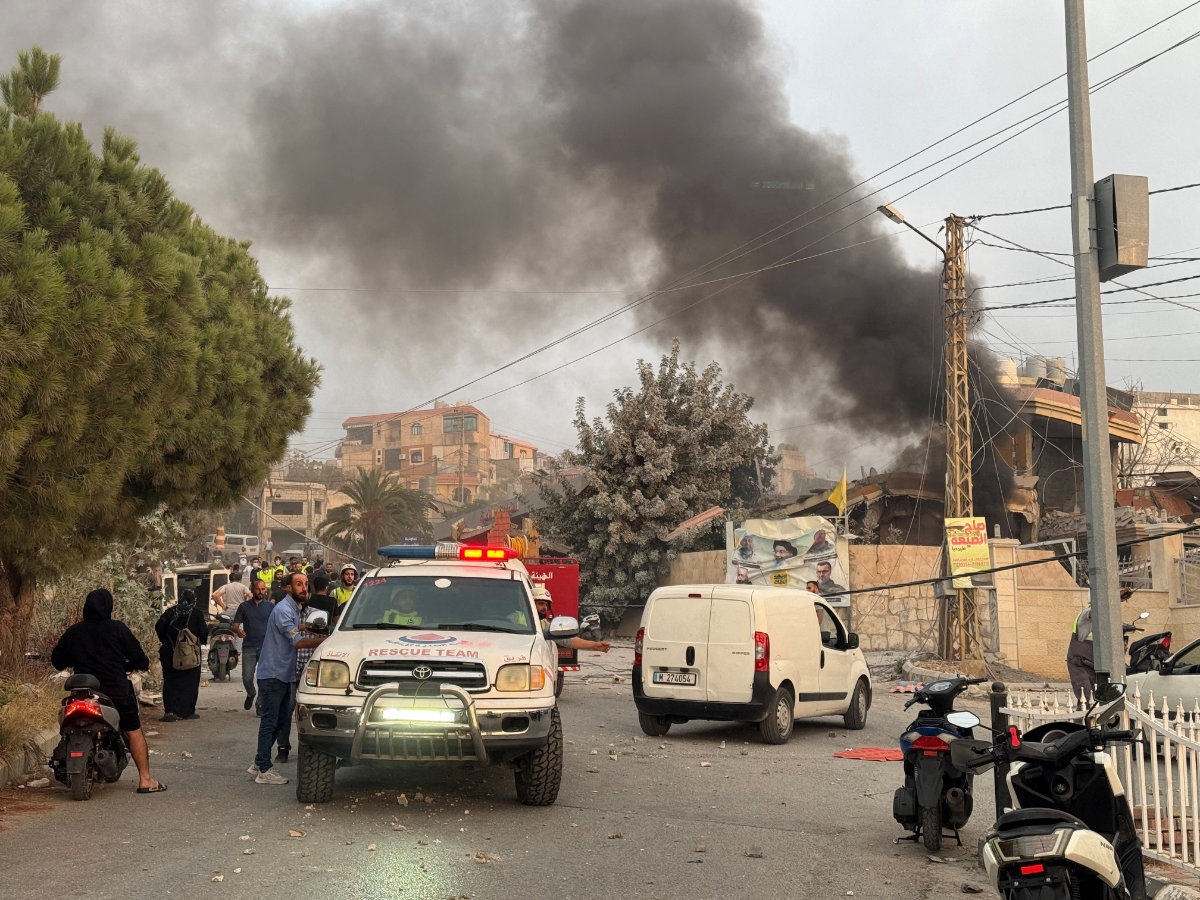
Smoke rises after Israeli strikes following Israeli military's evacuation orders, in Chehour, southern Lebanon, on November 19, 2025. (REUTERS)
“The main risk is going into a period of paralysis again,” Lebanese economist and political adviser Nadim Shehadi told Arab News. “Elections in May mean that this government has a few months (left), and this is not enough time for the reforms or programs.”
Shehadi noted that post-election consultations to select a prime minister and form a new cabinet could prolong uncertainty. “During this time, the government of Nawaf Salam will be a caretaker government, a sort of a lame duck,” he said.
The current government will be difficult to replicate and needs more time to develop and implement a transition. As such, “postponing the elections is not such a bad thing,” Shehadi said.
Still, he added, if political factions intend to delay government formation, they can still do so after the vote.
“The last thing we need is paralysis,” Shehadi said. “The principal cause of the political, economic and financial crisis has been the ability of Hezbollah to logjam the system.”
In October, US special envoy Tom Barrack warned that if Hezbollah comes under serious Israeli military pressure, “it will almost certainly seek to postpone the May 2026 elections to preserve its power base and regroup.”
He added in a post on X that “by invoking ‘national security’ and ‘wartime instability,’ Hezbollah could justify a delay.”
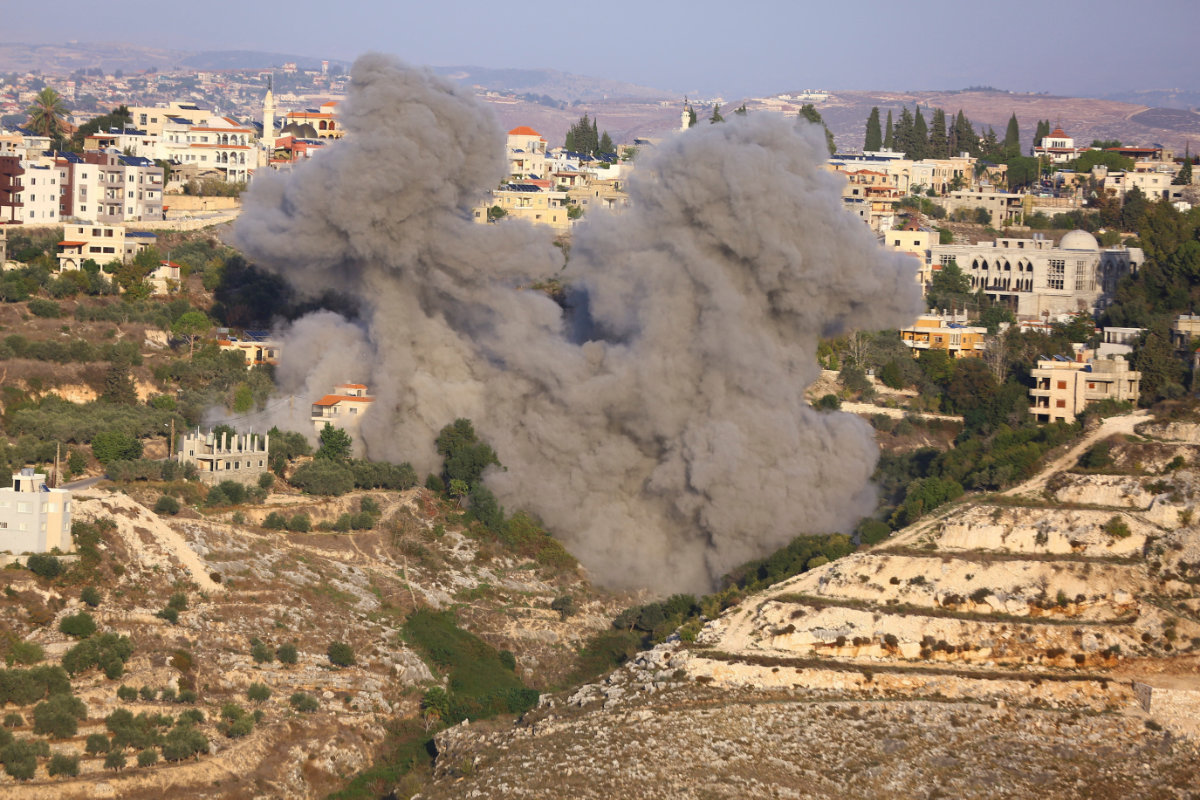
Smoke rises after Israeli strikes following Israeli military's evacuation orders, in Chehour, southern Lebanon, on November 19, 2025. (REUTERS)
Israel has intensified attacks on Lebanon in recent months, despite a ceasefire deal in place since November last year. It claims it is targeting Hezbollah-linked sites to prevent the militia from regrouping after heavy losses in late 2024.
Earlier this month, Israeli Prime Minister Benjamin Netanyahu accused Hezbollah of trying to rearm and vowed that Israel would do whatever is necessary to stop it.
“We expect the Lebanese government to uphold its commitments, namely, to disarm Hezbollah,” he said. “But it’s clear that we’ll exercise our right to self-defense as stipulated in the ceasefire terms.”
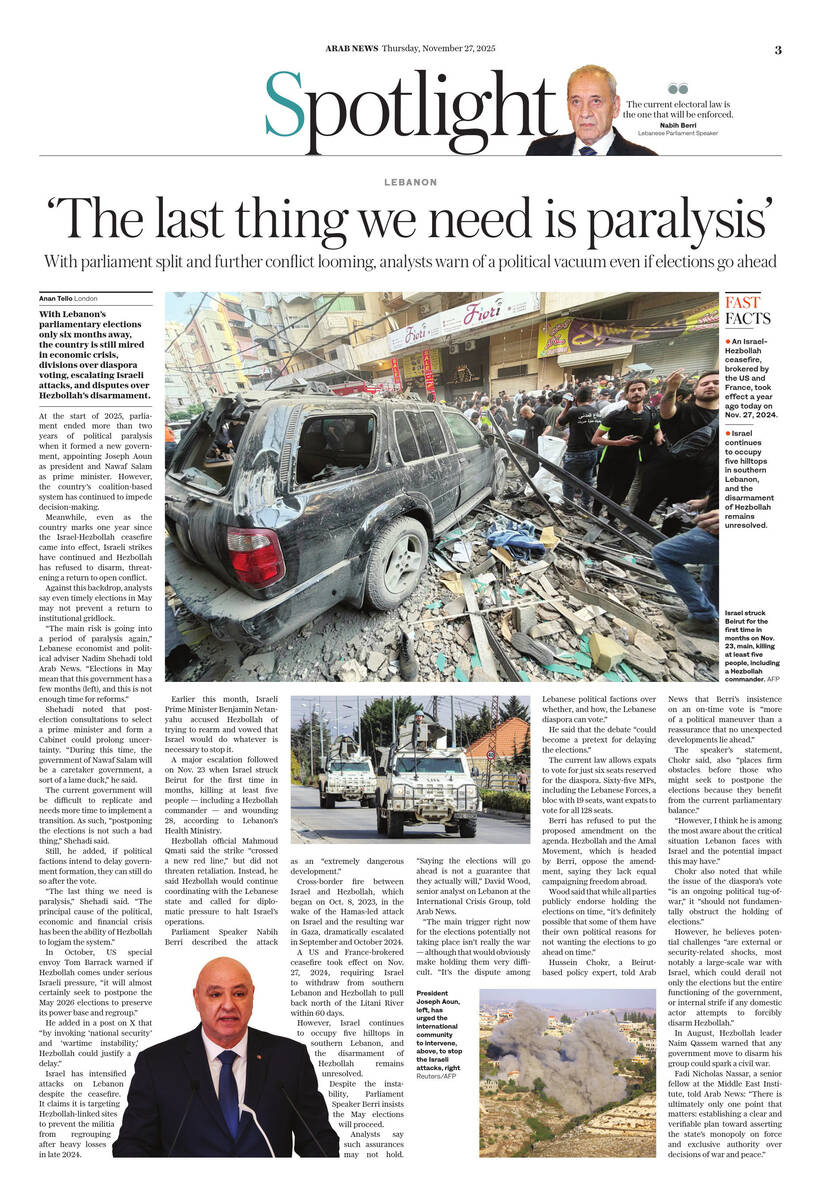
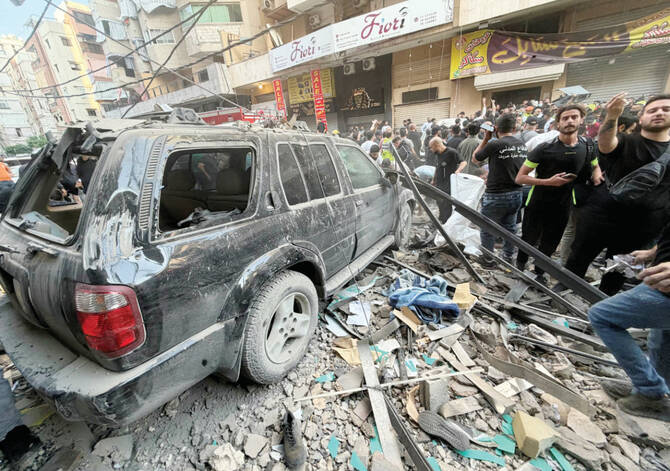
A major escalation followed on Nov. 23 when Israel struck Beirut for the first time in months, killing at least five people — including a Hezbollah commander — in the Haret Hreik area and wounding 28, according to Lebanon’s health ministry.
Israel said the strike targeted senior Hezbollah commander Haytham Ali Tabatabai in what was reportedly its third attempt to kill him since the war last year, according to Israeli media.
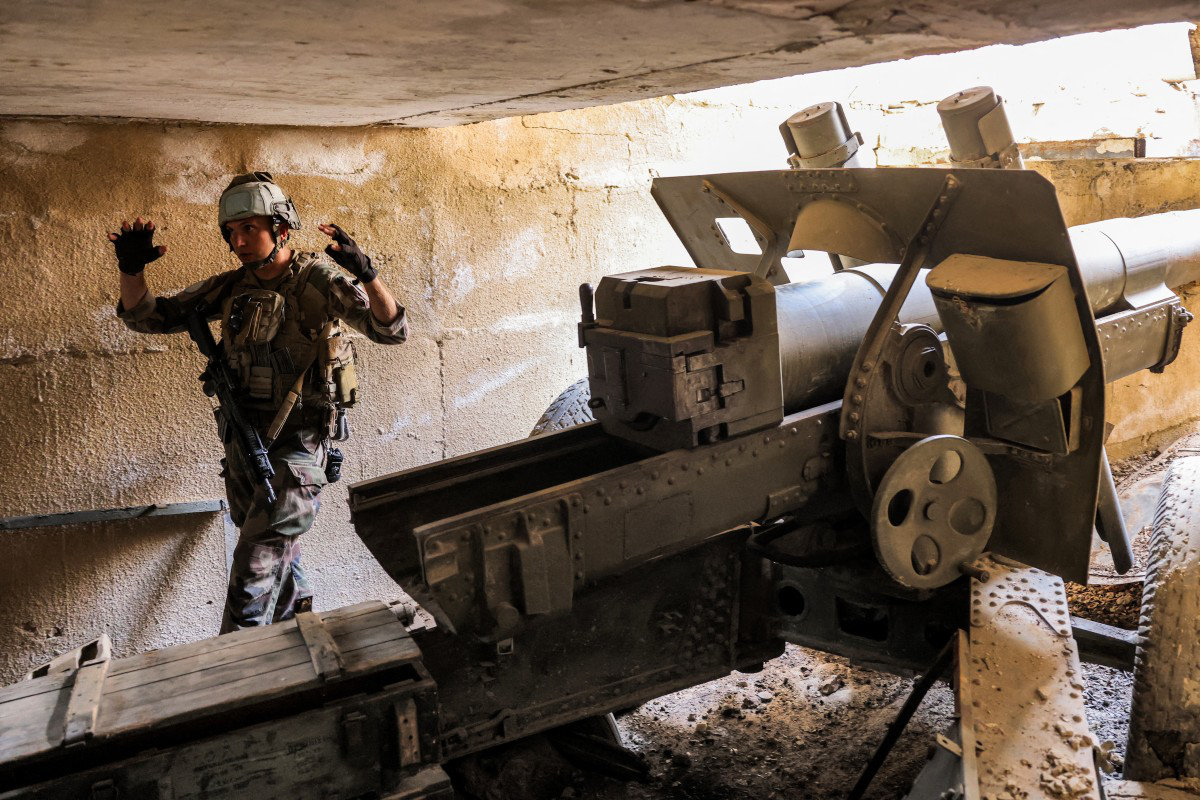
A peacekeeper of the United Nations Interim Force in Lebanon (UNIFIL) stands by an artillery gun at a fortified position formerly held Iran-backed Hezbollah in the Khraibeh Valley in el-Meri in south Lebanon on August 27, 2025. (AFP)
Israeli officials say Hezbollah is rebuilding its military capabilities, smuggling weapons into Lebanon and increasing the production of explosive drones as an alternative to rockets and missiles.
Netanyahu said after the strike that Israel “will not allow Hezbollah to rebuild its power.”
Hezbollah official Mahmoud Qmati said the strike “crossed a new red line,” adding that “all options are available” and that the group’s leadership would “study the matter and undertake the necessary response.”
But Qmati did not threaten retaliation. Instead, he said Hezbollah would continue coordinating with the Lebanese state and called for diplomatic pressure to halt Israel’s operations.
President Aoun also urged the international community to intervene to stop the Israeli attacks.
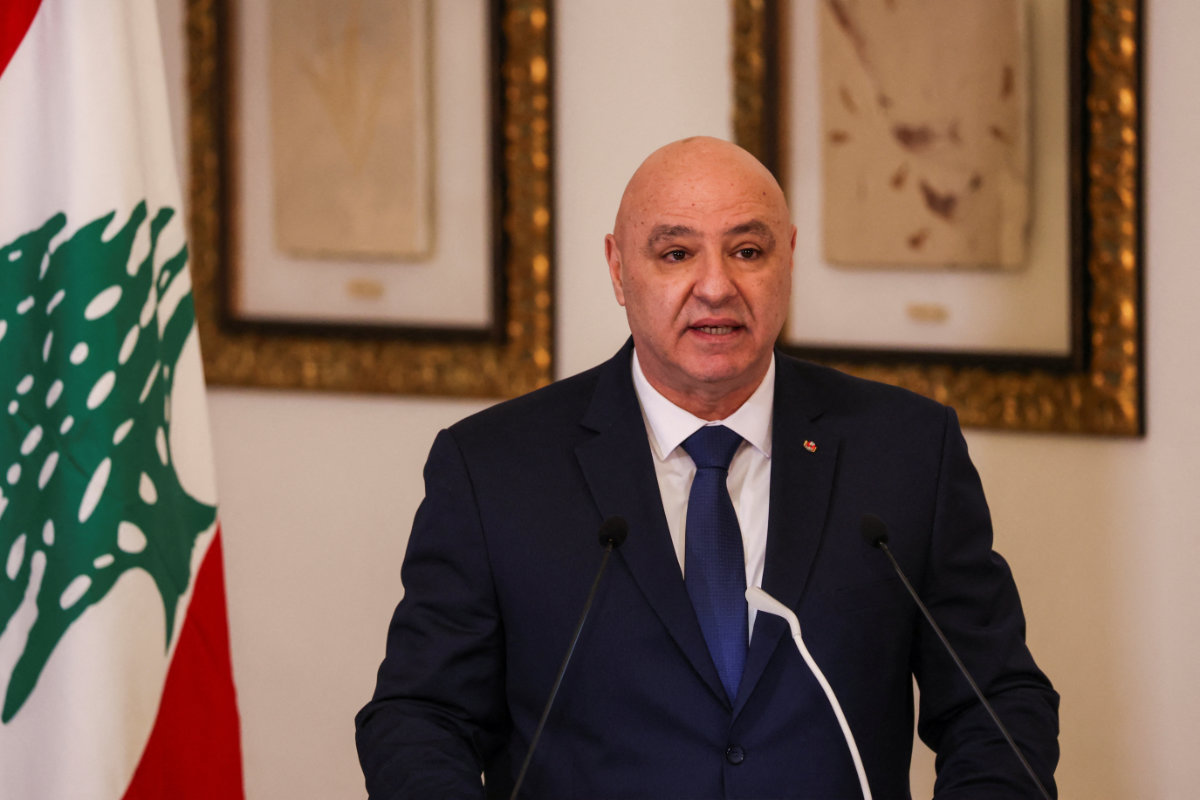
Lebanese President Joseph Aoun. (REUTERS/File Photo)
Parliament Speaker Nabih Berri, meanwhile, described the attack as an “extremely dangerous development.” He told Lebanese media on Nov. 25 that the airstrike shows that Israel’s aggression is likely to “intensify and expand in the coming period.”
Cross border fire between Israel and Hezbollah, which began on Oct. 8, 2023, in the wake of the Hamas-led attack on Israel and the resulting war in Gaza, dramatically escalated in September and October 2024.
Israeli airstrikes killed many of Hezbollah’s top brass, including its former secretary-general Hassan Nasrallah, as well as 5,000 of its fighters, and destroyed much of its arsenal.
FASTFACT
Israeli-Hezbollah ceasefire
• An Israel-Hezbollah ceasefire, brokered by the US and France, took effect a year ago today on Nov. 27, 2024.
• The ceasefire required a full Israeli withdrawal from Lebanon and for Hezbollah to retreat north of the Litani River.
• Israel continues to occupy five hilltops in southern Lebanon, and the disarmament of Hezbollah remains unresolved.
A US and France-brokered ceasefire took effect on Nov. 27, 2024, requiring Israel to withdraw from southern Lebanon and Hezbollah to pull back north of the Litani River within 60 days, with the Lebanese army deploying to the border.
Yet the truce remains tenuous. Israel continues to occupy five hilltops in southern Lebanon, and the disarmament of Hezbollah remains unresolved.
At least 127 Lebanese civilians, including children, have been killed in Israeli attacks since the ceasefire, the UN High Commissioner for Human Rights said on Nov. 25. The UN agency has called for a swift and impartial investigation into Israeli strikes in Lebanon.
Despite the instability, parliament speaker Berri insists the May elections will proceed. He told the Asharq Al-Awsat newspaper on Nov. 24 that the elections will be held on schedule “without justification for delay” and under the current electoral law.
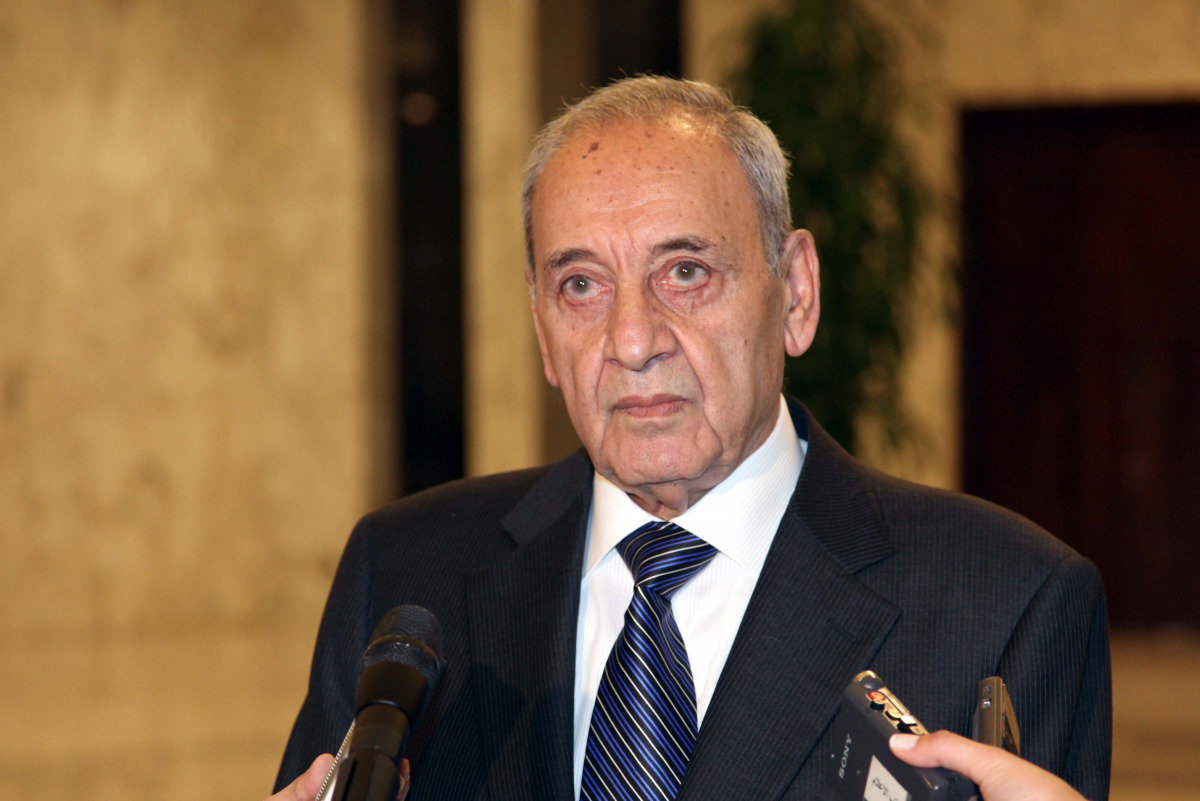
Parliament Speaker Nabih Berri. (AFP file photo)
However, analysts say such assurances may not hold. “Saying the elections will go ahead is not a guarantee that they actually will,” David Wood, senior analyst on Lebanon at the International Crisis Group, told Arab News.
“The main trigger right now for the elections potentially not taking place isn’t really the war — although that would obviously make holding them very difficult.
“It’s the dispute among Lebanese political factions over whether, and how, the Lebanese diaspora can vote, and whether they would be allowed to vote for all members of parliament in their district or only for the six seats reserved for the diaspora.”
He said that the debate “could become a pretext for delaying the elections, because the different political parties don’t agree on how the election should take place.”
The current law allows expats to vote for just six seats reserved for the diaspora. Sixty-five MPs, including the Lebanese Forces, a bloc with 19 seats, want expats to vote for all 128 seats.
Berri has refused to put the proposed amendment on the agenda, arguing that the electoral law is constitutional and cannot be “urgently” changed. The bill also seeks to extend the expatriate registration deadline from Nov. 20 to Dec. 31.
Hezbollah and the Amal Movement, which is headed by Berri, oppose the amendment, saying they lack equal campaigning freedom abroad, the news website NaharNet reported. Lebanese Forces MP Georges Adwan says Berri is now responsible for any delay in the elections.
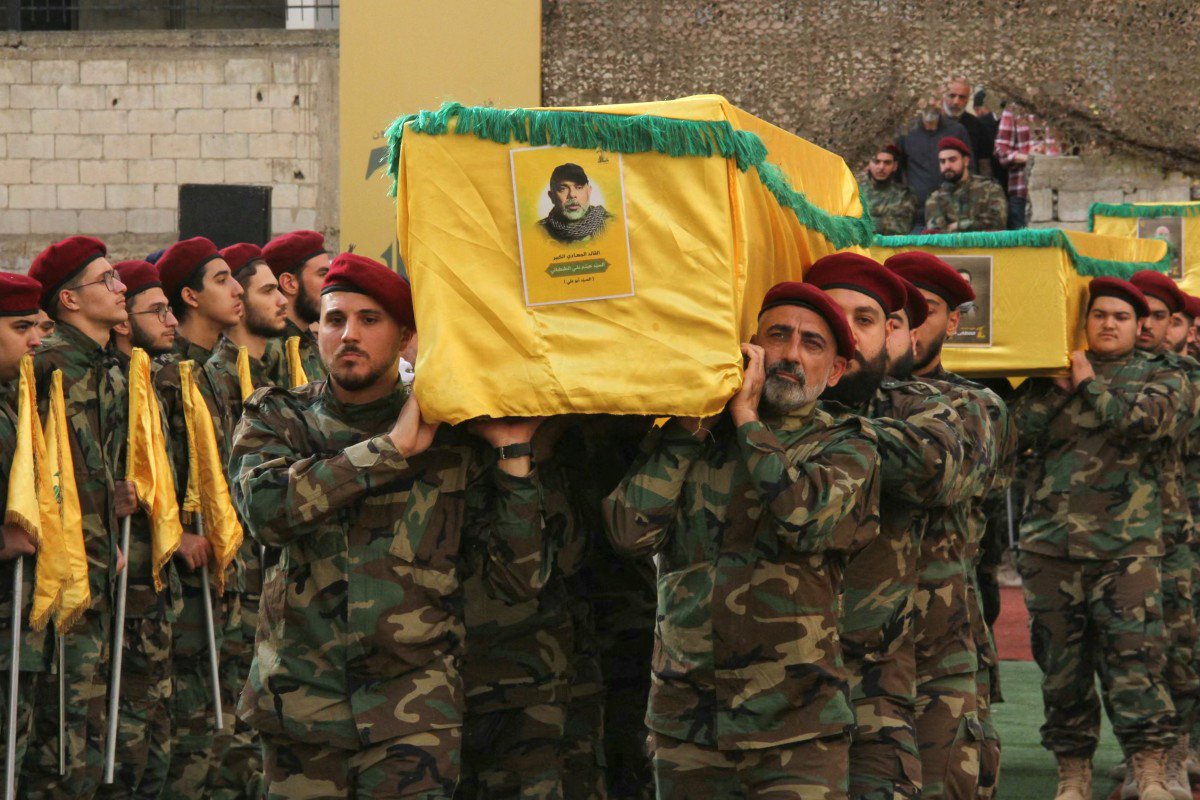
Hezbollah fighters carry the coffins of their top military chief Haytham Ali Tabatabai and others killed in an Israeli strike a day earlier during their funeral in Beirut’s southern suburbs on November 24, 2025. (AFP)
As of Nov. 20, more than 137,000 Lebanese abroad had registered to vote in 2026, according to the foreign ministry.
Wood said that while all parties publicly endorse holding the elections on time, “it’s definitely possible that some of them have their own political reasons for not wanting the elections to go ahead on time — another factor to consider.”
Other analysts share that view. Hussein Chokr, a Beirut-based policy expert, told Arab News that Berri’s insistence on an on-time vote is “more of a political maneuver than a reassurance that no unexpected developments lie ahead.”
The speaker’s statement, Chokr said, also “places firm obstacles before those who might seek to postpone the elections because they benefit from the current parliamentary balance and do not want it to change.”
Chokr continued: “However, I think he is among the most aware — and certainly among the most concerned — about the critical situation Lebanon faces with Israel and the potential impact this may have on domestic political milestones, including the upcoming elections.”
He added that “major administrative obstacles” to the governance or organization of parliamentary elections are “unlikely” if the 2022 electoral law is followed without amendments.
Lebanon’s parliament is highly fragmented, with no single bloc holding a majority, a weakened pro-Hezbollah camp, a stronger but divided anti-Hezbollah “sovereignist” camp, and a small but symbolically significant reformist contingent.
The chamber still operates under the same sectarian quota system.
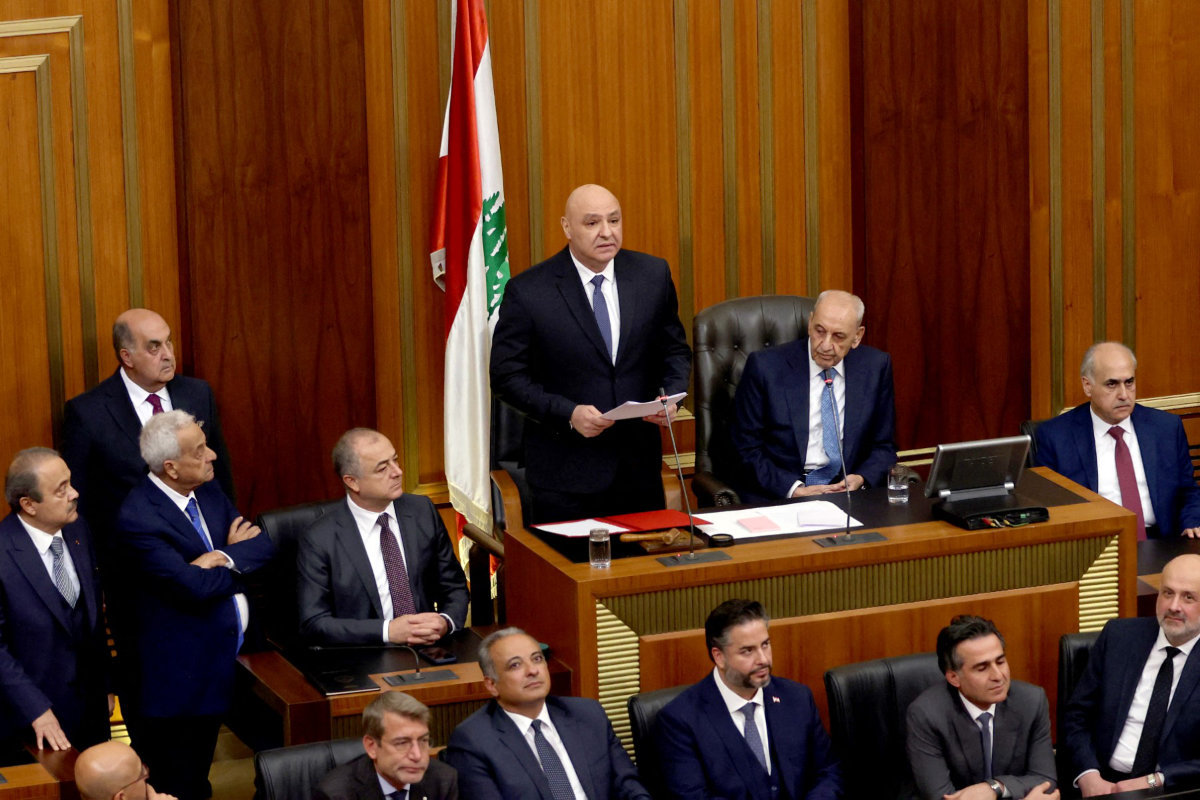
Newly elected Lebanese president Joseph Aoun delivers a speech at the parliament building in Beirut on January 9, 2025. (AFP)
Chokr also noted that while the issue of the diaspora’s vote “is an ongoing political tug-of-war,” it “should not fundamentally obstruct the holding of elections.”
However, he believes potential challenges “are external or security-related shocks, most notably a large-scale war with Israel, which could derail not only the elections but the entire functioning of the government, or, God forbid, internal strife if any domestic actor attempts to forcibly disarm Hezbollah.”
In August, Hezbollah leader Naim Qassem warned that any government move to disarm his group could spark a civil war. He said Hezbollah will not “surrender its weapons” while Israel continues its attacks, occupies Lebanese land, and holds Lebanese prisoners.
On Oct. 17, UN experts said Israeli strikes causing civilian casualties were “seriously undermining” Lebanon’s efforts to disarm Hezbollah.
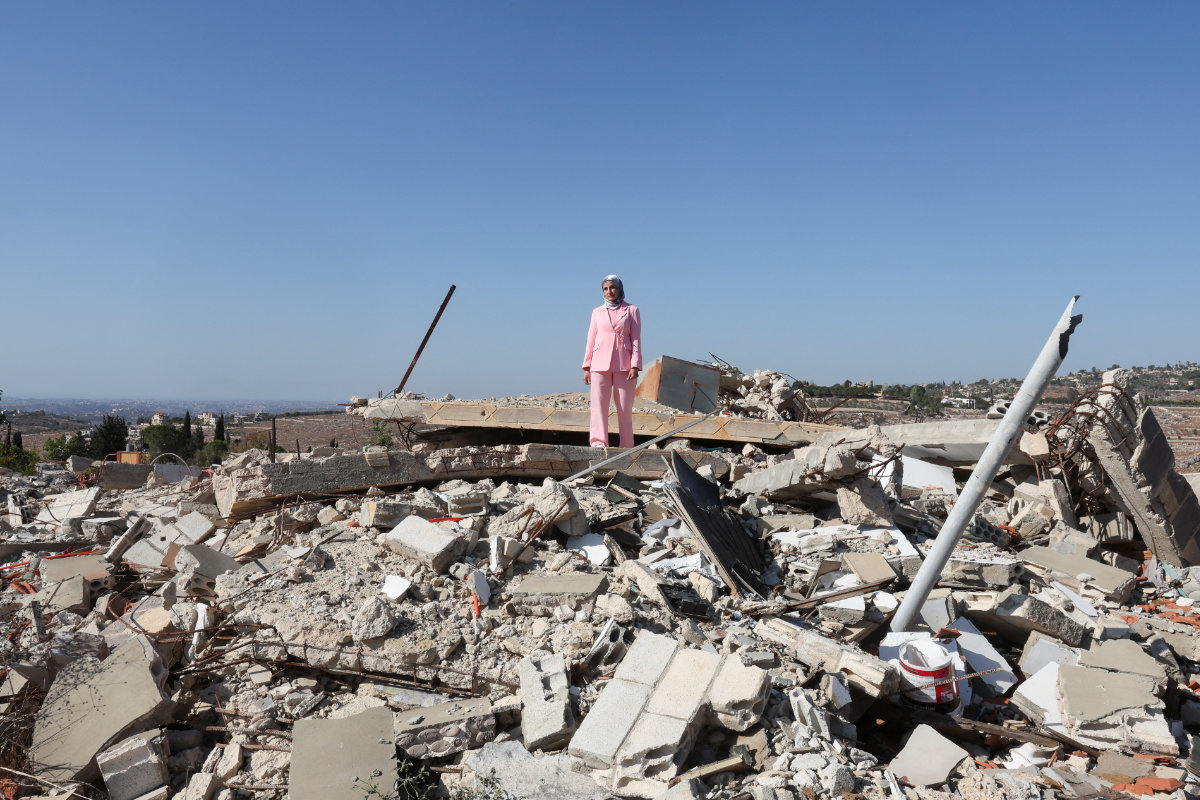
Bidaya Sleiman, a member of Houla's Municipal Council, stands on the rubble of her home in Houla, southern Lebanon, which was destroyed in an Israeli strike on October 11, 2025. (REUTERS)
Fadi Nicholas Nassar, a senior fellow at the Middle East Institute, told Arab News: “There is ultimately only one point that matters: establishing a clear and verifiable plan toward asserting the state’s monopoly on force and exclusive authority over decisions of war and peace.
“That pathway remains undefined at great expense to the state’s domestic and international credibility.
“From whether a capable government is quickly formed to lead Lebanon out of its crisis after a next round of elections to whether war can be averted, all depend on Hezbollah’s full disarmament.
“The state’s legitimacy depends on its ability and willingness to exercise its sovereign responsibilities.
“When those responsibilities are left unclaimed or ambiguous, existential decisions over war and peace are made elsewhere and Lebanon and its citizens bear the cost for choices they do not make.”