

Why Syria’s uncertain new dawn is straining the hopes of those returning home

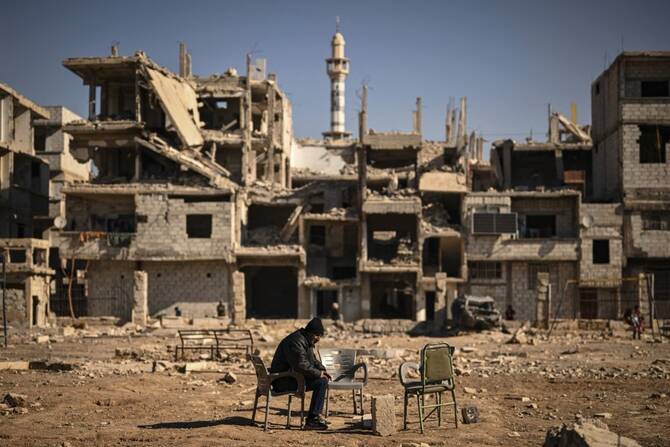
Although Syrians are eager to return to their homes, many remain hesitant due to the extent of the damage to infrastructure and the slow pace of economic recovery. (AFP/File)
Short Url
Updated 25 November 2025
Follow

Why Syria’s uncertain new dawn is straining the hopes of those returning home

  • Although refugees are eager to return home, many remain hesitant due to fragile security and a broken economy
  • US sanctions relief offers new avenues to recovery, but experts say it will take time for Syrians to feel the benefit

LONDON: Maher thought he would never set foot in his Damascus neighborhood again after he fled 13 years ago. But when a rebel offensive toppled the Bashar Assad regime a year ago, he seized the opportunity to return to his home in the Yarmouk camp.

Four months ago, the Syrian-Palestinian father of two returned to the capital to see whether he could move his family back to their former home. However, hopes of rebuilding his past life there were quickly dashed when he saw the extent of the damage.

“The neighborhood is now in ruins, and our home is nothing but a pile of gray rubble,” Maher told Arab News. “It was painful, sad, hard to see.”


Children look on from inside their tent in the village of Al-Hawash in Syria's west-central Hama province on May 22, 2025. (AFP)

Thirteen years earlier, Maher — whose name has been changed to protect his identity — was forced to flee when regime forces besieged Yarmouk to root out rebel fighters it claimed were hiding in the Palestinian camp.

As the civil war engulfed the country, Maher decided to leave Syria altogether, joining the millions who paid smugglers to take them on the perilous sea crossing to Europe.

With Assad gone, Maher allowed himself to dream of returning to his city of birth. But that dream was soon deferred. “Is Syria stable? Not yet,” he said. “Is it safe? Too early to tell. Syria’s recovery will need a long, long time, it seems.”

On Dec. 8, 2024, Damascus awoke to news that many once thought impossible — the end of 54 years of Assad family rule. Within nine months, more than 1 million refugees and 1.8 million internally displaced people returned to their hometowns, according to UN figures.

However, a November survey by the International Rescue Committee in Jordan and Lebanon found that 46 percent of respondents cited safety concerns and limited access to services, housing and livelihoods as obstacles to their return.

The World Bank estimates that reconstruction will cost $216 billion, noting that the conflict destroyed nearly one-third of Syria’s prewar capital stock and caused $108 billion in direct physical damage.


On Dec. 8, 2024, Damascus awoke to news that many once thought impossible — the end of 54 years of Assad family rule. (AFP)

Despite stabilization measures put in place by the interim authorities, led by President Ahmad Al-Sharaa, whose group Hayat Tahrir Al-Sham spearheaded the 2024 offensive, obstacles to safe and sustainable returns remain.

Security is foremost among them. Violence has flared in multiple regions in recent months, underscoring the fragility of the transition. Humanitarian groups also warn that damaged infrastructure and failing public services remain serious barriers.

“Although a quarter of refugees interviewed recently by the IRC in neighboring countries have expressed a desire to return, the reality on the ground remains deeply challenging,” Juan Gabriel Wells, IRC’s country director for Syria, said on Nov. 17.

“For too many … returning under current conditions is simply not the same as returning safely, with dignity, or with any guarantee of permanence.”

Pressure is rising in many host countries for Syrians to return home.
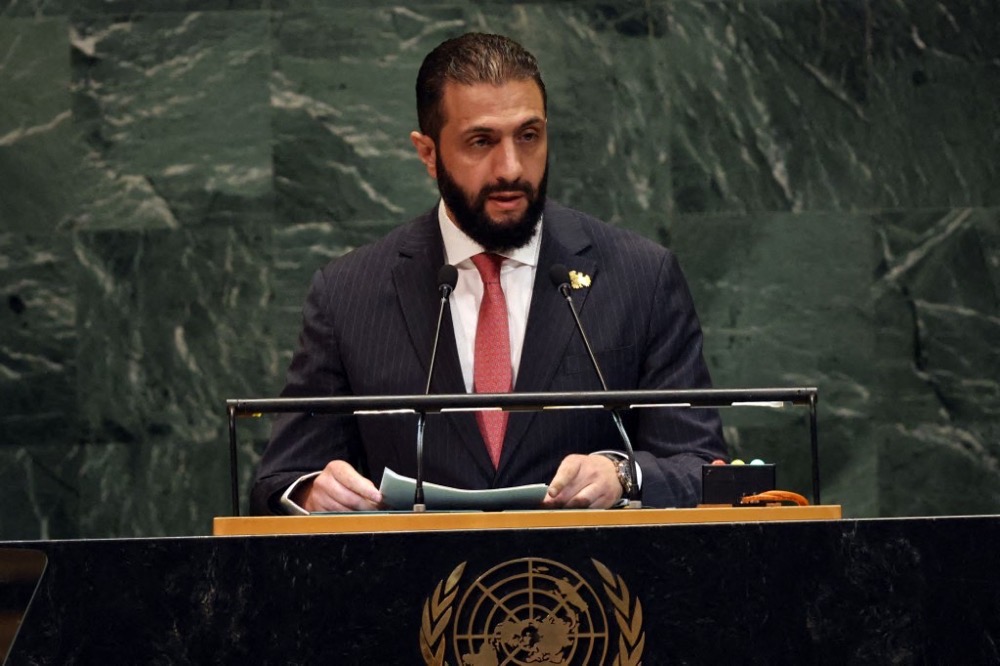


Despite stabilization measures put in place by the interim authorities, led by President Ahmad Al-Sharaa, whose group Hayat Tahrir Al-Sham spearheaded the 2024 offensive, obstacles to safe and sustainable returns remain. (AFP)

Harout Ekmanian, a New York-based attorney specializing in public international law at Foley Hoag LLP, told Arab News that a voluntary, safe, dignified and sustainable return must be “free, informed, and uncoerced,” based on “accurate, up to date information on conditions, viable alternatives to return, and no direct or indirect pressure.”

This, he said, is rooted in the non-refoulement obligation of the 1951 Refugee Convention and UNHCR guidelines.

Ekmanian said returns must also be physically, legally and materially safe, with “an effective end to persecution or generalized violence and credible guarantees of non-discrimination, liberty and security of person, and freedom of movement, supported by functioning rule of law institutions, removal of arbitrary detention risks, clearance of mines and unexploded ordnance, and access to civil documentation.”

Sustainability demands long-term access to housing, livelihoods, services, remedies for past violations and safeguards against renewed displacement, he added.

Even with the easing of Western sanctions on Syria, the country’s road to recovery will be long.


Pressure is rising in many host countries for Syrians to return home. (AFP)

Social and economic indicators paint a difficult picture, with 66 percent of the population living in extreme poverty, 89 percent facing food insecurity, youth unemployment standing at 60 percent, and 3.5 million children out of school, according to UN agencies.

These metrics may soon improve, however. The US has significantly shifted its approach to Syria following a historic meeting between Al-Sharaa and President Donald Trump at the White House in early November, opening up new avenues for recovery.

The US Treasury issued a general license to permit previously prohibited transactions with the new Syrian government and its central bank, stepping back from the rigid regime maintained under the Assad era.

This move is intended to encourage reconstruction, attract foreign investment, and facilitate Syria’s reintegration into the international economy.

It marks the most sweeping US sanctions relief for Syria in decades, promising economic revitalization if reforms and cooperation continue. The benefits, however, may not be felt immediately.

“Economically, the country is in a bad condition, and that’s nothing to do with the government — they inherited a bad system,” Fadi Al-Dairi, co-founder and regional director of the Syrian-British charity Hand in Hand for Aid and Development, told Arab News.


A woman stands next to her belongings in the ruins of a destroyed home in the village of Al-Hawash. (AFP)

“Everyone who speaks to me and to my other colleagues just needs a job to earn a living. However, with the high cost of living in Syria, it just makes it not worth it to work these days.

“For example, if they come to work and earn $200, they would be spending about $100 on transportation if they live in Damascus. That would leave them with just $100 to live on. That’s not enough.

“The cost of living varies from one city to another, and even within the same governorate. For example, the cost of living inside Damascus is different from the suburbs.”

The World Food Programme says food insecurity has deepened since Assad’s fall, with nearly 3 million people projected to face severe hunger.

INNUMBERS

• 1m Refugees who returned to Syria within 9 months of Assad’s downfall

• 1.8m Internally displaced people who have returned to their areas of origin

(Source: UNHCR)

The UN Development Programme warns that recovery must move beyond rebuilding infrastructure to restoring governance, reconciliation and social cohesion.

“As humanitarians, we’ve tried our best,” Al-Dairi said. “We’ve been providing a life-saving response, and at the same time, we keep demanding from donors and partners that the response becomes more sustainable.”

Meanwhile, the interim government has tried to attract foreign investment. But the impact on daily life has so far been minimal.


A man sorts sweets in his store in the Khan Arnabeh area in the city of Quneitra. (AFP)

“We’re seeing so many businesspeople and companies rushing in, thinking Syria is simply the next place to invest,” Al-Dairi said, warning that the rapid influx is only contributing to the soaring cost of living.

“As an investor myself, of course I want to earn a good living, but things need to happen step by step,” he said.

“Take the electricity issue. They’re rehabilitating the infrastructure and the network, but this has come at a cost — a 900 percent increase in electricity prices — because investors want to get their money back almost immediately.”

Indeed, a projected spike in electricity bills has angered many residents. A recent investigation by the Syrian news website Enab Baladi found that 83 percent of Syrians cannot afford the new bills.

“We don’t want to repeat these problems,” said Al-Dairi.

For example, “if our road networks are in poor condition, we need to fix them responsibly. We shouldn’t immediately privatize the roads and force people to either use expensive motorways or go through B-roads via the countryside.”

Still, some see opportunity in Syria’s vast diaspora. The World Bank says returning refugees could help drive a medium-term economic revival if trade and investment resume.


Horsemen perform during a ceremony unveiling Syria's new national emblem near the Tomb of the Unknown Soldier on Mount Qasioun overlooking the capital Damascus. (AFP/File)

Of the 7 million Syrians living abroad, Al-Dairi estimates roughly half have the financial capacity to invest. “If Syrians themselves are investing, then others might invest too,” he said. “One of my recommendations to the Syrian government is to look seriously at the diaspora.”

Mohamed Ghazal, managing director of Startup Syria, a community-led initiative supporting Syrian entrepreneurs, says small-scale investments are already emerging from Syrians abroad who understand local risks and conditions.

“These investors possess deep familiarity with the local market, culture, and operational environment, allowing them to accurately assess risks and opportunities,” he told Arab News, adding that “the capital brought in tends to be modest, reflecting the high-risk environment.”

In contrast, medium and large investments “remain largely on hold” until sanctions are fully lifted and regulations stabilize, Ghazal added.

“Major investors are concerned about the current economic and regulatory uncertainty, which is not conducive to establishing sustainable, long-term cash flow,” he said.

“These entities are largely waiting for the full lifting of sanctions to gain a clearer picture of the regulatory landscape and mitigate geopolitical risk before committing large funds.”

Ghazal said the interim government must create incentives that ensure physical and economic security for Syrian investors and provide clear, reliable legal frameworks.


A man clears rubble and debris from a damaged house at the Yarmuk camp for Palestinian refugees south of Damascus. (AFP)

Al-Dairi suggested that Syrians could also support one another through Islamic-inspired “qard hassan,” or benevolent loans, offering culturally acceptable financing for rebuilding without burdening borrowers with high interest.

But despite the many challenges, he remains convinced that Syrians themselves will play a central role in reconstruction.

“I’ll put this diplomatically,” he said. “We’ve seen many warlords and many who benefited from the conflict. But overall, Syrians will have an important part to play.”


Why Gaza aid curbs are deepening children’s health crisis despite ceasefire

Updated 04 December 2025
Follow

Why Gaza aid curbs are deepening children’s health crisis despite ceasefire

  • Humanitarian aid deliveries are still restricted, leaving thousands of children without sufficient food, medicine, and basic shelter
  • International agencies warn that without urgent, unrestricted aid, child mortality and long-term health crises will escalate sharply

DUBAI: Two months into Gaza’s fragile ceasefire, children in the besieged enclave continue to bear the brunt of a deepening humanitarian crisis, with aid agencies warning that Israel’s continued restrictions on relief supplies are exposing the population to malnutrition and disease. 

Despite the Oct. 10 ceasefire, humanitarian groups say convoys carrying much-needed aid remain stuck at border crossings. Meanwhile, thousands of families displaced by two years of war are now enduring heavy rains in overcrowded shelters, heightening the risk of disease. 

For displaced children, limited access to medical care and vaccinations could have long-term, irreversible consequences. Without timely medical intervention and proper nutrition, healthcare workers warn that children are far more vulnerable to illness and death. 

Caption

The UK-based charity Medical Aid for Palestinians has reported a rise in cases of child malnutrition, with medical facilities facing “critical shortages” of supplies needed to treat postwar health complications. 

“While the number of severely malnourished patients has decreased compared with the peak of the famine, cases are still regularly presenting to hospital emergency departments and medical points,” Rohan Talbot, MAP’s director of advocacy and campaigns, told Arab News. 

In November, the organization’s nutrition cluster identified 575 children with acute malnutrition, including 128 with severe malnutrition, out of 7,930 children screened. The highest rates were in Gaza City, where almost 10 percent of children screened were malnourished. 

“We have also seen birth defects attributed to poor nutrition in mothers and lack of access to proper food and medical care,” said Talbot, warning that malnutrition could have long-term effects on children, leaving them at risk of stunting, poor development, and recurrent infections. 

A man carries the body of Palestinian baby Zainab Abu Haleeb, who died due to malnutrition, according to health officials, at Nasser Hospital in Khan Younis, southern Gaza Strip, on July 26, 2025. (REUTERS)

Last week, MAP reported that three of Gaza’s largest hospitals — Al-Shifa, Nasser and the Patient’s Friends Benevolent Society — remain overwhelmed with critically injured and malnourished patients. 

Staff are unable to provide adequate care or carry out surgeries postponed during the war, with some patients dying as a result. 

Medical supplies have not “meaningfully increased” since the ceasefire began, leaving a collapsed healthcare system with little capacity to recover, the organization said. 

According to the UN, only half of Gaza’s 36 hospitals are currently partially operational, and not a single hospital in the enclave is fully functional.  

A nurse examines a malnourished child at Nasser Hospital in Khan Younis, southern Gaza Strip, on July 25, 2025. (REUTERS)

The Patient’s Friends Benevolent Society Hospital, the main pediatric facility in northern Gaza, has reported critical shortages of essential drugs, medical supplies, cleaning materials, and sterilization equipment. 

On Nov. 14, the hospital — already damaged in the fighting — was flooded by heavy rain, trapping children and their families on the ground floor. 

“Medical intervention was not enough to save the lives of children, so we lost a large number of them in the intensive care unit,” Dr. Majd Awadallah, the hospital’s medical director, said in a statement. 

“These problems are unsolvable without opening the crossings and allowing the unconditional entry of essential materials, especially medicines. How can a hospital operate in surgical and maternity cases without cleaning materials?”   

INNUMBERS

600 Aid trucks expected to enter Gaza daily under ceasefire deal.

145 Actual average number of aid trucks entering Gaza per day.

(Source: Gaza’s Government Media Office)

On Monday, the UN Relief and Works Agency accused Israel of blocking around 6,000 aid trucks carrying food, medicine, tents and blankets — enough to sustain the enclave for three months. 

The organization warned that 1.5 million people urgently need shelter after heavy rains in November flooded displacement camps and damaged at least 13,000 tents. 

Israel’s military operation in Gaza, triggered by the Hamas-led Oct. 7, 2023, attack, has displaced about 2.1 million Palestinians — roughly 95 percent of the population — and destroyed nearly 78 percent of the enclave’s 250,000 buildings, according to UN figures. 

Most of the displaced now live in makeshift tents, some erected over the rubble of their former homes, without proper sanitation, clean water, insulation or sewage systems, contributing to the spread of infectious diseases. 

The World Health Organization has reported a rise in cases of Guillain-Barre Syndrome, acute watery diarrhea, and acute jaundice syndrome, the latter of which can be linked to hepatitis A. 

Though more aid has been reaching the devastated enclave since the ceasefire, humanitarian organizations warn this is insufficient to meet the population’s needs. 

Under the US-brokered truce, at least 600 aid trucks were expected to enter Gaza daily. However, Gaza’s Government Media Office said the enclave has received an average of just 145 trucks a day since the agreement began. 

Palestinians collect aid supplies from trucks in Khan Younis, southern Gaza Strip, on October 12, 2025, amid a ceasefire between Israel and Hamas. (REUTERS)

Of the aid that has entered Gaza, only 5 percent of the trucks contained medical supplies, according to the UN. 

“The strain on Palestinians’ lives is only deepening,” said Talbot. “Even the most basic materials needed for shelter continue to be blocked by Israeli authorities.” 

Though food availability has slightly improved due to the entry of humanitarian and commercial trucks, aid organizations still report limited quantities and less diverse food in markets. 

The World Food Programme said food consumption remained below pre-conflict levels by mid-October, as meat, eggs, vegetables, and fruits remain unaffordable for many families. Talbot said the food shortages are affecting patient recovery and overall public health. 

“Local food production has been severely disrupted, and humanitarian access remains extremely constrained by Israeli restrictions, with a severe lack of properly nutritious food entering Gaza,” he said. 

The war has eroded purchasing power, leaving 95 percent of the population entirely dependent on aid, UNRWA said, urging Israel to facilitate rapid at-scale and unimpeded humanitarian access. 

Although the ceasefire was intended to bring relief, near-daily Israeli strikes have killed 347 Palestinians, including at least 67 children, and injured 889 others, pushing Gaza’s death toll to more than 70,000, according to the Ministry of Health. 

Gaza’s Government Media Office has documented 535 Israeli violations since the ceasefire began, while satellite imagery shows more than 1,500 buildings have been destroyed during this period. 

In a statement last week, rights monitor Amnesty International accused Israel of continuing to commit genocide in Gaza by severely restricting the entry of aid and blocking the restoration of services essential for civilian survival. 

Agnes Callamard, the organization’s secretary-general, said the ceasefire creates “a dangerous illusion that life in Gaza is returning to normal,” warning that the lack of proper food, water and shelter could lead to “slow death” of Palestinians in Gaza. 

This includes blocking equipment needed to repair life-sustaining infrastructure and to remove unexploded ordnance, contaminated rubble and sewage — all of which pose serious and potentially irreversible public health and environmental risks, she said. 

Israel denies accusations it is deliberately obstructing aid, and accuses Hamas of stealing humanitarian assistance. 

Israeli soldiers secure humanitarian aid, amid the ongoing conflict in Gaza between Israel and the Palestinian Islamist group Hamas, near the Erez Crossing point in northern Gaza, on May 1, 2024. (REUTERS)

COGAT, the Israeli military arm that oversees humanitarian matters, insists that “hundreds of trucks” enter Gaza daily. 

In a Nov. 30 statement, the unit said it “approved 100,000 pallet requests submitted by organizations, of winter-related items, shelter equipment, and sanitation supplies.” 

“These supplies are ready and waiting for weeks for immediate coordination by the relevant organizations so they can enter Gaza,” the statement read. 

Israel and Hamas have continued to trade accusations of ceasefire violations as the first phase nears completion. 

Under this initial phase, Israel was required to withdraw its troops behind a temporary boundary known as the yellow line, while Hamas was to release all living and deceased hostages. 

The next stage of the Trump 20‑point Gaza peace plan, endorsed by the UN Security Council on Nov. 18, faces major obstacles, including Hamas disarmament, Israel’s full withdrawal from Gaza, governance of the enclave, and international security arrangements. 

Despite these obstacles, aid agencies are continuing live-saving work, stepping up efforts to provide essential health services, distribute clean water, support trauma and emergency responses, and offer mental health support. 

On Nov. 21, the WHO, UNRWA, and the UN children’s fund UNICEF, announced the completion of the first round of vaccinations, which immunized more than 13,700 children against measles, polio, mumps and rubella, hepatitis B, tuberculosis, rotavirus and pneumonia. 

The agencies are now preparing for rounds two and three after 1.6 million syringes procured by UNICEF entered Gaza in mid-November. 

The UN also distributed food parcels to more than 264,000 families in the same month. 

However, aid workers say that these efforts represent only a fraction of what is needed to mitigate the worsening humanitarian crisis and help the population recover. 

“A ceasefire must mean more than this; it must bring an end to Palestinians’ suffering and allow them to regain their dignity and safety,” said Talbot. 

“Without a flood of aid and assistance, we will see more avoidable deaths and deprivation.”