MELBOURNE: A man who set fire to a Melbourne synagogue while worshippers were inside was motivated by mental illness rather than antisemitism, an Australian magistrate said on Monday.
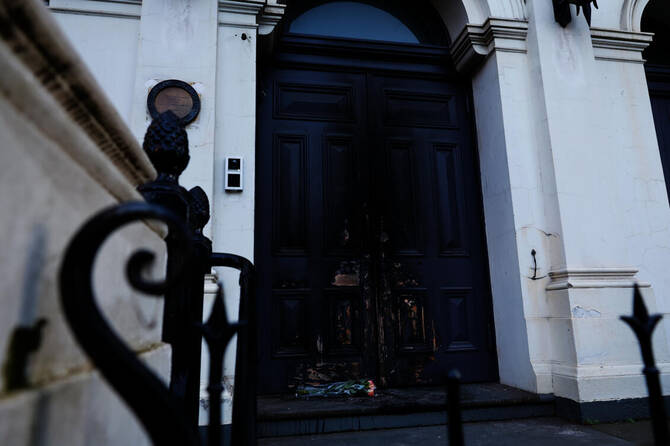
Angelo Loras, 35, had pleaded guilty to arson and recklessly placing people at risk of death on July 4 when he doused the front door of the East Melbourne Synagogue with flammable liquid and ignited it. Around 20 worshippers were inside sharing a Shabbat meal, but no one was injured.
Reports of antisemitic and Islamophobic incidents have risen sharply across Australia since the war between Israel and Hamas began in 2023. Government leaders suspected the attack on the synagogue, which is also known as the East Melbourne Hebrew Congregation, was a hate crime.
The morning after the fire, Prime Minister Anthony Albanese released a statement saying the arson attack was “cowardly, is an act of violence and antisemitism, and has no place in Australian society.”
But Magistrate Malcolm Thomas ruled on Monday that Loras was not motivated by antisemitism but had been in the grip of a terrifying delusion stemming from his failure to take medication for schizophrenia.
Thomas sentenced Loras to four months’ imprisonment, which is less than the 138 days he had already spent in custody.
While Loras was eligible for release on Monday, he was also ordered to continue medical treatment for schizophrenia for 20 months and to perform unpaid work.
The Australian government has blamed Iran for an earlier arson attack on a Melbourne synagogue, which security officers describe as an antisemitic crime aimed at undermining Australian social cohesion.
Australian spy agencies accuse Iran’s paramilitary Revolutionary Guards of organizing arson attacks on Melbourne’s Adass Israel Synagogue in December last year and on a Sydney kosher food business two months earlier. Iran has denied any involvement. Both buildings were extensively damaged.
Loras, who was arrested two days after his arson attack, told police he thought the synagogue was a residential address.
Thomas advised the Jewish congregation not to apply for a restitution order against Loras for the 54,000 Australian dollars ($35,000) in damage he caused because Loras had been homeless for an extended period.
Loras is a former Sydney-based forklift driver who had no previous criminal record.
His arson attack was one of three suspected antisemitic incidents across Melbourne the weekend of July 4 to July 6.
Around 20 masked protesters harassed diners at an Israeli-owned restaurant on July 5. A window was cracked, tables were flipped and chairs thrown as protesters chanted “Death to the IDF,” referring to the Israel Defense Forces.
Police also investigated the spray-painting of a Melbourne business and an arson attack on three vehicles attached to that business before dawn on July 6. Police said they found antisemitic “inferences” at the scene, without elaborating.


![]()

Australian judge rules synagogue arsonist was motivated by mental illness, not antisemitism
Short Url
https://arab.news/pszv5
Australian judge rules synagogue arsonist was motivated by mental illness, not antisemitism
- Angelo Loras had pleaded guilty to arson and recklessly placing people at risk of death on July 4
- An Australian magistrate says a man who set fire to a Melbourne synagogue door while worshippers were inside was motivated by mental illness rather than antisemitism


Latest updates


© 2026 SAUDI RESEARCH & PUBLISHING COMPANY, All Rights Reserved And subject to Terms of Use Agreement.