SOFIA, Bulgaria: Law enforcement agencies working across several countries dismantled a sophisticated criminal network trafficking stolen cultural goods across Europe, Bulgarian authorities said Thursday.
A coordinated operation spanning seven countries working with Eurojust and Europol led to the arrest of 35 suspects linked to a smuggling ring that was attempting to sell thousands of ancient artifacts stolen from museums across Europe. Around 20 people face charges of antiquities trafficking and money laundering, Bulgarian Prosecutor Angel Kanev told a news briefing.
Kanev said the criminal group has been operating in Western Europe, the Balkans, the United States and other countries for over 16 years. The money laundering investigation has so far identified over $1 billion in illicit funds.
On Wednesday, judicial and law enforcement authorities from Albania, Bulgaria, France, Germany, Greece, Italy, and the United Kingdom executed coordinated actions in their respective countries.
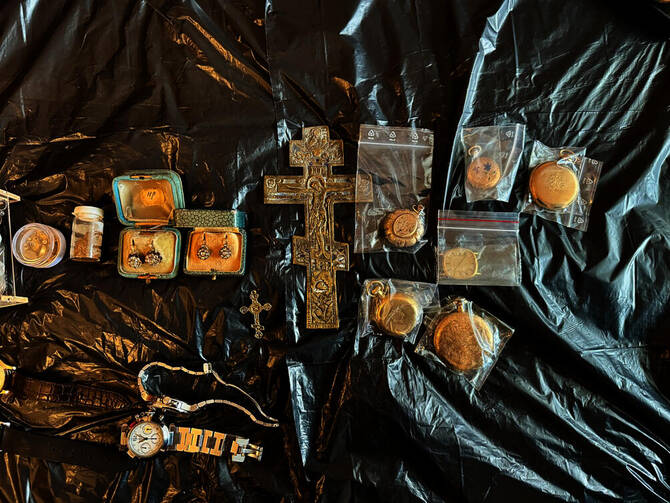
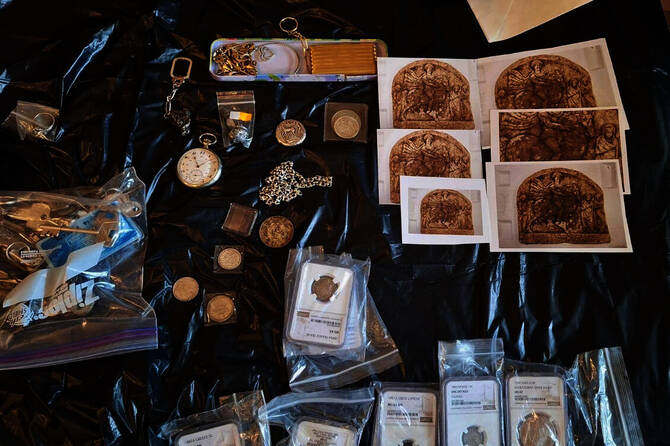
According to a Europol news release, the operation included 131 searches of houses, vehicles and bank safes in those countries. More than 3,000 artifacts were seized, including antique golden and silver coins and other antiquities with an estimated value of over 100 million euros ($116 million). Other seized items included artworks, weapons, documents, electronic equipment, large amounts of cash, and investment gold.
Paolo Befera, deputy head of the Italian Carabinieri’s specialized cultural heritage protection directorate, hailed the operation as “the largest of this manner ever conducted,” noting that in Italy alone, around 300 historical artifacts were seized from the alleged traffickers.
The Balkan region and Italy — home to invaluable Greek and Roman archaeological treasures — have long attracted criminal networks engaged in looting and theft. Despite strict national laws, such artifacts remain highly sought-after on the international black market.


![]()
![]()

Network that trafficked stolen antiquities across Europe dismantled with 35 arrests
Short Url
https://arab.news/n63yn
Network that trafficked stolen antiquities across Europe dismantled with 35 arrests
- More than 3,000 artifacts seized, over $1 billion in illicit funds identified
- Criminal group has been operating for over 16 years, says Bulgarian official


Latest updates


Recommended


© 2026 SAUDI RESEARCH & PUBLISHING COMPANY, All Rights Reserved And subject to Terms of Use Agreement.