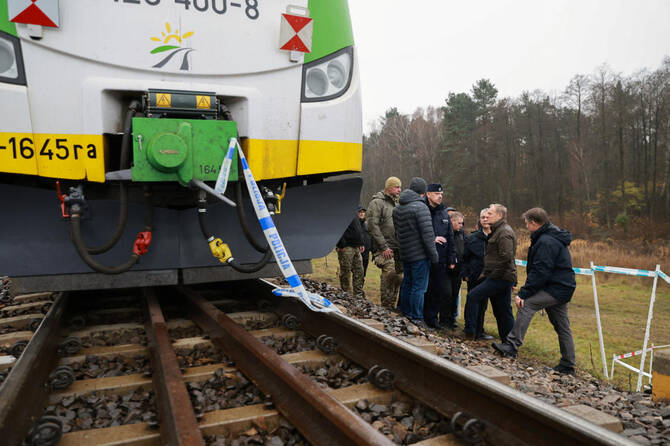
WARSAW: Two Ukrainian citizens working for Russia are suspected of blowing up a railway line in Poland over the weekend, Prime Minister Donald Tusk said Tuesday.
Speaking to the Sejm, the lower house of the Polish parliament, Tusk said the two suspects had been collaborating with Russian secret services for a long time. He said their identities were known but could not be revealed to the public because of ongoing investigations. The pair have already left Poland.
Tusk has described the explosion on a rail line linking Poland’s capital, Warsaw, to the border with Ukraine as an “unprecedented act of sabotage.”
In a separate incident, which Polish officials are also now confirming as sabotage, power lines over another segment of the same rail line further south were also damaged.
A meeting of the governmental National Security Committee had taken place earlier on Tuesday, with the participation of military commanders, heads of the intelligence services and a representative of the president.
Army patrols have been sent to check the safety of railways and other key infrastructure in the east of the country, the defense minister said.
Polish prosecutors have initiated an investigation into “acts of sabotage of a terrorist nature” directed against railway infrastructure and committed for the benefit of foreign intelligence.
“These actions brought about an immediate danger of a land traffic disaster, threatening the lives and health of many people and property on a large scale,” prosecutors said in a statement.
In the first incident, an explosion damaged the tracks near the village of Mika, about 100 kilometers (60 miles) southeast of Warsaw and, in a separate incident, power lines were destroyed in the area of Puławy, about 50 kilometers (30 miles) from Lublin. Trains carrying passengers were forced to stop at both locations, but no one was hurt.
“The explosion was most likely intended to blow up the train,” Tusk said on Monday in reference to the Mika incident.
The damage caused at both locations has been repaired.


![]()

Poland says 2 Ukrainians working for Russia are suspected of being involved in railway blast
Short Url
https://arab.news/wc9fd
Poland says 2 Ukrainians working for Russia are suspected of being involved in railway blast
- Tusk said the two suspects had been collaborating with Russian secret services for a long time
- Army patrols have been sent to check the safety of railways and other key infrastructure in the east of the country


Latest updates


Recommended


© 2026 SAUDI RESEARCH & PUBLISHING COMPANY, All Rights Reserved And subject to Terms of Use Agreement.