WASHINGTON: Months before the US military began launching airstrikes against suspected drug vessels, former Justice Department No. 2 official Emil Bove told employees the government should just “sink the boats” rather than prosecute the people on board, three witnesses told Reuters.
Bove, the former acting deputy attorney general, made similar remarks on at least three separate occasions between November 2024 and February 2025 when the topic of maritime drug cases was broached, the witnesses said. All three were granted anonymity to detail internal Justice Department discussions. NPR first reported the news on Monday.
The witnesses now view Bove’s remarks as a harbinger of the unprecedented militaristic approach the Trump administration is taking by bombing suspected drug vessels, rather than the traditional response of seizing the ships, confiscating the drugs and arresting those on board.
Reuters could not determine whether Bove, who left the department in early September to begin serving as a judge for the US Court of Appeals for the Third Circuit, was directly involved in discussions with the Pentagon about the plans to strike suspected drug vessels.
Bove declined to comment through a court spokesperson. A Justice Department spokesperson downplayed the recollections of the witnesses, calling them “disgruntled,” but did not dispute their account.
“This Department of Justice along with the entire Trump Administration is committed to ending the illegal trafficking of deadly drugs into our country and leaks from disgruntled former employees will not distract us from our mission,” the spokesperson said.
“Judge Bove’s career as a prosecutor was spent fighting illegal drug trafficking and we thank him for all his work and continued service in helping make our country safe again.” A spokesperson for the Pentagon referred all questions to the Justice Department.
CLASSIFIED LEGAL OPINION ON FORCE
The Justice Department’s Office of Legal Counsel over the summer drafted a classified legal opinion to justify the use of military force against suspected drug vessels, according to a source briefed on the matter. At that time, Bove was serving as the principal deputy attorney general while undergoing the Senate confirmation process for his new judicial position.
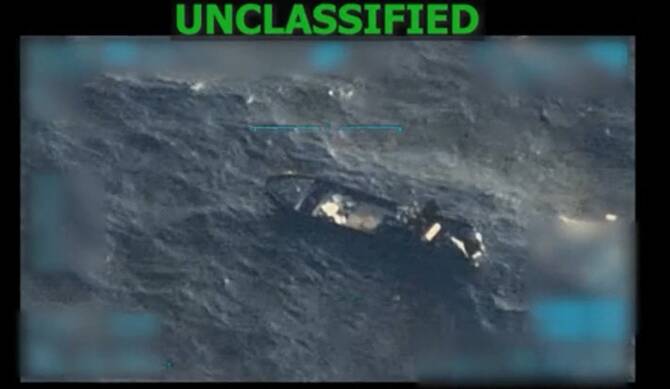
The strikes began on September 2, around the time Bove was sworn in as an appellate judge. As of mid-November, more than 80 people have been killed across 21 strikes.
The Pentagon has defended its use of force against the boats, saying it is attacking narco-terrorists. The State Department earlier this year designated certain cartels as terrorist organizations. Many outside legal experts, however, have said the extrajudicial killings amount to unlawful war crimes.
US Senate Democrats have demanded access to the Justice Department’s classified legal opinion and have complained they were recently excluded from a classified briefing on its contents with Republican lawmakers.
’THE BOVE DOCTRINE’
Earlier in his tenure, Bove said the government should just “sink the boats” on at least two occasions in small private briefings.
The first time he made the comment was during a presidential transition briefing in November 2024, one witness recalled, and the second came during one of Bove’s first briefings with prosecutors who oversaw complex organized-crime drug cases, two of the witnesses said.
The third time, however, he made the remark in a room full of more than 100 prosecutors and law enforcement officials, all three witnesses said.
Bove addressed the group virtually on February 20 at the National Advocacy Center in Columbia, South Carolina, according to all three witnesses and government documents memorializing the event.
The officials gathered were part of a prosecutor-led office known as the Organized Crime Drug Enforcement Task Forces.
Created during Ronald Reagan’s presidency, the task force was responsible for investigating and prosecuting transnational criminal organizations. It also played a role in seizing suspected drug vessels and prosecuting those on board.
The witnesses described Bove’s remarks as belligerent and macho. He made a reference to an “ongoing invasion,” one person recalled, and said prosecutors would be unleashed, two of the witnesses said.
The three witnesses quoted Bove as having said: “We are not going to be doing these maritime prosecutions. We are just going to sink the boats.”
In early February, the department announced it would no longer prioritize prosecuting lower-level offenders without legal immigration status in maritime drug cases.
When news of the first US military strike against a suspected drug vessel broke in September, the memory of Bove’s comments flooded back. “My immediate thought was: ‘Oh, that’s the Bove doctrine’,” one witness recalled.
Later that same month, Attorney General Pam Bondi permanently shuttered the organized-crime drug task forces office.


![]()

US official advocated sinking boats carrying suspected drugs, witnesses say
Short Url
https://arab.news/2a3fj
US official advocated sinking boats carrying suspected drugs, witnesses say
- Former top DOJ official Emil Bove said the government should “sink the boats” carrying suspected drugs
- Bove’s remarks seen as precursor of militaristic approach toward suspected drug vessels


Latest updates


© 2026 SAUDI RESEARCH & PUBLISHING COMPANY, All Rights Reserved And subject to Terms of Use Agreement.