ISLAMABAD: Pakistan’s interior minister said Thursday that Afghan nationals carried out two fatal suicide attacks this week — one targeting a cadet college near the Afghan border and the other outside a court in the capital, Islamabad.
“In both of the suicide bombings, Afghan citizens were involved, and they carried out the attacks,” Interior Minister Mohsin Naqvi said.
There was no immediate comment from Kabul.
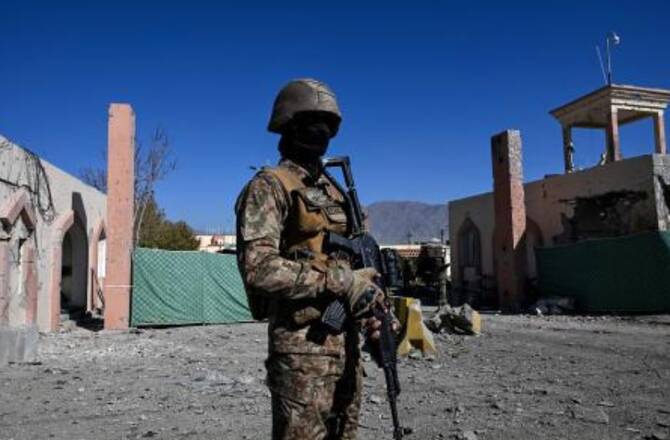
On Tuesday a suicide bombing outside a district court in Islamabad killed 12 people and wounded 27 others. Separately on Monday, three soldiers were killed when a suicide bomber and four other militants targeted Cadet College Wana in northwestern Khyber Pakhtunkhwa province.
The attacks underscored Pakistan’s worsening security situation as the government faces growing militancy, tense relations with Kabul and an increasingly fragile truce along the border. Until Tuesday’s attack, the capital had largely been considered safe compared with the country’s conflict-hit northwest.
Prime Minister Shehbaz Sharif on Wednesday offered talks to Afghanistan’s Taliban government in a renewed peace overture. His call in a televised speech on Wednesday followed the collapse of peace negotiations in Istanbul last week. It raised fears that a ceasefire brokered by Qatar and Turkiye could unravel and trigger new border clashes.
Islamabad wants Kabul to rein in the Pakistani Taliban — known as Tehrik-e-Taliban Pakistan, or TTP, which has claimed most of the attacks in Pakistan in recent years. The group has distanced itself from the latest attacks, saying it was not behind them.
Pakistan has long accused the Afghan Taliban of harboring TTP leaders and fighters, an allegation Kabul denies. One TTP breakaway faction, Jamaat-ul-Ahrar, initially claimed responsibility for the Islamabad bombing, before one of its commanders retracted the statement.
Pakistan’s Information Minister Attaullah Tarar said Wednesday that all five attackers in the assault on the Cadet College Wana were killed by security forces. More than 600 people — including 525 cadets, their teachers and staff — were safely rescued, he told reporters.
Tarar said the assailants appeared to be attempting a repeat of the 2014 Peshawar school massacre, when a TTP splinter group killed 154 people, mostly children, at an army-run school.
Tensions between Pakistan and Afghanistan have spiked since last month, when Afghanistan accused Islamabad of launching drone strikes on Oct. 9 that killed several people in the Afghan capital. The strikes sparked cross-border clashes that left dozens of soldiers, civilians and militants dead before Qatar brokered a ceasefire on Oct. 19.
Two subsequent rounds of peace talks in Istanbul ended without progress after Kabul refused to provide written assurances that militants would not use Afghan soil for attacks in Pakistan.
The TTP, which is separate from but allied with the Afghan Taliban, has been emboldened since the Taliban seized power in Afghanistan in 2021.


![]()

Pakistan says Afghan nationals carried out this week’s suicide attacks in the capital and northwest
Short Url
https://arab.news/5h48a
Pakistan says Afghan nationals carried out this week’s suicide attacks in the capital and northwest
- “In both of the suicide bombings, Afghan citizens were involved, and they carried out the attacks,” Interior Minister Mohsin Naqvi said
- Pakistan has long accused the Afghan Taliban of harboring TTP leaders and fighters


Latest updates


© 2026 SAUDI RESEARCH & PUBLISHING COMPANY, All Rights Reserved And subject to Terms of Use Agreement.