- Islamabad hosts webinar with French embassy to promote investment in Pakistan’s copper, gold and rare earth mining sector
- Pakistan stepping up drive to unlock estimated $6–8 trillion mineral wealth through new investment framework, global partnerships
ISLAMABAD: Pakistan and France this week agreed to explore joint investment opportunities in the minerals and mining sector, with Islamabad inviting French firms to participate in exploration and value addition projects under its new facilitation framework, the Press Information Department said.
Pakistan, which has been seeking to diversify its export base and attract foreign investment to ease pressure on its external accounts, has made the development of its mineral economy a central pillar of its growth strategy.
The government recently organized the Pakistan Minerals Investment Forum 2025, which drew more than 5,000 delegates from over 50 countries and resulted in the signing of 16 memorandums of understanding. New partnerships are also being explored with the United States, Saudi Arabia and China under the Special Investment Facilitation Council (SIFC) framework to accelerate exploration and processing of critical minerals, particularly in the mineral-rich southwestern Balochistan province.
“The global shift toward green energy has made minerals such as copper, lithium, and rare earth elements crucial to future technologies. Pakistan’s mineral-rich regions, especially in Balochistan’s Chaghi belt, offer immense opportunities for investment,” Minister for Petroleum Ali Pervaiz Malik was quoted as saying in a statement released by the Press Information Department following a webinar titled “Pakistan’s Minerals Economy: Gateway to Growth.”
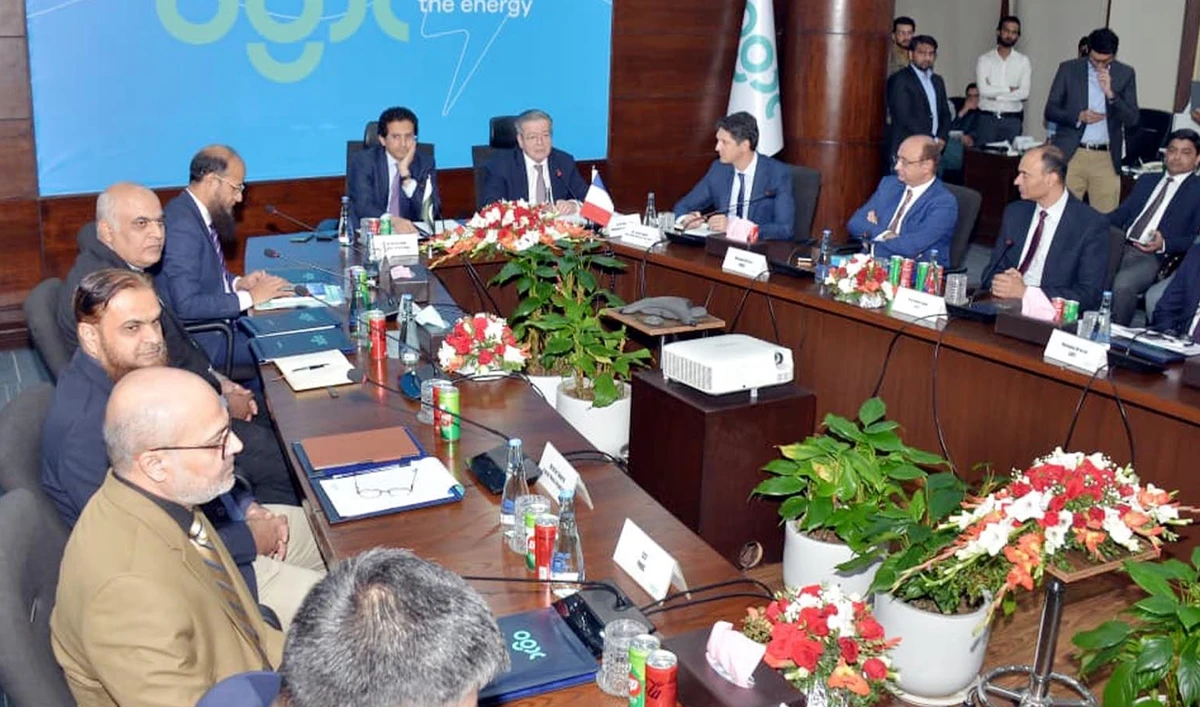
The discussion was co-hosted with the French embassy to highlight Pakistan’s mineral wealth and promote bilateral investment in copper, gold, and rare earth elements critical for the global transition to green energy.
“The government of Pakistan, through the SIFC, is fully committed to providing all facilitation and a transparent regulatory framework to attract international investors and build strong, long-term partnerships,” Malik added.
Pakistan is estimated to hold mineral resources valued at $6 trillion–8 trillion, including major deposits of copper, gold, lithium, rare earth elements, coal, iron-ore and chromite. Large-scale deposits such as those in the Reko Diq copper-gold project in Balochistan, one of the world’s largest undeveloped sites, underscore this potential.
Yet despite the geological promise, Pakistan’s mining sector remains under-developed. Challenges include inadequate infrastructure, weak technical and financial investment, poor regulatory and data transparency, and security and access risks in remote mineral-rich regions. For example, mining and quarrying contributed barely 2–2.5 percent of GDP in recent years, despite the scale of the deposits.
These obstacles, coupled with the high cost of exploration, limited value-added processing capacity and unsettled provincial and federal frameworks, mean that converting Pakistan’s mineral wealth into exports, jobs and economic growth remains a slow and uncertain process.
Malik said Pakistan had launched a National Minerals Harmonization Framework, digitized geological data and revitalized the Geological Survey of Pakistan to enhance transparency and improve the ease of doing business in the minerals sector. He also noted that the next edition of the Pakistan Minerals Investment Forum (PMIF26) would take place in April 2026.
French Ambassador Nicolas Galey welcomed Pakistan’s reforms and said French firms were eager to explore sustainable mining ventures, according to the PID statement.
“France sees great potential in Pakistan’s minerals sector. We look forward to deepening cooperation and facilitating the exchange of information and expertise,” he said.
Benjamin Gallezot, adviser to the French president on mining, said the forum was “very helpful for highlighting opportunities in Pakistan’s mineral sector for French companies.”
Ahmed Hayat Lak, the CEO of OGDC, Pakistan’s largest state-owned oil and gas producer, said Pakistani firms were open to partnerships with French companies in both ongoing and upcoming projects.
“Pakistan’s mineral industry offers promising investment opportunities, and we welcome French companies to collaborate in exploration and development initiatives. We are ready to discuss potential partnerships that can drive mutual growth,” he said.
The webinar concluded with both sides agreeing to continue coordination between Pakistani and French stakeholders to identify projects for cooperation in exploration, technology transfer, and sustainable mining practices.