

Saudi Arabia protects rare marine ecosystems with 2 new reserves

1 / 3
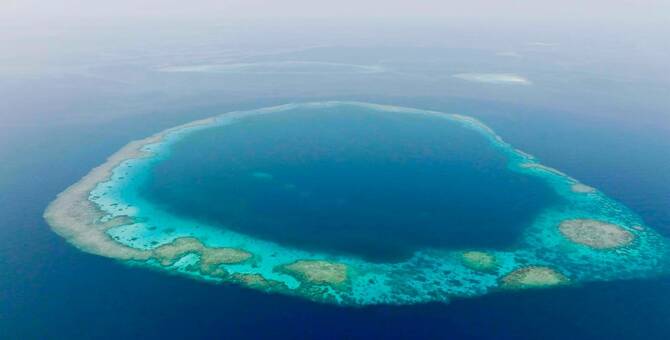
The blue holes are ecological systems and natural formations that are rich in biodiversity and marine life, including turtles, fish, marine mammals, and invertebrates. (Supplied/NCW)
2 / 3
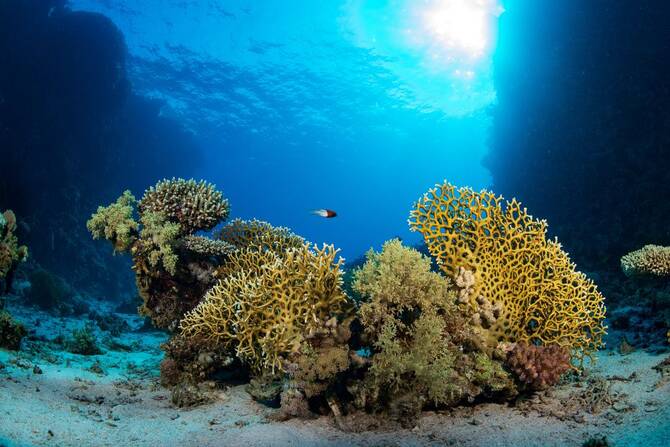
The Red Sea is known for its high salinity and warm temperatures, making it a haven for marine biodiversity. (Supplied/NCW)
3 / 3
The Council of Ministers of Saudi Arabia has announced the inclusion of Ras Hatiba and the Blue Holes marine reserves in the list of national reserves in the Kingdom. (Supplied/NCW)
Short Url
Updated 12 November 2025
Follow

Saudi Arabia protects rare marine ecosystems with 2 new reserves

  • Aim to protect 30% of Saudi by 2030
  • Unique biodiversity and tourism value

RIYADH: Saudi Arabia’s Council of Ministers has included the Ras Hatiba and Blue Holes marine areas on the Kingdom’s national list of reserves, the Saudi Press Agency reported recently.

The move reflects Saudi Arabia’s commitment to protecting biodiversity and advancing sustainable development goals under Vision 2030, the SPA reported.

Mohammed Qurban, CEO of the National Center for Wildlife, said the decision followed extensive biological, natural, and social studies confirming the two reserves’ unique biodiversity, and economic and tourism value.

Located northwest of Jeddah, Ras Hatiba covers 5,715 sq. km and features coral reefs, mangroves, and seagrass beds — key habitats for green turtles, dugongs, whales, dolphins, and sharks.

The Blue Holes areas are rich in marine life, including turtles, fish, mammals, and invertebrates. Their discovery was first announced in 2022 after 20 such formations were found along the southern Red Sea coast.

With the addition of these two protected areas, the Kingdom’s nature reserves now cover 16.1 percent of its territory, up from 6.5 percent, and moving closer to the national goal of 30 percent by 2030.


Celestial spectacle in KSA’s north on first day of Ramadan

Updated 44 min 23 sec ago
Follow

Celestial spectacle in KSA’s north on first day of Ramadan

  • Venus-crescent moon alignment visible in Northern Borders
  • Meteorology center issuing swift weather alerts for pilgrims

ARAR/JEDDAH: The holy month of Ramadan has commenced in the Kingdom with a striking astronomical display in the Northern Borders Region, setting a serene tone for the month, the Saudi Press Agency reported.

In addition, the National Center for Meteorology has confirmed its readiness to support pilgrims in Makkah and Madinah.

On Tuesday evening in Arar there was a rare alignment of the planet Venus with the slender crescent moon marking the first day of Ramadan.

Appearing shortly after sunset, the crescent shimmered low on the western horizon above Venus — one of the brightest celestial bodies — in a display enhanced by clear skies.

While the conjunction is a recurring astronomical phenomenon caused by the apparent proximity of the two bodies as viewed from Earth, its coincidence with the start of the holy month added a special aesthetic and spiritual dimension to the atmosphere in the north, the SPA said.

The plan includes heightened performance levels at observatories in the Kingdom’s airports to manage increased flight traffic and aviation safety. (SPA)

Meanwhile, as the faithful began fasting, the NMC announced the readiness of its observatories at the Kingdom’s airports to manage increased flight traffic and ensure aviation safety.

The NCM’s CEO Dr. Ayman bin Salem Ghulam said there would be round-the-clock weather monitoring for Makkah, Madinah, and the roads leading to the two holy mosques.

To ensure pilgrims have real-time access to information, the NCM has integrated its data with the Nusuk and Tawakkalna smart applications. Ten-day forecasts and alerts will also be available via the Anwaa app and on guidance boards along highways.

The center has 14 media platforms to deliver swift weather alerts, ensuring high standards of security and logistical support throughout the season, the SPA reported.