

Pakistan economic body approves $2.3 billion for circular debt financing

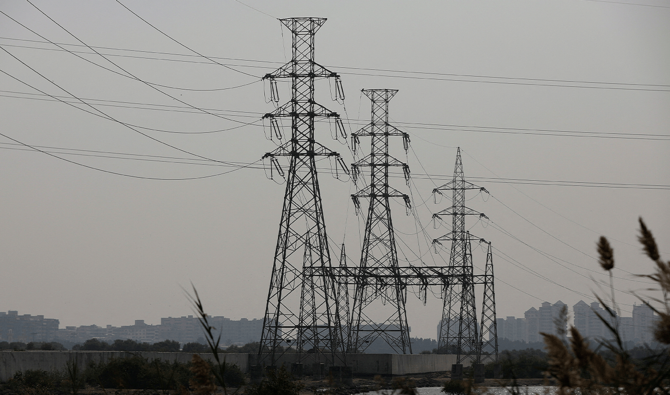
This file photo, taken on January 24, 2023, shows a power transmission tower in Karachi. (REUTERS/File)
Short Url
Updated 08 November 2025
Follow

Pakistan economic body approves $2.3 billion for circular debt financing

  • Circular debt is an ever-growing chain of unpaid bills within Pakistan’s power and gas sector
  • Reducing this debt has been a key requirement of the IMF under Pakistan’s $7 billion program

KARACHI: The Economic Coordination Committee (ECC) on Friday approved the issuance of a government guarantee of over Rs659 billion ($2.3 billion) for circular debt financing of Rs1.225 trillion (4.3 billion), the finance ministry said.

The decision was made at an ECC meeting, presided over by Finance Minister Muhammad Aurangzeb, to review proposals submitted by various ministries and departments, including a Power Division summary seeking the guarantee.

Circular debt is an ever-growing chain of unpaid bills within Pakistan’s power and gas sector where one entity’s arrears cascade to the next. It has for years strained the economy through debt-servicing.

“The guarantee is intended for the settlement of Power Holding Limited’s debt and overdue payments to Independent Power Producers,” the finance ministry said in a statement.

“The ECC also authorized the Finance Division to issue a Letter of Comfort accordingly. Power Division was directed to report back to ECC on the timeframe for the closure of PHL following the settlement of debt issue.”

Pakistan, which relies heavily on domestic and external loans to repay its mounting obligations, has been taking measures to reduce this circular debt, a key condition of its $7 billion International Monetary Fund (IMF) program.

In June, Pakistan signed term sheets with 18 commercial banks for a 1.275 trillion Pakistani rupees ($4.50 billion) Islamic finance facility to help pay down mounting debt in its power sector, according to officials.

In its meeting on Friday, the ECC discussed and agreed on a framework regarding rationalization of tariffs and payment adjustments for nuclear power plants, government-owned power plants, and gas companies.

The committee also endorsed a phased, data-driven approach to ensure stability in remittance inflows, which rose by 11.9 percent month-on-month in October 2025 to $3.42 billion, and to avoid any abrupt disruption that could adversely impact the economy.


Pakistan high court pauses tree-cutting in Islamabad until Feb. 2

Updated 10 sec ago
Follow

Pakistan high court pauses tree-cutting in Islamabad until Feb. 2

  • Islamabad High Court asks CDA to ‘explain and justify’ tree-cutting at next hearing
  • CDA officials say 29,000 trees were cut due to allergies, deny felling in green belts

ISLAMABAD: The Islamabad High Court has ordered an immediate halt to tree-cutting in the federal capital until Feb. 2, seeking justification from civic authorities over the legality of a large-scale felling drive that has seen thousands of trees removed in recent months.

The interim order, issued by a single-judge bench led by Justice Khadim Hussain Soomro, came during proceedings on a petition challenging the Capital Development Authority’s (CDA) tree-cutting operations in Islamabad’s Shakarparian area and H-8 sector.

At the outset of the hearing, the petitioner’s counsel argued that trees were being felled in violation of the Pakistan Environmental Protection Act 1997, the Islamabad Wildlife Ordinance 1979 and the city’s master plan.

“Respondents shall not cut trees till the next date of hearing,” Justice Soomro said in the court order released on Friday while referring to CDA officials.

“Respondents are directed to come fully prepared and to file paragraph-wise comments before the next date of hearing, along with a comprehensive report explaining the justification and legal basis for the cutting of trees,” he added.

According to the court order, the petitioner maintained that the CDA had not made any public disclosure regarding the legal basis for the operation and that the felling was causing environmental harm.

The petition sought access to the official record of tree-cutting activities and called for the penalization of CDA officials responsible for the act under relevant criminal and environmental laws.

It also urged the court to impose a moratorium on infrastructure projects in Islamabad, order large-scale replanting as compensation and constitute a judicial commission headed by a retired Supreme Court judge to probe the alleged violations.

CDA officials acknowledge around 29,000 paper mulberry trees have been cut in the capital in recent months, arguing that the species triggers seasonal allergies such as sneezing, itchy eyes and nasal congestion.

They also maintain that no trees have been removed from designated green belts and that the number of replacement trees planted exceeds those felled.

Designed in the 1960s by Greek architect Constantinos Doxiadis, Islamabad was conceived as a low-density city with green belts and protected natural zones at its core.

Critics, however, say the recent felling has extended beyond paper mulberry trees and question whether authorities are adhering to the city’s master plan and the legal protections governing forested and green areas.

The court has adjourned its hearing until Feb. 2, 2026.