WASHINGTON: US President Donald Trump set the refugee admissions ceiling at 7,500 for fiscal year 2026, the lowest cap on record, a White House document published on Thursday said, part of a broader effort to reshape refugee policies in the US and worldwide.
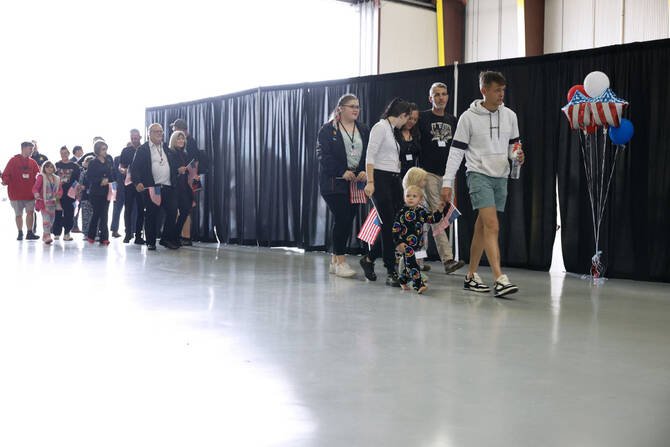
Trump said in an annual refugee determination dated September 30 that admissions would be focused largely on South Africans from the country’s white Afrikaner ethnic minority.
Trump has claimed Afrikaners face persecution based on their race in the Black-majority country, allegations the South African government has denied. Trump paused all US refugee admissions when he took office in January, saying they could only be restarted if they were established to be in the best interests of the US Weeks later, he launched an effort to bring in Afrikaners, sparking criticism from refugee supporters. Only 138 South Africans had entered the US by early September, Reuters reported at the time.
In the determination published on Thursday, Trump said his administration would consider bringing in “other victims of illegal or unjust discrimination in their respective homelands.” An internal document drafted by US government officials in April suggested the administration could also prioritize bringing in Europeans as refugees if they were targeted for expressing certain views, such as opposition to mass migration or support for populist political parties. Europeans and other groups were not named in Trump’s public refugee plan.
US law requires the executive branch to consult with members of Congress before setting refugee levels, but Democratic lawmakers said on September 30 that the meeting never took place. In a statement on Thursday, US Representative Jamie Raskin, US Senator Dick Durbin and other Democratic lawmakers said Trump’s low refugee cap was both wrongheaded and lacked legal force.
“This bizarre presidential determination is not only morally indefensible, it is illegal and invalid,” the lawmakers said.
A senior Trump administration official blamed the government shutdown that began on October 1 for delayed consultation and said no refugees would be admitted until it occurred.
During the United Nations General Assembly in September, top Trump administration officials urged other nations to join a global campaign to roll back asylum protections, a major shift that would seek to reshape the post-World War Two migration framework.
This month, Reuters and other outlets reported Trump’s plans for the 7,500-person refugee ceiling, which contrasts sharply with the 100,000 refugees who entered under former President Joe Biden in fiscal 2024.
Gideon Maltz, CEO of Tent Partnership for Refugees, said in a statement that refugees help address labor shortages and that the program “has been extraordinarily good for America.”
“Dismantling it today is not putting America first,” he said in a statement.
In a related move, the White House said it would move oversight of the refugee support programs from the State Department to the Department of Health and Human Services.


![]()

Trump sets refugee ceiling at record-low 7,500 with focus on white South Africans
Short Url
https://arab.news/6d2te
Trump sets refugee ceiling at record-low 7,500 with focus on white South Africans
- Trump has claimed Afrikaners face persecution based on their race in the Black-majority country, allegations the South African government has denied
- US law requires the executive branch to consult with Congress before setting refugee levels, but Democratic lawmakers said the meeting never took place


Latest updates





© 2026 SAUDI RESEARCH & PUBLISHING COMPANY, All Rights Reserved And subject to Terms of Use Agreement.