
LONDON: Human rights and media organizations are calling for the protection of journalists amid a near-total communications blackout in El-Fasher following the city’s fall to the paramilitary Rapid Support Forces.
A limited and scattered stream of reports have emerged of the ongoing humanitarian catastrophe in the North Darfur capital city, with the Sudanese government accusing the RSF of killing over 2,000 civilians during the past weekend.
The Committee to Protect Journalists reported that as many as 11 journalists have gone missing in El-Fasher, including freelance reporter Muhammad Ibrahim. Ibrahim appeared in a video circulated by the RSF on Sunday, showing him being captured while trying to leave the city.
In a statement on Thursday, the CPJ confirmed it had verified the whereabouts of three of the missing, all of whom have fled the city. The remaining journalists remain incommunicado amid ongoing hostilities and the blackout that severely limits external communication.
“The RSF’s claims that it is solely targeting ‘terrorists’ and not civilians replicate a familiar play-book — first denial of civilian harm, then shifting of blame, and then active suppression of journalists attempting to document the truth,” said Sara Qudah, CPJ regional director.
Fighting has escalated since April 2023, when internal conflicts within Sudan’s military regime erupted into open clashes in Khartoum, quickly spreading across the country.
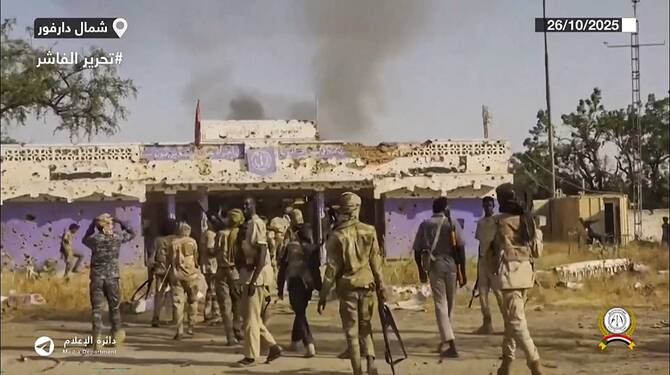
Over the past weekend, the RSF took control of the last Darfur regional capital following an 18-month siege, expanding its influence across the west and southwest of Sudan.
A comprehensive communications blackout appears to be in effect across large areas of North Darfur, severely restricting external access, impeding independent verification and deepening the isolation of journalists and affected communities.
Multiple sources report that as the RSF advanced it seized journalists, killed a significant number of civilians, and broadcast footage of their operations on social media — a “chilling escalation” in the targeted repression of both the press and the public, according to the CPJ.
An estimated 260,000 civilians are still trapped in the city, half of them children.
“This cycle fosters impunity, stifles independent reporting and erodes accountability,” Qudah said.
“We urge all parties — and the international community — to act immediately to protect journalists, restore communications and ensure accountability for these grave violations.”
On Wednesday, the Sudan Media Forum condemned the attacks, saying they demonstrated “a complete disregard for international law and human dignity.”
The group called on the international community to “exert maximum pressure” on the RSF to allow essential supplies — including food, medicine and aid — to reach the city and to halt what it termed “summary executions” and “ethnically motivated killings.”
The CPJ also urged the imposition of targeted sanctions and accountability measures against RSF leaders, stating: “The world can no longer afford to wait to act in defense of the public’s right to know and for the safety of journalists in El-Fasher.”
Since the war between the RSF and the Sudanese Armed Forces began on April 15, 2023, the RSF has killed at least 14 journalists with dozens more detained, assaulted, raped or disappeared, according to the CPJ’s research.