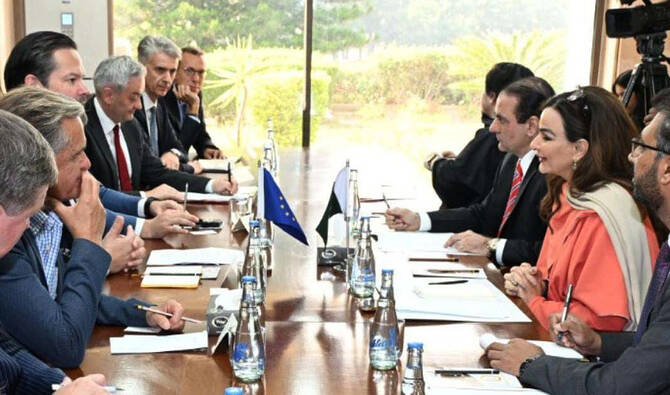

ISLAMABAD: Pakistan and a visiting delegation of the European Parliament reaffirmed their partnership under the GSP+ preferential trade framework during talks in Islamabad on Monday, while Pakistan raised concerns over the withdrawal of duty concessions on ethanol exports and the ongoing Geographical Indication (GI) dispute over Basmati rice.
The GSP+ scheme grants Pakistan duty-free access to the EU market for most exports in exchange for progress on human rights, labor protections, environmental commitments and governance reforms. The EU is Pakistan’s largest export destination, particularly for textiles, leather, ethanol and agri-food products.
At Monday’s meeting, Pakistan’s Commerce Minister Jam Kamal Khan told the delegation that the European Commission’s suspension of duty-free treatment for Pakistani ethanol earlier this year, citing increased export volumes, had reduced market competitiveness and impacted sugarcane-linked rural economies, where farming communities depend on surplus molasses processing for income.
On Basmati, Pakistan noted that both Pakistan and India have sought Geographical Indication (GI) protection for the rice in the European Union, and urged the EU to ensure a fair and impartial process that reflects the crop’s cultivation across the Punjab region on both sides of the border.
“The withdrawal of duty concessions on Pakistan’s ethanol exports under the GSP+ scheme has adversely affected rural livelihoods and farming communities,” a statement by the Press Information Department said, quoting Khan, adding that Pakistan also urged the EU to ensure “a fair and impartial decision that recognizes Pakistan’s heritage and rightful claim to the globally renowned rice variety.”
The ministry noted that both issues were significant for Pakistan’s rural economy and the livelihoods of farmers, particularly in areas affected by recent floods.
The ministry said the government highlighted reforms under the GSP+ monitoring process, which links continued duty-free access to progress on human rights and governance standards.
It pointed to Pakistan’s election to the UN Human Rights Council (2026–28), the National Commission for Human Rights receiving “A status” accreditation, and new legislation including the Islamabad Child Marriage Restraint Act 2025 and the Commission for the Protection of Journalists and Media Professionals.
Pakistan also asked the EU for technical assistance and transition support to meet upcoming European market regulations that will affect Pakistani exports, including the Carbon Border Adjustment Mechanism (CBAM) on emissions-linked products, the Corporate Sustainability Due Diligence Directive (CSDDD) on supply-chain oversight, and the EU Deforestation Regulation (EUDR) governing agricultural imports.
These requirements will shape future access to the EU market for textiles, leather, agriculture and manufacturing exports.