



RIYADH: For years, the vision of the “smart city” has been sold on a promise of hyper-efficiency: a world of sensors, seamless traffic, and artificial intelligence-driven automation.
But as a wave of next-generation urban projects rises from the deserts of the Middle East and North Africa, a more profound question is emerging: What should a smart city actually do for its people?
The recent BRICS Urban Future Forum in Moscow, which drew thousands of global experts, made it clear that the conversation has shifted. The buzzwords of AI, robotics, and IoT were ever-present, but the central theme was one of human-centric transformation. But how do you turn that theme into a reality?
For Aisha Bin Bishr, former chief executive officer of the Dubai Digital Development Agency and former deputy chairman of the Board of Directors of EMAAR Development, the answer lies not in a specific technology, but in a foundational principle.
In an interview with Arab News on the sidelines of the forum, she identified the crucial mechanism: “From my experience, the most critical mechanism is trust through governments.”
She added: “Governments create transparent, predictable frameworks that share risks fairly. This gives the private sector the confidence to invest in public-good projects in emerging economies. The bottleneck is not technology or funding — it is collaboration.”
On this note, Kate Barker, executive board adviser and chief futurist for Saudi Arabia’s flagship project, NEOM, told Arab News that “the challenge is not technology or money, it is mindset.”
She added that collaboration succeeds when leaders across sectors align around shared purpose rather than competition.
“Real collaboration is co-design, not consultation. It is about leaders listening as much as they innovate. When well-being becomes the shared measure of success, we shift from short-term targets to long-term value creation, and that is where true societal progress begins,” Barker added.
Bin Bishr went on explaining that if governments ensure regulatory stability and people-centric outcomes, the private sector will bring the innovation and the capital needed for this project. The real story in the MENA region is no longer about the technology itself, but the new stack of urban priorities being built from the ground up — priorities like climate resilience, mental well-being, and community cohesion.
From digital nervous system to a city that cares
If a smart city were a human body, technology would be its nervous system, a network of IoT sensors and ICT fibers taking in information. But the purpose of this system is not just to react, but to proactively improve the quality of life. This ethos was echoed by global leaders at the forum. Bin Bishr outlined this evolution, describing a shift from simple digitalization toward a human-centered transformation.
“Technology is only a tool, not an end in itself,” she told at the Moscow forum. “The question is no longer what technology we buy, but whether the innovation makes people happier, reduces inequality, and strengthens resilience to climate change.”
This reframes the entire smart city endeavor. The goal is not a digital city of pure data, but a sustainable settlement — in environmental, economic, and cultural terms — that meets the needs of the present without compromising the future.
The new KPIs: happiness, health, and community
Across the region, this philosophy is being put into practice, with projects that measure success not just in gigabits, but in well-being metrics.
In Saudi Arabia’s NEOM, Barker presented a vision where AI is less an administrator and more a companion. She described a future where each resident has an AI twin that monitors health and advises on personal development.
In an interview with Arab News, Barker emphasized that “a truly smart city should make people feel seen, not surveilled.” She explained that the most important thing is to create a sense of belonging and psychological safety.
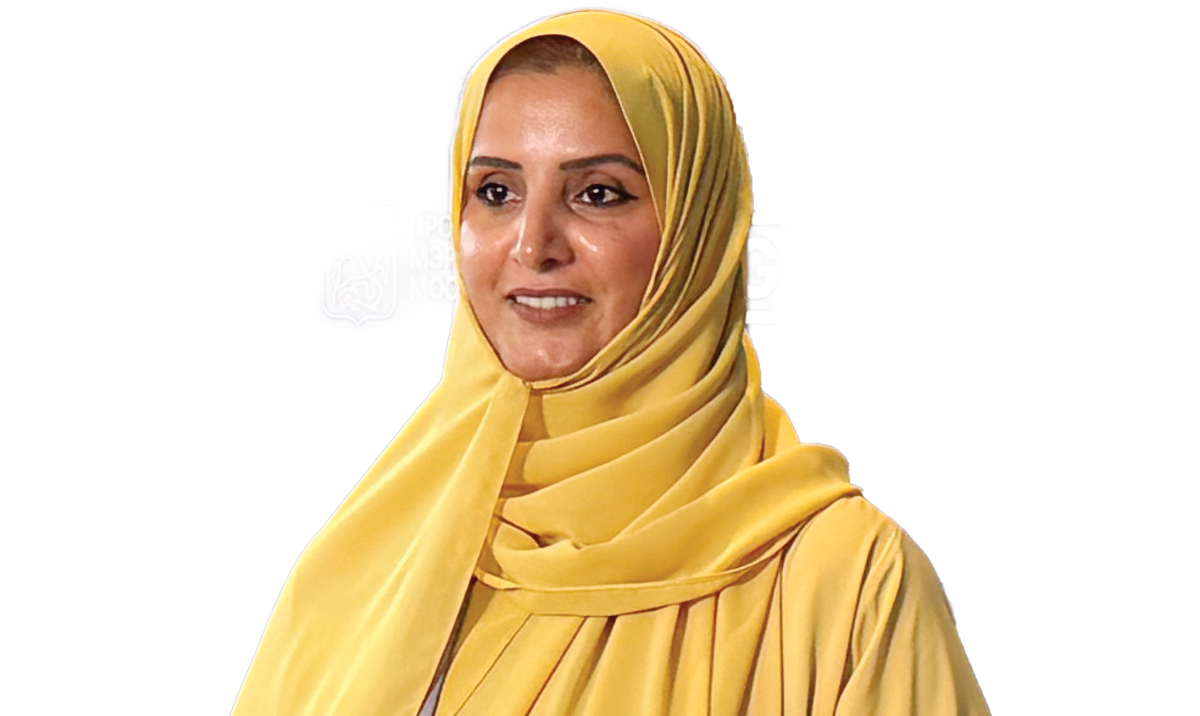
The question is no longer what technology we buy, but whether the innovation makes people happier, reduces inequality, and strengthens resilience to climate change.
Aisha Bin Bishr, Former chief executive officer of the Dubai Digital Development Agency
“That requires leadership with empathy and foresight, people who see technology not just as infrastructure but to enhance quality of life.”
The chief futurist stated that efficiency alone can make life faster, but empathy makes it meaningful, and the real goal is to build cities that understand human rhythms and aspirations.
Sultan Al-Raisi of the Dubai Future Foundation presented how Dubai is creating a sandbox to fast-track innovation. By offering regulatory relaxations and direct access to policymakers, the city is actively cultivating solutions designed to ease urban life.
The focus is on removing friction and stress for its citizens and the innovators who serve them, fostering a sense of community and collaborative progress. On this note, Barker added: “We always ask: does this technology make us more human or just more automated? That question sits at the heart of responsible leadership.”
At the Moscow forum, she described a future where each resident has an AI twin that monitors health and advises on personal development.
“The AI Twin is not another assistant; it is a leadership tool for the self. It learns from how you live, helps prevent burnout, and supports better decisions about rest, focus, and growth,” Barker explained to Arab News.
“When technology enhances self-awareness and well-being instead of driving consumption, citizens become more resilient and self-led. That is how technology can elevate both individual potential and collective well-being within a city.”
The proof is in the pavement: recognizing human-centric tech
This new direction was formally recognized at the forum’s BRICS Urban Innovation Award. Notably, Moscow won in the “Human-Centered Robotics” category, not for having the most robots, but for deploying them in ways that tangibly improve the urban experience — from autonomous cleaning bots that handle seasonal leaves to robotic monitors that enhance construction site safety.
Even the robots on stage, like the humanoid Ardi and the avatar-moderator, were framed not as cold automations, but as integral parts of a future hybrid world where technology and humanity coexist to create a more connected, less stressful environment.
FASTFACT
The real story in the MENA region is no longer about the technology itself, but the new stack of urban priorities being built from the ground up — priorities like climate resilience, mental well-being, and community cohesion.
The message from the global stage is clear: the competitive edge for the cities of tomorrow will not come from who has the most data, but from who can best use that data to foster resilience, inclusion, and happiness.
The MENA region, with its projects and forward-thinking leadership, is positioning itself at the forefront of this new urban reality — building not just smarter cities, but wiser ones.
The most powerful innovation emerging from the MENA region is leadership itself, according to Barker.
“Leaders here are redefining what progress looks like, proving that ambition and humanity can exist side by side,” she said.
The region is demonstrating that sustainable development is as much about social and emotional intelligence as it is about AI or automation.
“The world will look to the Middle East as the place where leadership evolved from managing cities to shaping a new kind of civilization built on inclusion, purpose, and trust,” Barker concluded.


