YANGON: SpaceX has cut service to more than 2,500 Starlink devices at Myanmar scam centers, a company executive said Wednesday, after reports revealed that their use had exploded in the illicit industry.
Sprawling compounds where Internet tricksters target foreigners with romance and business cons have thrived along Myanmar’s loosely-governed border during its civil war, sparked by a 2021 coup.
A highly-publicized crackdown starting in February saw some 7,000 workers repatriated and Thailand enact a cross-border Internet blockade.
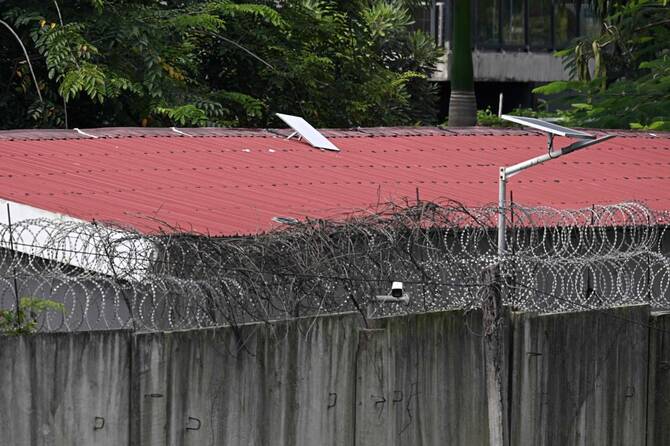
But an AFP investigation this month revealed construction has continued apace, while Starlink receivers have been installed en masse, seeming to connect the hubs to the Elon Musk-owned satellite network.
SpaceX’s vice president of Starlink business operations, Lauren Dreyer, said the company “disabled over 2,500 Starlink Kits in the vicinity of suspected ‘scam centers’” in Myanmar.
Her post on X did not outline when the terminals were disconnected.
Myanmar’s military announced this week it had raided KK Park — one of the country’s most notorious scam centers — and seized 30 Starlink satellite Internet terminals.
Those are only a tiny fraction of the number used at the site, according to AFP’s investigation as well as independent analysis.
An AFP journalist on Wednesday saw more than 1,000 people traveling away from the site on foot, by motorbike and crammed into pickup trucks.
One departing KK Park worker said the crackdown was ongoing.
“Around 10:00 a.m. Myanmar military soldiers in four trucks arrived to our site,” said one worker who declined to give his name for security reasons.
The scam centers have emerged as a key plank in the wartime economy of Myanmar, where the military has been fighting an array of rebel groups since seizing power.
Frustrated that Chinese citizens were ring-leading scams, being trafficked into the hubs and defrauded by them, Beijing in February led the pressure campaign to curb the booming black market.
The junta relies on military backing from China to maintain its grip on power.
But it also relies on powerful militias controlling the border regions on their behalf, in return for profiting from the scam centers, analysts say.
“They need to be able to enrich those militias,” said Nathan Ruser, an analyst at the Australian Strategic Policy Institute. “But then they also have the pressure from China.”
The result is a “balancing act,” he said, with the junta “tokenistically” taking action “while actually not doing anything.”


![]()

SpaceX says ‘disabled’ 2,500 Starlink devices at Myanmar scam centers
Short Url
https://arab.news/yppp9
SpaceX says ‘disabled’ 2,500 Starlink devices at Myanmar scam centers
- Sprawling compounds where Internet tricksters target foreigners with romance and business cons have thrived along Myanmar’s loosely-governed border
- Myanmar’s military announced this week it had raided KK Park and seized 30 Starlink satellite Internet terminals


Latest updates


© 2026 SAUDI RESEARCH & PUBLISHING COMPANY, All Rights Reserved And subject to Terms of Use Agreement.