JERUSALEM: The United Nations’ aid chief took stock of the monumental task of restoring basic necessities in the devastated Gaza Strip on Saturday, and Israel received the remains of another October 7 hostage as a ceasefire entered its second week.
In a short convoy of white UN jeeps, relief coordinator Tom Fletcher and his team wound their way through the twisted rubble of shattered homes to inspect a wastewater treatment plant in Sheikh Radwan, north of Gaza City.
“I drove through here seven to eight months ago when most of these buildings were still standing and, to see the devastation, this is a vast part of the city, just a wasteland, and it’s absolutely devastating to see,” he said.
The densely packed cities of the Gaza Strip, home to more than two million Palestinians, have been reduced to ruins by two years of bombardment and intense fighting between Hamas and the Israeli army.
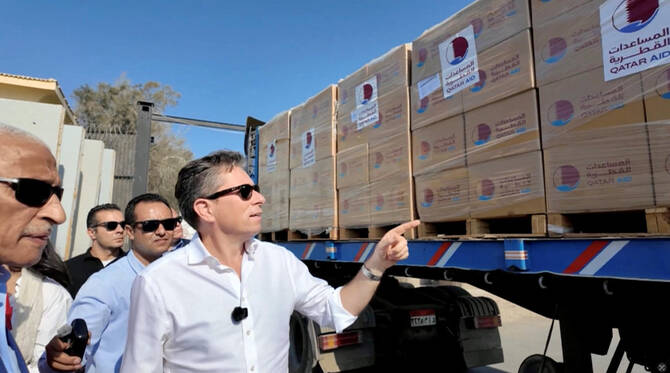
Just over a week since US President Donald Trump helped broker a truce, the main border crossing to Egypt has yet to be reopened, but hundreds of trucks roll in daily via Israeli checkpoints and aid is being distributed.
Hamas has returned the final 20 surviving hostages it was holding and has begun to hand over the remains of another 28 who died.
On Friday night, it turned over a set of remains identified by Israel as Eliyahu Margalit, 75, who died in the October 2023 attack that ignited the war in Gaza.
Digging latrines
Surveying the damaged pumping equipment and a grim lake of sewage at the Sheikh Radwan wastewater plant, Fletcher said the task ahead for the UN and aid agencies was a “massive, massive job.”
The British diplomat said he had met residents returning to destroyed homes trying to dig latrines in the ruins.
“They’re telling me most of all they want dignity,” he said. “We’ve got to get the power back on so we can start to get the sanitation system back in place.
“We have a massive 60 day plan now to surge in food, get a million meals out there a day, start to rebuild the health sector, bring in tents for the winter, get hundreds of thousands of kids back into school.”
According to figures supplied to mediators by the Israeli military’s civil affairs agency and released by the UN humanitarian office, on Thursday some 950 trucks carrying aid and commercial supplies crossed into Gaza from Israel.
Relief agencies have called for the Rafah border crossing from Egypt to be reopened to speed the flow of food, fuel and medicines, and Turkiye has a team of rescue specialists waiting at the border to help find bodies in the rubble.
Hostage remains
Israel’s Prime Minister Benjamin Netanyahu approved the ceasefire but is under pressure at home to restrict access to Gaza until the remaining bodies of the hostages taken during Hamas’s brutal attacks have been returned.
On Saturday, his office confirmed that the latest body, returned by Hamas via the Red Cross on Friday night, had been identified as Margalit, the elderly farmer who was known to his friends at the Nir Oz kibbutz as “Churchill.”
“He was a cowboy at heart, and for many years managed the cattle branch and the horse stables of Nir Oz,” said the Hostages and Missing Families Forum, a support group founded by relatives of the hostages.
“He was connected to the ‘Riders of the South’ group whose members shared a love of horseback riding for over 50 years. On October 7, he went out to feed his beloved horses and was kidnapped from the stable.”
Margalit had been married with three children and three grandchildren. His daughter Nili Margalit, also taken hostage, was freed during the war’s first brief truce in November 2023.
In a statement confirming he had been identified and his remains returned to his family, Netanyahu’s office said “we will not compromise ... and will spare no effort until we return all of the fallen abductees, down to the last one.”
Hamas spokesman Hazem Qassem said on Friday that the group “continues to uphold its commitment to the ceasefire agreement... and it will continue working to complete the full prisoner exchange process.”
Under the ceasefire agreement between Israel and Hamas, negotiated by Trump and regional mediators, the Palestinian militant group has returned all 20 surviving hostages and the remains of 10 out of 28 deceased ones.


![]()

UN aid chief foresees ‘massive job’ ahead on tour of ruined Gaza
Short Url
https://arab.news/wa22t
UN aid chief foresees ‘massive job’ ahead on tour of ruined Gaza
- UN relief coordinator Tom Fletcher: Gaza residents are ‘telling me most of all they want dignity’


Latest updates


Recommended


© 2026 SAUDI RESEARCH & PUBLISHING COMPANY, All Rights Reserved And subject to Terms of Use Agreement.