Protests against Tunisian chemical factory blamed for health issues turn violent

1 / 3
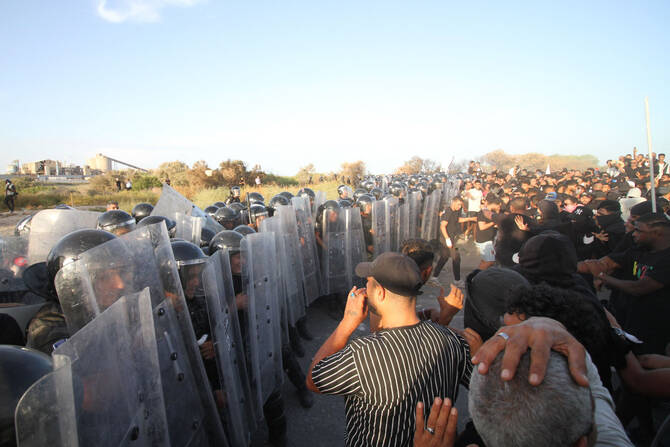
Tunisian policemen stand guard during a demonstration by residents of the city of Gabes on October 15, 2025, to demand the closure of chemical factories in the Ghannouch industrial zone amid concerns of pollution inducing illnesses in the local population. (AFP)
2 / 3
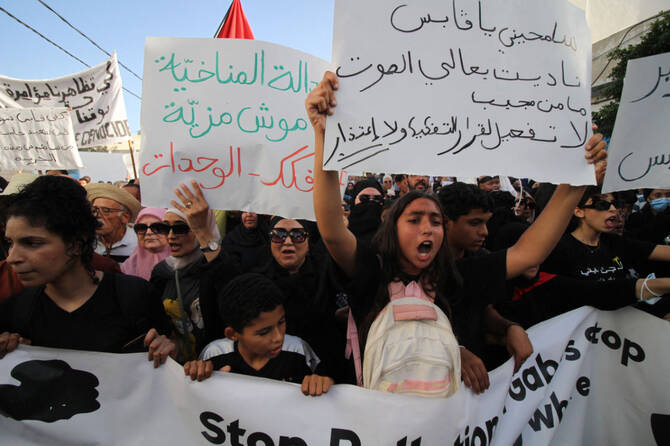
Residents of the city of Gabes carry placards during a demonstration on October 15, 2025, to demand the closure of chemical factories in the Ghannouch industrial zone amid concerns of pollution inducing illnesses in the local population. (AFP)
3 / 3
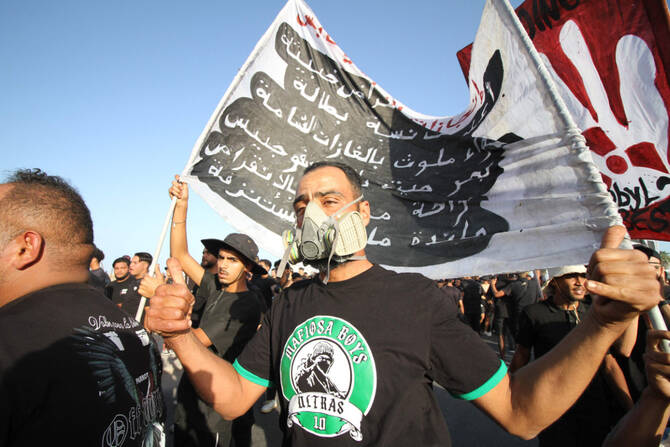
Residents of the city of Gabes carry placards during a demonstration on October 15, 2025, to demand the closure of chemical factories in the Ghannouch industrial zone amid concerns of pollution inducing illnesses in the local population. (AFP)Thousands rally for closure of Tunisia factory blamed for health issues Gabes, Tunisia, Oct 15, 2025 : Several thousand people rallied in southern Tunisia on Wednesday, calling for the closure of an aging chemicals factory which locals have blamed for a host of poisonings and health issues. As the procession reached the vicinity of the vast factory of the Tunisian Chemical Group, a public company, police fired large amounts of tear gas. Hundreds of people retreated, but groups of young people remained shouting their anger, while several individuals fainted, according to an AFP correspondent on site. In recent weeks scores of people have been hospitalized in the city of Gabes, with residents pointing the finger at the potentially cancer-causing waste from a phosphate proc
Short Url
Updated 16 October 2025
Follow

Protests against Tunisian chemical factory blamed for health issues turn violent

  • The rally comes a day after 122 people had to be treated or hospitalized for cases blamed on the plant, according to a local official with knowledge of the figures

GABES, Tunisia: Several thousand people rallied in southern Tunisia on Wednesday, calling for the closure of an aging chemicals factory which locals have blamed for a host of poisonings and health issues.
As the procession reached the vicinity of the vast factory of the Tunisian Chemical Group, a public company, police fired large amounts of tear gas. Hundreds of people retreated, but groups of young people remained shouting their anger, while several individuals fainted, according to an AFP correspondent on site.
In recent weeks scores of people have been hospitalized in the city of Gabes, with residents pointing the finger at the potentially cancer-causing waste from a phosphate processing plant nearby.
“This has to stop. My three kids and I are asthmatic, my husband and my mother died from cancer as a result” of the plant, 52-year-old protester Lamia Ben Mohamed told AFP.
“We want to breathe,” the protesters chanted, while dozens of motorcycles at the head of the rally honked their horns.


According to an AFP journalist at the scene and police sources, the crowd’s size began at around 2,000 people before growing to several thousand.
Organized by the Stop Pollution collective, the rally demanded the shuttering of the aging fertilizer plant, whose discharges into the Mediterranean Sea have long sown discontent among Gabes residents.
They blame the plant for collapsed fishing stocks, beach pollution, respiratory diseases and cancer.
That outcry has intensified in the past month. The rally comes a day after 122 people had to be treated or hospitalized for cases blamed on the plant, according to a local official with knowledge of the figures.
Marwa Salah, 33, a cardiologist at Gabes Regional Hospital, said she wanted to “live without the pollution from the complex that has brought us nothing.”
Wrapped in the Tunisian flag or holding yellow banners bearing a skull, protesters carried signs reading “Stop genocide,” “Gabes without oxygen,” and “The complex is killing us under the state’s watch.”
According to Slah Ben Hamed, regional leader of the UGTT union, the recent waves of poisoning were caused by “outdated equipment” and “gas leaks.”
Fertilizer production requires treating phosphates with sulfuric acid and ammonia.
Although the Tunisian state had promised in 2017 to begin the plant’s gradual closure, authorities earlier this year said they would ramp up production instead.
Experts have cast doubt on the possibility of cleaning up a complex first inaugurated in 1972.


WHO says Dubai global emergency logistics hub ‘resuming operations’

Updated 5 sec ago
Follow

WHO says Dubai global emergency logistics hub ‘resuming operations’

  • Hanan Balkhy, WHO’s Eastern Mediterranean regional chief, says more than 50 emergency supply requests across 25 countries are affected by the pause
  • The hub stopped work this week after Iran launched waves of missile and drone attacks across the Gulf
GENEVA: The World Health Organization said its global health emergencies logistics hub in Dubai was resuming operations on Friday after a pause caused by the war in the Middle East.
“One of our most immediate concerns is the disruption of humanitarian health supply chains,” Hanan Balkhy, the UN health agency’s Eastern Mediterranean regional chief, told a press conference in Geneva.
“After a temporary pause, WHO’s Hub for Global Health Emergencies Logistics is today resuming operations,” she said, speaking from Cairo.
She said the UAE, in coordination with the UN’s World Food Programme, had confirmed that it stood ready to facilitate urgent humanitarian shipments.
“More than 50 emergency supply requests across 25 countries are currently affected,” said Balkhy.
“These pending requests — which will benefit more than 1.5 million people — include WHO supplies for Lebanon, Gaza, Yemen, and Somalia, as well as polio laboratory supplies for global detection and eradication activities across a number of countries.”
She said the WHO would be working in the coming days to process urgent new shipments and clear priority backlogs.
Balkhy noted that even before the escalation of hostilities in the Middle East, health systems in many countries were already operating at full capacity.
“WHO has pre-positioned trauma supplies and essential medicines at our warehouse in Tehran and is closely monitoring the situation — including potential mass casualty needs, disruptions to essential health services, and possible displacement,” she said.