

Bloomberg Weekend editor Mishal Husain questions media’s treatment of Shamima Begum

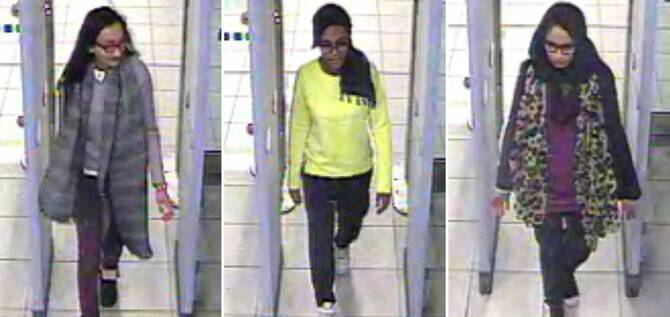
Shamima Begum, aged 15 at the time, was one of three girls who left London in 2015 to join Daesh in Syria. (AFP)
Short Url
Updated 15 October 2025
Follow

Bloomberg Weekend editor Mishal Husain questions media’s treatment of Shamima Begum

  • Husain questions media bias, duty of care in Begum coverage

DUBAI: Former BBC journalist Mishal Husain, now editor-at-large at Bloomberg Weekend, has questioned the media’s sense of duty of care toward Shamima Begum and whether she would have been treated differently if she were not Muslim.

Speaking on Tuesday at the 2025 Romanes Lecture, a free, public annual lecture at the University of Oxford, Husain said it has been six years since the chair of the UK-based Independent Press Standards Organization said “that he thought Muslims were on occasion written about in the newspapers in ways Jews or Catholics would not be.”

In her speech titled “Empire, Identity and the Search for Reason,” she gave the example of Shamima Begum, saying it was worth asking whether she would have been perceived the same way if she had not been Muslim.

Begum, aged 15 at the time, was one of three girls who left London in 2015 to join Daesh in Syria.

Four years later, The Times tracked her down and interviewed her when she was nine months pregnant.

“The callousness of her words in that interview — including her saying she had been unmoved by the sight of a captured fighter’s severed head in a bin — prompted widespread revulsion,” Husain said.

Shortly after, there began a “scramble” to get the first TV interview, and both Sky and BBC reached out to her, she added.

Husain highlighted the media’s lack of empathy for Begum’s state. She had lost two children to illness and malnutrition, and the third was born just hours before one of her TV appearances.

She said that “one broadcaster said their correspondent had ‘tracked down the IS bride in a hospital just hours after she gave birth,’” and that the other recorded the segment when her son was just 3 days old, “the distinctive cry of a newborn audible off camera as she spoke.”

She added: “When I watched these interviews, I saw something that appeared to go entirely unnoticed in editorial decision-making — or was regarded as unimportant.

“I saw a teenage mother, only just postpartum.”

Husain recounted her own experience giving birth in the UK, where she had the help and support of family members and medical facilities. Even then, she said, she was “in no fit state to give any interview in the weeks, let alone the hours or days, after those births.

“And certainly not an interview of consequence to the rest of my life, conducted without advice, representation — or even access to information.”

Husain said she found it difficult to reconcile the media coverage with a sense of duty of care toward the interviewee, to assess “whether an interviewee is in a position to give informed consent, or in a place where they can speak freely.”

She highlighted how news organizations had failed to emphasize the ways in which Daesh targeted and enticed young girls, providing little context for how Begum became radicalized.

In late 2015, Husain was given an official briefing on the “online material used by IS to entice girls to join them,” and it was “clever and visually attractive,” including emojis, imagery and messages designed to appeal to teenage girls.

She added: “Little of this ever emerged publicly. Questions about grooming or entrapment have rarely gained currency.”

Although Husain has never met Begum, she said she often thinks of her. Even now, 10 years later, “we still don’t know how her story ends,” as “she remains in Syria, stripped of her British citizenship and with little hope of securing another passport,” Husain said.


BBC says will fight Trump's $10 bn defamation lawsuit

Updated 16 December 2025
Follow

BBC says will fight Trump's $10 bn defamation lawsuit

LONDON: The BBC said Tuesday it would fight a $10-billion lawsuit brought by US President Donald Trump against the British broadcaster over a documentary that edited his 2021 speech ahead of the US Capitol riot.
“As we have made clear previously, we will be defending this case,” a BBC spokesperson said in a statement sent to AFP, adding the company would not be making “further comment on ongoing legal proceedings.”
The lawsuit, filed in federal court in Miami, seeks “damages in an amount not less than $5,000,000,000” for each of two counts against the British broadcaster, for alleged defamation and violation of the Florida Deceptive and Unfair Trade Practices Act.
The video that triggered the lawsuit spliced together two separate sections of Trump’s speech on January 6, 2021 in a way that made it appear he explicitly urged supporters to attack the Capitol, where lawmakers were certifying Joe Biden’s 2020 election win.
The lawsuit comes as the UK government on Tuesday launched the politically sensitive review of the BBC’s Royal Charter, which outlines the corporation’s funding and governance and needs to be renewed in 2027.
As part of the review, it launched a public consultation on issues including the role of “accuracy” in the BBC’s mission and contentious reforms to the corporation’s funding model, which currently relies on a mandatory fee for anyone in the country who watches television.
Minister Stephen Kinnock stressed after the lawsuit was filed that the UK government “is a massive supporter of the BBC.”
The BBC has “been very clear that there is no case to answer in terms of Mr.Trump’s accusation on the broader point of libel or defamation. I think it’s right the BBC stands firm on that point,” Kinnock told Sky News on Tuesday.
Trump, 79, had said the lawsuit was imminent, claiming the BBC had “put words in my mouth,” even positing that “they used AI or something.”
The documentary at issue aired last year before the 2024 election, on the BBC’s “Panorama” flagship current affairs program.

Apology letter 

“The formerly respected and now disgraced BBC defamed President Trump by intentionally, maliciously, and deceptively doctoring his speech in a brazen attempt to interfere in the 2024 Presidential Election,” a spokesperson for Trump’s legal team said in a statement to AFP.
“The BBC has a long pattern of deceiving its audience in coverage of President Trump, all in service of its own leftist political agenda,” the statement added.
The British Broadcasting Corporation, whose audience extends well beyond the United Kingdom, faced a period of turmoil last month after a media report brought renewed attention to the edited clip.
The scandal led the BBC director general, Tim Davie, and the organization’s top news executive, Deborah Turness, to resign.
Trump’s lawsuit says the edited speech in the documentary was “fabricated and aired by the Defendants one week before the 2024 Presidential Election in a brazen attempt to interfere in and influence the Election’s outcome to President Trump’s detriment.”
The BBC has denied Trump’s claims of legal defamation, though BBC chairman Samir Shah has sent Trump a letter of apology.
Shah also told a UK parliamentary committee last month the broadcaster should have acted sooner to acknowledge its mistake after the error was disclosed in a memo, which was leaked to The Daily Telegraph newspaper.
The BBC lawsuit is the latest in a string of legal actions Trump has taken against media companies in recent years, several of which have led to multi-million-dollar settlements.