


ISLAMABAD: Prime Minister Shehbaz Sharif on Sunday condemned “provocations” by Afghanistan in Pakistan’s border areas, vowing a “strong and effective response” to incursions in defense of his country.
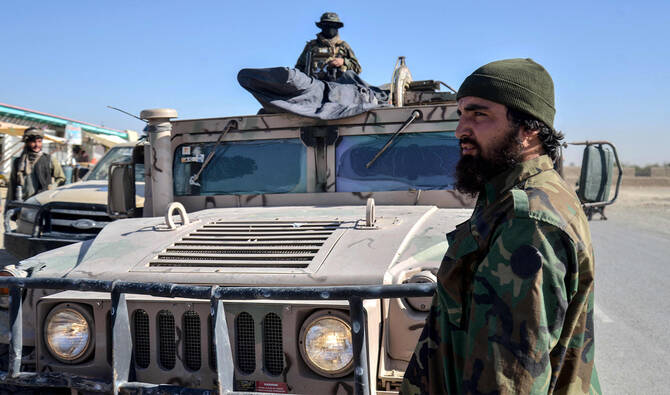
Afghan troops opened fire on Pakistani border posts late Saturday, with the country’s ministry of defense saying this was in retaliation for alleged Pakistani airstrikes in Afghanistan this week. Afghan officials said dozens of Pakistani soldiers were killed in the clashes.
Security officials in Pakistan said they had captured 19 Afghan posts, from where attacks were carried out. Videos circulating on Pakistani media showed soldiers erecting Pakistan’s flag on a captured Afghan post. It could not be independently verified.
Afghanistan and Pakistan have had frosty relations since the Taliban returned to power in 2021. Islamabad accuses authorities there of harboring militants carrying out strikes on its soil, an accusation Afghanistan denies.
“There will be no compromise on Pakistan’s defense, and every provocation will be given a strong and effective response,” Sharif said in a statement, accusing Taliban authorities in Afghanistan of allowing their land to be used by “terrorist elements.”
Landlocked Afghanistan has a 2,600-kilometer-long border with Pakistan. Key border crossings between Pakistan and Afghanistan were closed on Sunday after fierce clashes erupted overnight following Taliban accusations that Islamabad had carried out air strikes this week, officials said.
This week’s Pakistani airstrikes, not officially acknowledged by Islamabad, had targeted the leader of the Tehreek-e-Taliban Pakistan (TTP) militant group in Kabul on Thursday, Reuters reported, citing a Pakistani security official. It is unclear if TTP chief Noor Wali Mehsud survived.
The TTP, which has had a close relationship with the Afghan Taliban, has been behind some of the deadliest attacks in Pakistan since late 2000s.
Sharif said Islamabad has repeatedly given information to Kabul about “terrorist elements” who carry out operations against Pakistan from the Afghan soil.
“Terrorist organizations are supported by elements present in Afghanistan,” he said. “Pakistan expects the Afghan caretaker government to ensure that its territory is not used by terrorist elements against Pakistan.”
Speaking at a presser on Sunday, Taliban spokesman Zabihullah Mujahid said their forces had killed 58 Pakistani soldiers, seized 20 Pakistani positions and lost nine of their own soldiers.
“We stopped firing at night, but the Pakistani side did not stop and continued targeting several sites,” he said. “If Pakistan continues its attacks on Afghanistan, we will retaliate again.”
Mujahid claimed Pakistan does not want Afghanistan to be stable, accusing it of harboring Daesh militants and training them.
Pakistan must either hand over the Daesh (Daesh) members or expel them,” he said.
The Pakistan-Afghanistan skirmishes come at a time when Afghan foreign minister Amir Khan Muttaqi is visiting India, where he said on Saturday that Pakistan should not blame Afghanistan for its internal problems.
“It is a noteworthy fact that Afghanistan has attacked Pakistan at the very time when the Afghan foreign minister is on a visit to India and anti-Pakistan statements are being given the form of joint declarations there,” Pakistani Information Minister Attaullah Tarar said on X.
“This act is regrettable and condemnable.”




