



ISLAMABAD: When Arshia Akhtar first stepped onto a karting track in Riyadh as a child, she had no idea it would lead her to professional racing.
Nearly two decades later, she has become the first Pakistani woman to receive a professional license from the Fédération Internationale de l’Automobile (FIA) — motorsport’s global governing body — a milestone that places her among the few women competing internationally in formula racing.
Born in Lahore and raised in Saudi Arabia, Akhtar moved to the United States in 2017, where she now works full-time in clinical research while pursuing her motorsport ambitions.
“My mom and my sister, they don’t even have a driver’s license,” she told Arab News in an online interview from Texas. “It has always been my dad and I who are more sports-oriented.”
Akhtar first tried karting at age 11 and returned to it in her teens before transitioning to competitive circuits. She has since raced in the Formula Race Promotions Series and the F4 US Championship, both featuring international drivers.
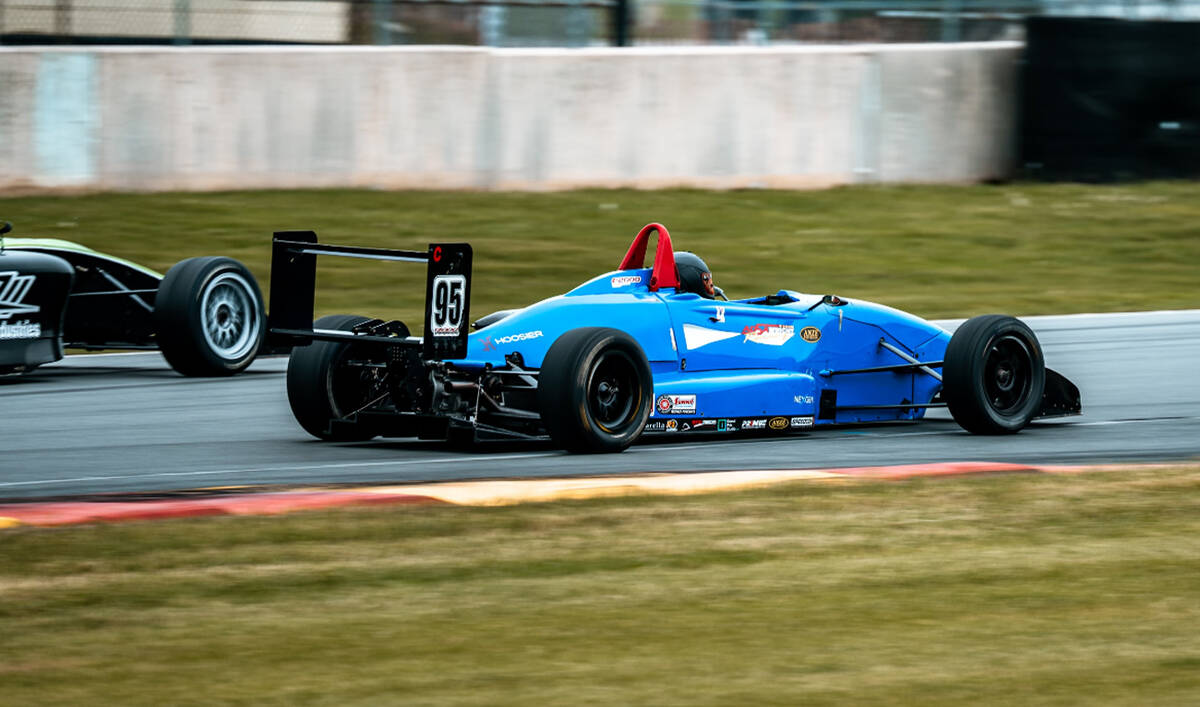
Pakistani motorsport driver Arshia Akhtar in action during the Formula Race at Road America in Wisconsin, US, on June 27, 2025. (Arshia Akhtar)
Robert Wright, owner of Formula Race Promotions, said Akhtar began competing with their team in early 2025 and showed steady improvement throughout the season.
“Her progress through the season was steady and rewarded her with fourth place in the season points standings,” he said, adding that plans are already underway to further her skills and experience in 2026.
Securing a professional license from the FIA was a demanding process. As a Pakistani woman entering a sport still dominated by men and the West, Akhtar said much of her journey involved learning through trial and error.
She spent months studying regulations, car specifications and race categories while building a resumé that met FIA standards.
“When you’re the first one doing something, you’re figuring it out as you go,” she said.
Akhtar currently holds a Grade C FIA license and is working toward Grade B, a step closer to the elite “super license.”
“Every time I race in the championship, I gain points,” she explained. “You only gain points if you’re in the top ten. You need to build up to a certain number to even qualify for a super license.”

The photograph shared on July 2, 2025, shows Pakistani motorsport driver Arshia Akhtar with her 7-month-old puppy, Ezra, during a test day drive at MSR Houston in Texas, US. (Arshia Akhtar)
Currently, she is competing in Formula E, a category of high-speed electric racing that tests drivers’ reflexes, technical precision and strategy.
Her coach, professional driver Nathan Byrd, described her as “a fast learner with a good attitude, taking all of my feedback well and then immediately executing on-track.”
‘ADRENALINE JUNKIE’
Beyond the racetrack, Akhtar juggles a demanding schedule.
“I wake up early, check emails, handle racing or sponsorship calls and then start my research job by 7:30,” she said. “After work, I take my dogs to the park, work out, practice on the simulator and sometimes I’m working till late.”
Despite the sport’s high costs, Akhtar continues to self-fund her career.
Women remain vastly underrepresented in motorsport. A 2023 study by More Than Equal, an initiative by former Formula 1 driver David Coulthard and entrepreneur Karel Komárek, found that women make up just around 10 percent of global participants.
Against that backdrop, Akhtar’s progress marks both a national milestone and a personal test of endurance. She said she often races on unfamiliar tracks against seasoned competitors.
“Every time I go on a track, that’s my first time on that track, while other people I’m competing against have been there at least 10 or 12 times,” she said.

Arshia Akhtar is having a chat with race engineer Angelo Zarra at Road Atlanta Raceway in Hall County, Georgia, US, on March 20, 2025. (Arshia Akhtar)
To prepare, she spends hours in simulation and track analysis, though she admits that practice can’t replace real racing.
“Once you are on track, the execution part kind of includes dealing with things that are changing,” she said.
Away from motorsport, Akhtar describes herself as an “adrenaline junkie.” She has competed in equestrian events in the US, earning several podium finishes, and enjoys snowboarding, skydiving, and scuba diving.
“My family has just accepted the fact that I’m the weird kid,” she laughed.
Akhtar also excelled academically, staying on the dean’s list and publishing in scientific journals. Now, she hopes her example will inspire more Pakistani women to explore motorsport, not just as drivers, but also in engineering, management and technical roles.
“We make our own norms,” she said. “If you truly believe that something should be normal and you do it... then it will become normal.”


